Research Peptide
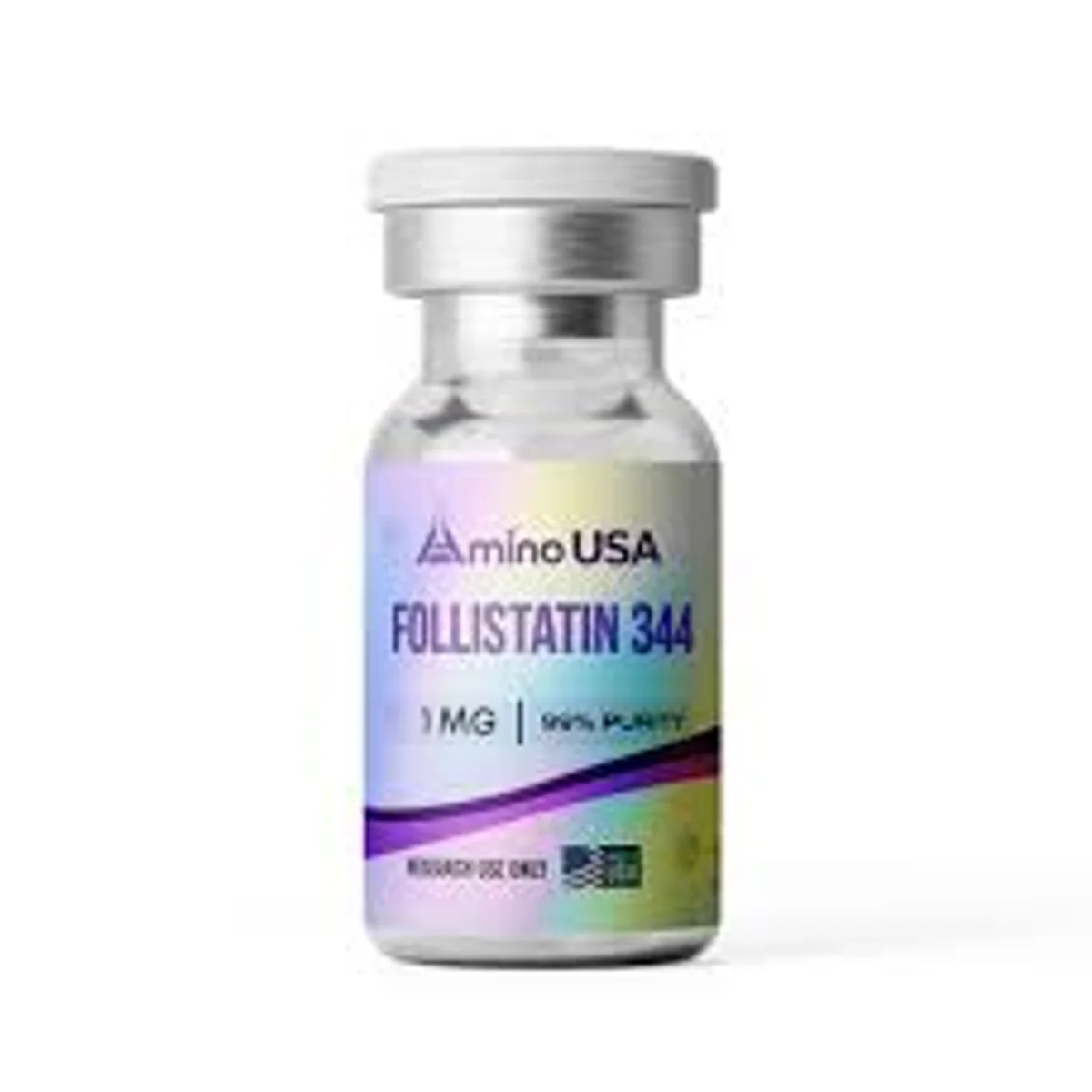
Follistatin 344
Myostatin inhibitor with muscle and fertility research interest
“A recombinant myostatin-binding protein with compelling animal-model muscle data and a near-complete absence of human clinical evidence in its exogenous form.”
Last updated: May 1, 2026
Score Breakdown
Evidence
Purity
Cost Efficiency
Safety Profile
Pros & Cons
Pros
- Mechanistic rationale for myostatin inhibition is well-established and peer-reviewed
- Animal model data (rodent and primate) is among the more compelling in the muscle-growth research space
- Dual research interest in both muscle physiology and reproductive endocrinology
- Human gene-therapy safety data, while limited, suggests tolerability in a controlled clinical setting
Cons
- Zero peer-reviewed human evidence for exogenous recombinant protein administration at research-chemical market doses
- Short plasma half-life in animal models raises serious questions about efficacy of subcutaneous/intramuscular dosing protocols circulating in the community
- Recombinant protein products are exceptionally difficult to authenticate and are high-risk for misrepresentation or endotoxin contamination from lower-tier vendors
- Potential for FSH suppression and broader endocrine disruption is poorly characterized at community-used doses
Best For
- Academic researchers studying myostatin pathway biology in vitro or in animal models
- Investigators with laboratory infrastructure capable of verifying protein folding and purity
- Research contexts examining follistatin's role in FSH regulation and reproductive endocrinology
Avoid If
- Any active or suspected hormone-sensitive condition, including reproductive disorders or hormone-dependent cancers, given follistatin's role in FSH and activin modulation
- Anyone unable to obtain and interpret a mass-spectrometry and HPLC-verified COA with endotoxin panel, given the contamination risk profile of recombinant proteins from unregulated vendors
Full Review
Follistatin 344 is a specific isoform of the follistatin protein family, a group of endogenous glycoproteins first isolated in ovarian follicular fluid in the late 1980s. The '344' designation refers to its 344-amino-acid form, one of several alternative splicing variants of the FST gene. Biochemically, it belongs to the class of activin-binding proteins and functions as a secreted antagonist of multiple TGF-beta superfamily ligands. Unlike synthetic peptide fragments such as BPC-157 or TB-500, Follistatin 344 is a full-length recombinant protein — meaning it is substantially larger and structurally more complex than most peptides covered in the research chemical market, which carries significant implications for stability, administration, and sourcing integrity.
The primary mechanism of action described in the literature centers on high-affinity binding to myostatin (also known as Growth Differentiation Factor 8, or GDF-8), a potent endogenous suppressor of skeletal muscle development. By sequestering myostatin and preventing it from engaging its receptors (primarily ActRIIB), research suggests Follistatin 344 may lift a 'brake' on muscle fiber growth and satellite cell proliferation. The protein also binds activins A and B with similarly high affinity, which partially explains its observed effects on FSH regulation and reproductive physiology. Some animal research has explored interactions with bone morphogenetic proteins (BMPs), suggesting a broader role in tissue remodeling beyond muscle alone.
The evidence base for Follistatin 344 is heavily weighted toward animal and gene-therapy models, which should be understood clearly before interpreting any claims. In rodent studies, intramuscular injection or gene delivery of follistatin constructs has produced dramatic increases in muscle mass — some transgenic mouse models showing muscle weight roughly doubling under constitutive overexpression. A notable 2009 study published in Molecular Therapy (Haidet et al.) examined AAV-mediated follistatin gene delivery in non-human primates and reported significant lean mass increases without apparent safety signals at the trial's timeframe. A small human gene therapy trial (Mendell et al., 2015, n=6) assessed intramuscular AAV1-FS344 delivery in patients with Becker muscular dystrophy and reported some functional improvement signals, though the sample size was insufficient to draw clinical conclusions. Importantly, this gene-therapy context is categorically different from administering recombinant protein as a research chemical — the delivery mechanism, duration of action, and safety profile are not directly comparable. Anecdotal user reports in biohacking and bodybuilding communities describe increased muscle fullness and reduced recovery time, but these self-reports are uncontrolled and unverifiable. No placebo-controlled human trials of exogenous recombinant Follistatin 344 protein administration have been published to this platform's knowledge as of 2024.
Dosing ranges reported in the gene-therapy and animal research literature are not translatable to exogenous recombinant protein dosing in research contexts. Within the research chemical vendor ecosystem, doses cited in community forums range from 50–100 mcg per injection site, with some protocols referencing cycle lengths of 10–30 days. These figures are community-derived and not drawn from peer-reviewed human pharmacokinetic studies. This information is reported from community research contexts only and represents no dosing recommendation whatsoever. The half-life of follistatin protein in circulation is estimated at under 2 hours in animal models, raising significant questions about the pharmacological rationale for subcutaneous or intramuscular administration of the recombinant form at the doses circulating in research communities. Vendors should be viewed with appropriate skepticism given the complexity and cost of producing authentic, correctly folded recombinant follistatin protein at the purity levels required for even research use.
Follistatin 344 occupies an ambiguous regulatory position across jurisdictions. In the United States, it is not FDA-approved for any indication and is classified as a research chemical; its use in any gene therapy application requires IND authorization. In the United Kingdom, it is similarly unapproved by the MHRA for human use. Across the EU and Australia, the compound has no approved therapeutic indication. All sourcing of recombinant Follistatin 344 for non-laboratory research purposes exists in an unregulated gray area. This content is published for educational purposes only and does not constitute medical advice, a treatment recommendation, or an endorsement of human self-administration. Prospective researchers should prioritize vendors providing mass-spectrometry-verified certificates of analysis (COAs), HPLC purity data (ideally >98%), and documented endotoxin testing — given that recombinant proteins carry a meaningfully higher contamination risk profile than small synthetic peptides.
Details
Reviews
No reviews yet. Be the first to share your experience.