
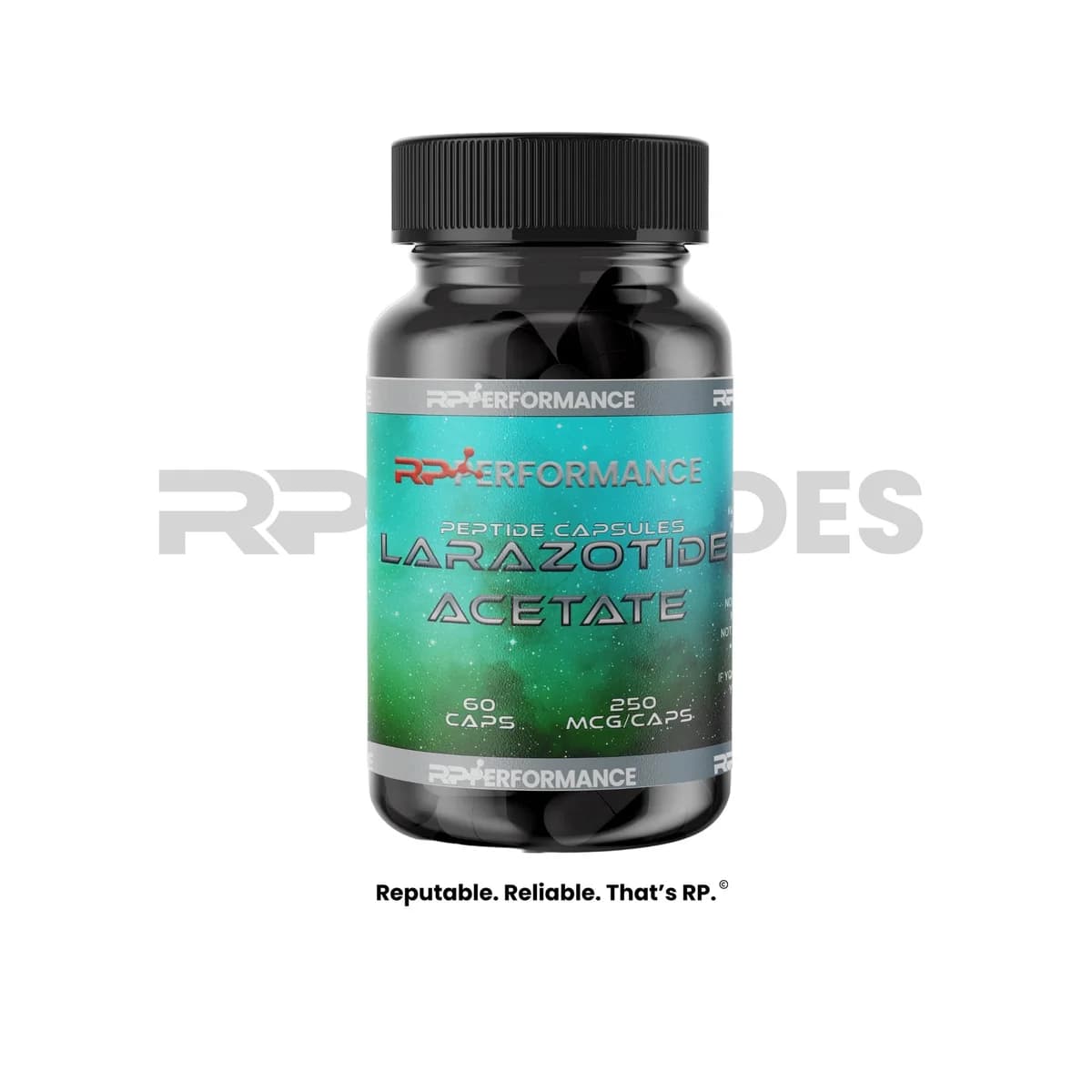
Research Peptide
Larazotide Acetate
Tight Junction Regulator for Intestinal Permeability Research
“One of the most clinically-trialed investigational peptides for intestinal barrier research — yet still awaiting regulatory approval.”
Last updated: April 27, 2026
Score Breakdown
Evidence
Purity
Cost Efficiency
Safety Profile
Pros & Cons
Pros
- Among the most extensively human-trialed investigational peptides — multiple Phase 2 RCTs with hundreds of participants
- Well-characterized mechanism targeting zonulin-mediated tight junction disruption
- Oral delivery format; no injection required
- Favorable tolerability profile in trials — side effects largely indistinguishable from placebo at low doses
Cons
- Phase 3 trial did not achieve primary endpoints, raising questions about clinical effect size
- Extremely narrow investigational scope — primarily relevant to intestinal permeability research, not a multi-use compound
- Research-grade oral peptide products are difficult to verify for purity; COA standards lag behind injectable peptide vendors
Best For
- Researchers studying intestinal tight junction physiology and paracellular permeability
- Investigative models of gluten sensitivity and celiac-adjacent barrier dysfunction
- Comparative studies on zonulin pathway modulation
Avoid If
- Seeking a broad-spectrum recovery or performance compound — this has a single, narrow mechanism
- Unable to source a vendor providing lot-specific third-party COA with HPLC and MS confirmation for an oral peptide format
Full Review
Larazotide acetate (also designated AT-1001 in earlier trial literature) is a synthetic 8-amino-acid peptide derived from a sequence analog of the cholera toxin accessory protein, specifically engineered to act as a tight junction regulator rather than a permeabilizing agent. It belongs to the broader class of barrier-modulating peptides and is notable for being among the very few research peptides that have advanced into large-scale randomized controlled trials in human subjects. Its primary investigational context has been celiac disease, a condition characterized in part by pathological intestinal permeability driven by zonulin-mediated tight junction disassembly.
The proposed mechanism of action centers on larazotide acetate's ability to competitively inhibit zonulin signaling at the epithelial cell surface, thereby stabilizing tight junction protein complexes — including occludin, claudin, and zonula occludens-1 (ZO-1). Research suggests that by blocking the receptor-mediated pathway through which zonulin (and related proteins in the haptoglobin-2 family) disrupt intercellular sealing, larazotide acetate may help maintain paracellular barrier integrity. This mechanism is distinct from anti-inflammatory approaches: the peptide is not proposed to suppress immune activation directly, but rather to limit the translocation of luminal antigens — including gliadin peptides in celiac patients — that trigger downstream immune cascades.
The evidence base for larazotide acetate is notably more developed than most research peptides. Multiple Phase 1 and Phase 2 randomized, placebo-controlled trials have been conducted in celiac disease populations, with sample sizes ranging from approximately 86 to over 340 participants. Notably, a Phase 2b trial published around 2012-2013 (Kelly et al., ClinicalTrials.gov NCT01396213 and related registrations) examined doses of 0.5 mg, 1 mg, and 4 mg three times daily in celiac patients on a gluten-containing challenge diet, reporting that the 0.5 mg dose was associated with statistically significant reductions in gastrointestinal symptom scores compared to placebo, though effects on intestinal permeability biomarkers (lactulose:mannitol ratio) were mixed across dosing arms. A subsequent Phase 3 trial (NCT02637141, Alba Therapeutics) enrolled a larger cohort but results were less definitive in meeting primary endpoints, which contributed to the compound's ongoing investigational — rather than approved — status. Animal model data from rodent studies using gluten-challenge protocols have generally supported the mechanism, showing reduced lactulose flux and lower gliadin antibody titers in treated animals. No substantial human self-report community exists for larazotide acetate comparable to peptides like BPC-157, likely due to its narrow investigational focus and oral rather than injectable format.
Dosing ranges reported in published clinical research have varied: Phase 2 trials used 0.5 mg, 1 mg, and 4 mg administered orally three times daily, typically with meals, over periods of 12 to 24 weeks. The 0.5 mg three-times-daily regimen appeared in some analyses to offer the most favorable signal-to-noise ratio, though no dose has been established as clinically optimal given the lack of regulatory approval. These figures are reported strictly in the context of describing published research protocols and constitute no recommendation for use. Larazotide acetate is formulated as an oral capsule or tablet in clinical trials, which is unusual for peptides (most of which are degraded by gastric proteases); its stability appears to derive in part from its short length and the specific amino acid composition that confers partial resistance to luminal enzymatic degradation. Reconstitution from lyophilized powder is not required in its research-grade oral form, though some vendors supply it as a lyophilized powder.
For educational purposes only: larazotide acetate is not approved by the FDA, MHRA, EMA, or TGA for any indication. It remains classified as a research chemical in most jurisdictions and has not completed a successful regulatory approval pathway despite advancing further through clinical development than the vast majority of investigational peptides. Researchers and procurement officers sourcing this compound should insist on a full certificate of analysis confirming identity via HPLC and mass spectrometry, purity of ≥98%, and absence of endotoxin contamination. The oral format introduces unique adulteration risks compared to injectables, as fillers, binders, and coating agents can complicate purity assessment. Any research-grade source should provide lot-specific third-party COAs, not generic batch documentation.
Details
Reviews
No reviews yet. Be the first to share your experience.