
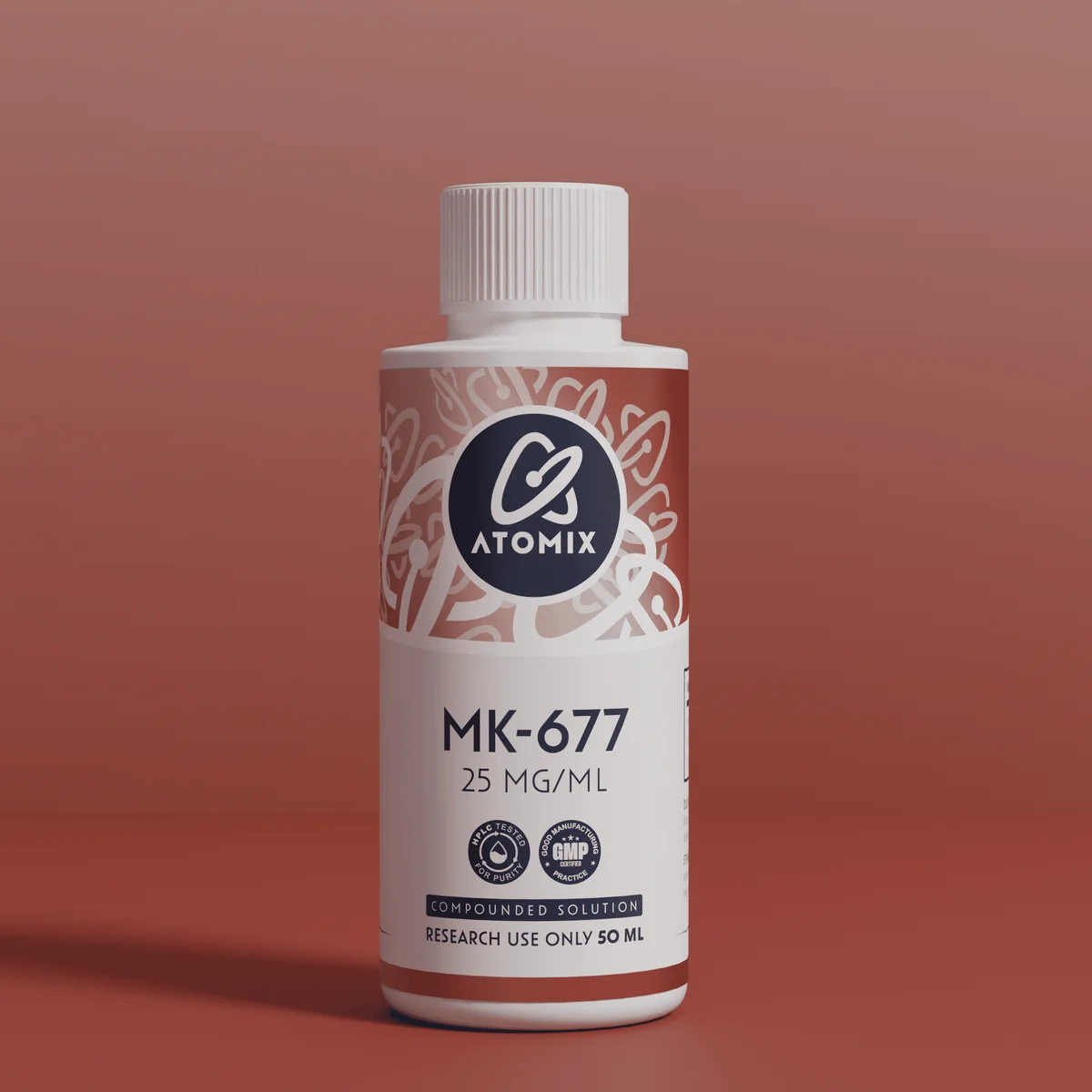
Research Peptide
MK-677 (Ibutamoren)
Oral growth hormone secretagogue with substantial human trial data
“The rare research chemical with actual double-blind human trial data behind it — and a side-effect profile that demands honest scrutiny.”
Last updated: April 23, 2026
Score Breakdown
Evidence
Purity
Cost Efficiency
Safety Profile
Pros & Cons
Pros
- One of the few research chemicals with multiple completed double-blind, placebo-controlled human trials
- Oral administration eliminates injection-site complications and reconstitution requirements
- Research consistently demonstrates robust GH and IGF-1 elevation without suppressing endogenous pituitary function
- Preliminary human research suggests favorable effects on slow-wave sleep duration and architecture
Cons
- Documented impairment of insulin sensitivity in human trials — a meaningful metabolic risk for predisposed individuals
- Appetite stimulation is pronounced and may be counterproductive depending on research context
- Water retention is a commonly reported adverse effect that can confound lean mass measurements and cause discomfort
Best For
- Researchers investigating non-injectable GH secretagogue mechanisms in a controlled setting
- Longevity researchers examining IGF-1 modulation and age-related muscle wasting models
- Sleep-architecture research contexts, given documented effects on slow-wave and REM sleep phases
Avoid If
- Pre-existing insulin resistance, type 2 diabetes, or metabolic syndrome — human trial data indicates measurable glucose dysregulation
- Competitive athletes subject to WADA testing — MK-677 is explicitly listed on the WADA Prohibited List
Full Review
MK-677 (Ibutamoren mesylate) is a small-molecule, non-peptide ghrelin receptor agonist and growth hormone secretagogue (GHS) originally developed by Reverse Pharmacology and subsequently investigated by Eli Lilly and Merck in clinical trials during the 1990s and 2000s. Despite its name appearing in peptide research circles, it is technically a peptidomimetic — it mimics the action of ghrelin at the GHS-R1a receptor but is structurally a small molecule, granting it oral bioavailability that distinguishes it from injectable GHRPs like GHRP-6 or Ipamorelin. It belongs to the broader class of growth hormone secretagogues and is often researched alongside them despite its distinct chemical identity.
MK-677's primary mechanism involves agonism of the ghrelin receptor (GHS-R1a), which stimulates pituitary release of growth hormone in a pulsatile, physiologically patterned fashion. Critically, published research indicates it does not suppress endogenous GH secretion or cause negative feedback on the hypothalamic-pituitary axis in the way that exogenous recombinant HGH (rhGH) administration does. It also reliably elevates IGF-1 levels, which is the primary downstream mediator of many GH-associated anabolic and regenerative effects. Because it mimics ghrelin, it also stimulates appetite — an effect consistently documented in human trials and relevant for both its research applications in cachexia/wasting conditions and its reported side-effect profile in other contexts.
The evidence base for MK-677 is notably stronger than most compounds in the research-chemical category. Human trials include a double-blind, placebo-controlled crossover study (Svensson et al., 1998, n=24) demonstrating significant GH and IGF-1 elevation, and a landmark two-year randomized controlled trial in elderly subjects (Chapman et al., 1996; Nass et al., 2008) examining effects on body composition, bone density, and functional outcomes. A 2008 trial published in the Annals of Internal Medicine (n=65) found that MK-677 increased lean body mass in elderly subjects over 12 months but did not improve functional outcomes as measured. A separate trial (Copinschi et al., 1996) documented its effects on sleep architecture, with research suggesting increased REM and slow-wave sleep duration. Animal models additionally demonstrate neuroprotective and memory-relevant effects, though these have not been replicated at scale in human trials. Anecdotal user reports in biohacking communities frequently describe improvements in sleep quality, appetite stimulation, and body composition changes — but these are self-reported and uncontrolled and should not be conflated with clinical evidence.
Dosing ranges reported in published human research have varied between 10 mg and 25 mg administered orally once daily. Some trials used doses as low as 2 mg to characterize pharmacokinetics. The 25 mg daily dose is the most commonly referenced in body composition and GH-secretion studies. IMPORTANT: These figures are reported strictly from research contexts and are not a recommendation for human use. MK-677 is not approved for human consumption in any major regulatory jurisdiction, and any dosing information presented here is for educational and research-literacy purposes only.
From a legal and sourcing standpoint, MK-677 occupies an ambiguous position. In the United States, it is unscheduled under the Controlled Substances Act but is also not FDA-approved, placing it in a gray-zone research-chemical category. It has been explicitly added to WADA's prohibited list, making it banned for competitive athletes. In Australia, it falls under Schedule 4 (prescription-only) in some interpretations, and regulatory enforcement has tightened significantly in recent years. In the UK, supply for human use may engage the Medicines Act, though it is not a controlled substance under the Misuse of Drugs Act. Credible vendors should provide third-party COAs confirming identity, purity (HPLC ≥98%), and absence of heavy metals or residual solvents. Because MK-677 is an oral compound, tablet and capsule formulations are common — this makes vendor quality particularly important, as underdosed or adulterated oral products are harder to detect without independent testing. This content is for educational purposes only and does not constitute medical advice.
Details
Reviews
No reviews yet. Be the first to share your experience.
Featured In
STACK
Growth Hormone Secretagogue Stacks: How Ipamorelin + CJC-1295 Are Studied (2026 Research Guide)
Ipamorelin and CJC-1295 are research peptides studied as a growth hormone secretagogue stack, pairing a selective ghrelin receptor (GHS-R1a) agonist with a GHRH analog to stimulate endogenous GH release through two complementary pituitary pathways. Neither compound is FDA-approved for human use, and the peer-reviewed record contains no randomized controlled trials of the combination in healthy adults — the strongest human data is a Phase II pharmacokinetic trial of CJC-1295 with DAC, which extends circulating half-life to roughly 6–8 days via albumin binding. Tesamorelin remains the only FDA-approved GHRH analog with Phase III backing.
PEPTIDE-PROFILE
MK-677 (Ibutamoren): What the Research Shows on the Oral Growth Hormone Secretagogue
MK-677 (Ibutamoren) is the most comprehensively studied oral GH secretagogue in the research chemical space, with multiple completed double-blind, placebo-controlled human trials documenting sustained GH and IGF-1 elevation. Its oral bioavailability and documented sleep-architecture effects make it mechanistically interesting, but human trial evidence of insulin sensitivity impairment means any research application requires careful contextual scrutiny.
HOW TO
Peptides 101: A Beginner's Guide to the Research Landscape (2026 Edition)
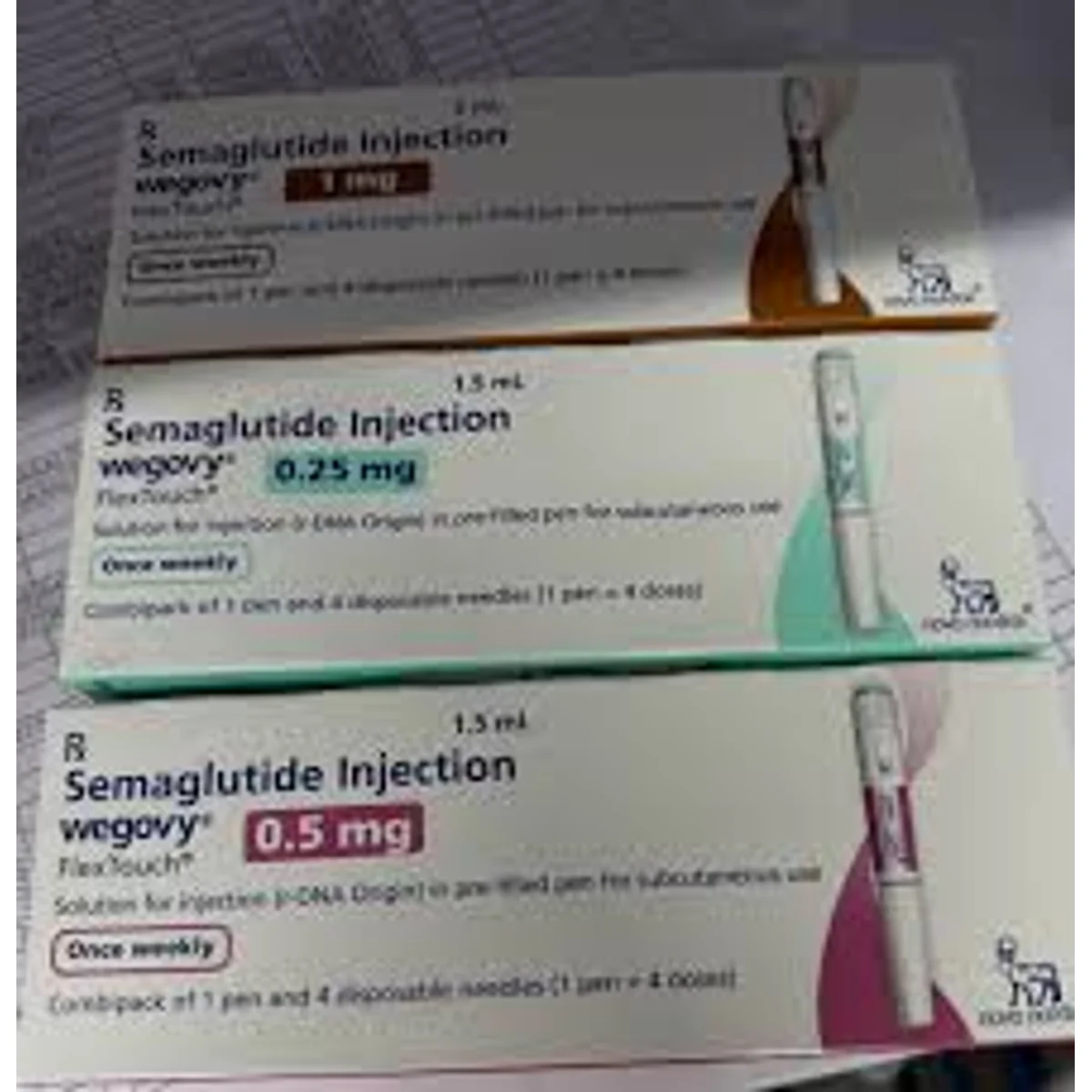
Peptides are short chains of amino acids (typically fewer than 50) linked by peptide bonds, ranging from endogenous molecules like the tripeptide GHK-Cu to synthetic analogs engineered for receptor selectivity or extended half-life. The evidence behind specific peptides varies dramatically: semaglutide is FDA-approved and supported by Phase III trials with sample sizes in the thousands, while compounds like BPC-157 remain research chemicals with little or no human trial data. Evaluating any peptide claim requires matching it to a standard evidence hierarchy, where in vitro and rodent findings sit far below replicated randomized controlled trials.
STACK
Peptide Stacks for Body Recomposition: How Researchers Combine GH-Axis, GLP-1, and Mitochondrial Compounds (2026 Research Guide)
For researchers building a GH-axis protocol with the strongest available human trial data, MK-677 (Ibutamoren) is the most defensible starting point - it's one of the only research chemicals in this class with completed double-blind, placebo-controlled human trials, oral administration, and documented GH/IGF-1 elevation. The insulin sensitivity impairment documented in those same trials, though, makes it a poor fit for any protocol layered with metabolic agents unless that interaction is explicitly part of the research question.
VENDOR-EVALUATION
Evaluating Peptide Vendors: Red Flags, Quality Signals, and COA Literacy (2026 Guide)
Evaluating peptide vendors requires distinguishing between FDA-approved prescription drugs (like semaglutide and tirzepatide, manufactured under pharmaceutical GMP standards and dispensed through licensed pharmacies) and research chemicals, which operate outside that regulatory framework and carry no statutory obligation to verify purity, peptide sequence, or endotoxin levels. Independent testing of grey-market peptides has documented sub-90% purity in products labeled 99%+, incorrect sequences confirmed by mass spectrometry, and bacterial contamination in injectable products. A credible Certificate of Analysis should include HPLC purity data, mass spectrometry identity confirmation, and third-party (not in-house) laboratory verification.
STACK
The GH-Axis Peptide Stack: CJC-1295, Ipamorelin, Sermorelin, and IGF-1 LR3 in Research Context (2026 Guide)
For researchers building a GH-axis peptide stack, CJC-1295 paired with Ipamorelin is the most evidence-supported GHRH+GHRP combination in the literature. CJC-1295 takes the top spot because of its published Phase II pharmacokinetic data (n=64), characterised mechanism at the GHRH receptor, and DAC modification that allows less frequent dosing. All compounds discussed here are research chemicals not approved for human use - this is a research-context summary only.