
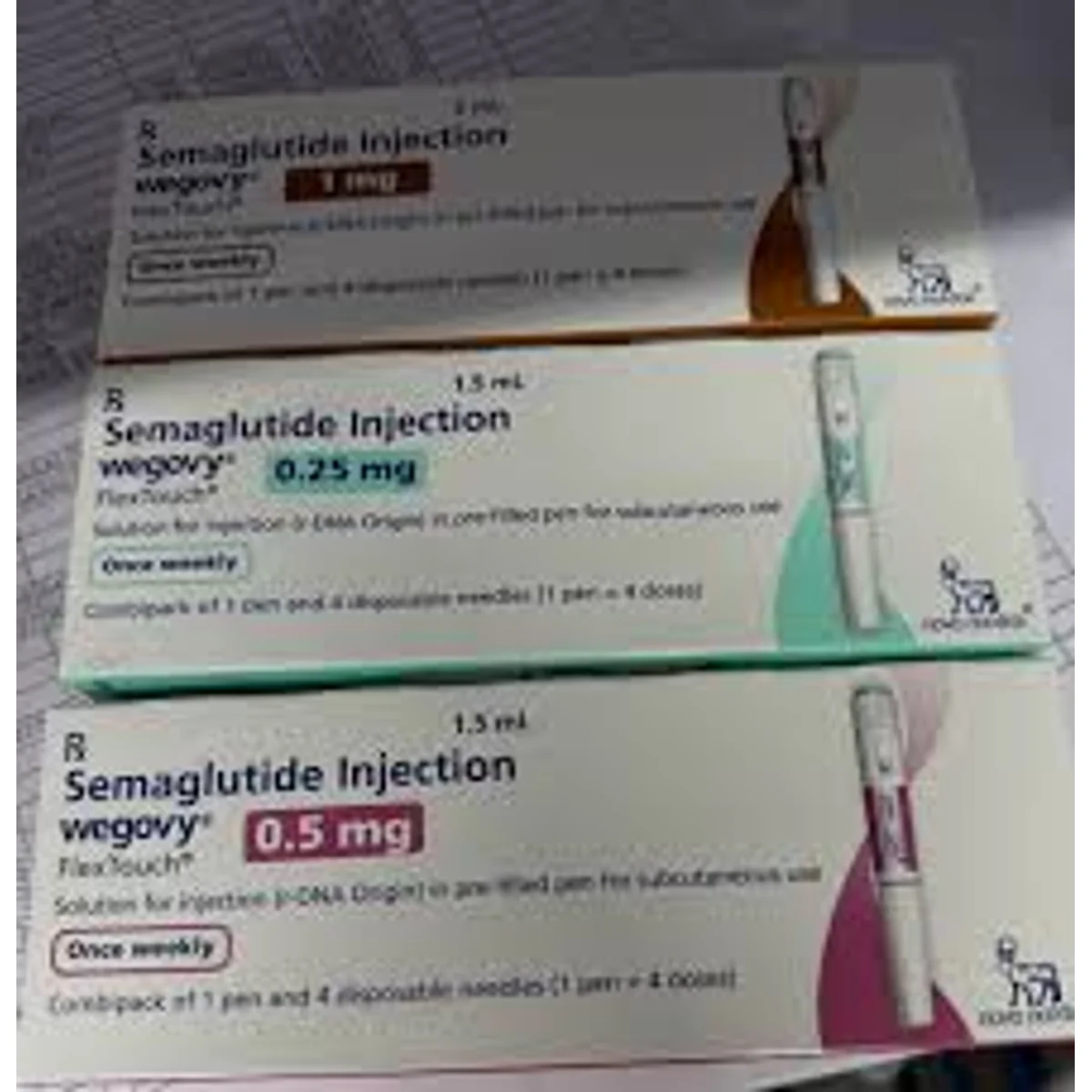
Prescription
Semaglutide (Ozempic / Wegovy)
FDA-approved GLP-1 agonist for glycemic control and weight management
“The most robustly evidenced GLP-1 agonist for weight management, backed by Phase III RCTs and FDA approval — but only legally accessible via prescription.”
Last updated: April 24, 2026
Score Breakdown
Evidence
Purity
Cost Efficiency
Safety Profile
Pros & Cons
Pros
- Among the most robustly evidenced weight management interventions ever studied — multiple large Phase III RCTs with consistent replication
- Dual regulatory approval for both glycemic control (Ozempic) and chronic weight management (Wegovy), with expanding indications (cardiovascular risk reduction)
- Once-weekly subcutaneous dosing improves adherence versus daily injectables; oral formulation (Rybelsus) available for needle-averse patients
- Cardiovascular mortality benefit demonstrated in SELECT trial (2023), distinguishing it from purely cosmetic weight-loss interventions
Cons
- Prohibitively expensive without insurance coverage — list price often exceeds $1,300/month; insurance coverage inconsistent, particularly for weight management indication
- Significant rebound weight regain reported in research upon discontinuation, suggesting potential need for long-term or indefinite use
- GI side effect burden (nausea, vomiting, diarrhea) is high during titration and causes meaningful dropout rates in trials; black box warning for medullary thyroid carcinoma based on rodent studies
Best For
- Adults with BMI ≥30 (or ≥27 with comorbidities) seeking medically supervised weight management through a licensed telehealth or in-person prescriber
- Adults with type 2 diabetes requiring improved glycemic control alongside cardiometabolic risk reduction
- Individuals with established cardiovascular disease and overweight/obesity seeking evidence-based risk reduction beyond lipid-lowering therapy
Avoid If
- Personal or family history of medullary thyroid carcinoma or Multiple Endocrine Neoplasia syndrome type 2 (MEN2) — contraindicated per prescribing information
- History of pancreatitis, severe gastrointestinal disease, or active eating disorders — heightened risk and clinical complexity require specialist oversight
Full Review
Semaglutide is a synthetic analog of human glucagon-like peptide-1 (GLP-1), a naturally occurring incretin hormone secreted by intestinal L-cells in response to food intake. Structurally, it shares approximately 94% sequence homology with endogenous GLP-1 but incorporates a C18 fatty diacid chain attached via a linker to lysine at position 26, which enables albumin binding and dramatically extends its half-life to approximately 165–168 hours — enabling once-weekly subcutaneous dosing. It belongs to the GLP-1 receptor agonist class alongside liraglutide (Victoza/Saxenda), dulaglutide (Trulicity), and the dual GIP/GLP-1 agonist tirzepatide. Semaglutide also exists in an oral formulation (Rybelsus), which uses the absorption enhancer SNAC (sodium N-[8-(2-hydroxybenzoyl) amino] caprylate) to facilitate uptake across the gastric mucosa.
Semaglutide's mechanism of action is multifactorial. At the pancreatic level, it stimulates glucose-dependent insulin secretion and suppresses glucagon release, improving glycemic control without causing hypoglycemia in isolation. At the central nervous system level, research suggests GLP-1 receptors in the hypothalamus and brainstem — particularly the arcuate nucleus and area postrema — mediate reductions in appetite and food-reward signaling. Animal models and human neuroimaging studies indicate semaglutide attenuates the reinforcing properties of palatable foods, which may partially explain the appetite suppression reported beyond simple gastric emptying delay. Gastric motility is also slowed, contributing to earlier satiety. Cardiovascular benefits observed in the SELECT trial (2023) — a reduction in major adverse cardiovascular events (MACE) in adults with obesity and established cardiovascular disease — suggest additional vascular and inflammatory mechanisms that are still under active investigation.
The evidence base for semaglutide is among the strongest of any compound covered on this platform. The STEP 1 trial (n=1,961, 2021, New England Journal of Medicine) demonstrated a mean body weight reduction of approximately 14.9% over 68 weeks in adults with obesity receiving 2.4 mg subcutaneous semaglutide weekly, versus 2.4% in the placebo group. The SUSTAIN trial series established glycemic efficacy across multiple comparators in type 2 diabetes populations. The SELECT trial (n=17,604, 2023) reported a 20% relative risk reduction in MACE in adults with overweight/obesity and cardiovascular disease, without diabetes as an inclusion criterion — a landmark finding that significantly expanded the clinical rationale for semaglutide beyond metabolic endpoints. Pediatric data are emerging: the FDA approved Wegovy for adolescents aged 12 and older in 2023 based on the STEP TEENS trial. Evidence for cognitive and addiction-related applications (alcohol use disorder, smoking cessation) is preliminary and largely observational or early-phase at time of writing; no regulatory approvals exist for these indications.
Dosing reported in research contexts follows a structured escalation protocol designed to minimize gastrointestinal side effects. For the weight management indication (Wegovy), published trials used a 16-week escalation: 0.25 mg/week for 4 weeks, then 0.5 mg/week, then 1.0 mg/week, then 1.7 mg/week, reaching the maintenance dose of 2.4 mg/week. For the diabetes indication (Ozempic), the escalation ceiling is 1.0 mg/week (or 2.0 mg in some markets). Oral semaglutide (Rybelsus) is studied at 3 mg, 7 mg, and 14 mg daily doses. These ranges are reported here for educational and research context only — they are not dosing recommendations. Semaglutide is a prescription drug; any use should be supervised by a licensed healthcare provider who can assess contraindications, manage titration, and monitor for adverse events. Compounded semaglutide from non-pharmacy sources is specifically addressed under sourcing considerations below.
Semaglutide is FDA-approved (US), EMA-approved (EU), MHRA-approved (UK), and TGA-approved (Australia) for specific indications accessed via prescription. It is not a research chemical and should not be sourced through peptide research chemical vendors. During a period of FDA-declared shortage (2022–2024), compounded semaglutide was legally permitted from 503A and 503B pharmacies in the US; the FDA began removing semaglutide from the shortage list in 2026, which significantly restricts the legality of compounded versions going forward. Telehealth platforms such as Ro, Hims/Hers, and Mochi Health have offered legitimate prescription pathways; the regulatory landscape for compounded versions is actively shifting and patients should consult current FDA guidance. Sourcing semaglutide from unregulated peptide vendors — where it may be mislabeled, underdosed, or contaminated — is strongly discouraged and carries meaningful health and legal risk. This content is for educational purposes only and does not constitute medical advice.
Details
Reviews
No reviews yet. Be the first to share your experience.
Featured In
CATEGORY-OVERVIEW
Peptides Studied for Fat Loss: GLP-1 Agonists, Mitochondrial Approaches, and Beyond (2026 Research Overview)

Prescription tirzepatide (Mounjaro / Zepbound) is the strongest-evidenced compound in this category by a significant margin. Phase III RCT data from SURMOUNT-1 shows up to ~21% mean body weight reduction at the 15mg dose, a signal no research chemical or investigational agent has come close to replicating in controlled human trials at scale. It's also legally accessible via prescription in all major markets, which puts it in a completely different category from the unregulated research chemicals covered elsewhere in this guide.
COMPARISON
Tirzepatide vs Semaglutide: What the Clinical Studies Actually Show (2024–2026 Evidence Review)
For clinically validated weight reduction with legitimate prescription access, Prescription Tirzepatide (Mounjaro / Zepbound) carries the strongest efficacy signal of any approved pharmacological agent right now - SURMOUNT-1 reported a mean body weight loss of roughly 21% at the 15mg dose, the highest published figure from any Phase III RCT. That said, Prescription Semaglutide (Ozempic / Wegovy) has something tirzepatide doesn't yet: a demonstrated cardiovascular mortality benefit from the SELECT trial, which puts it in a different clinical category entirely for patients where heart risk is the primary concern.
LEGAL-LANDSCAPE
Research Peptide Legal Status: US, UK, EU, and Australia Compared (2026 Guide)
Peptide legal status varies sharply across jurisdictions because no single international framework governs research peptides, leaving classification to national regimes including the US FDA (FD&C Act), UK MHRA (Medicines Act 1968), EU EMA, and Australia's TGA. Semaglutide is FDA-approved and available by prescription across all four jurisdictions, while compounds like BPC-157, TB-500, and Melanotan II are flagged by the MHRA as unlicensed medicines whose supply is a criminal offense in the UK and are scheduled or restricted in Australia, despite occupying a fragile gray-zone "research chemical" status in the US.
HOW TO
Peptides 101: A Beginner's Guide to the Research Landscape (2026 Edition)
Peptides are short chains of amino acids (typically fewer than 50) linked by peptide bonds, ranging from endogenous molecules like the tripeptide GHK-Cu to synthetic analogs engineered for receptor selectivity or extended half-life. The evidence behind specific peptides varies dramatically: semaglutide is FDA-approved and supported by Phase III trials with sample sizes in the thousands, while compounds like BPC-157 remain research chemicals with little or no human trial data. Evaluating any peptide claim requires matching it to a standard evidence hierarchy, where in vitro and rodent findings sit far below replicated randomized controlled trials.
COMPARISON
GLP-1 Agonists Compared: Semaglutide vs Tirzepatide vs Retatrutide (2026 Research Review)
Semaglutide, tirzepatide, and retatrutide are incretin-pathway agonists with sharply different regulatory status: semaglutide (Ozempic/Wegovy) and tirzepatide (Mounjaro/Zepbound) are FDA-approved prescription drugs for type 2 diabetes and chronic weight management, while retatrutide remains an investigational Eli Lilly compound in Phase 3 trials with no approved indication anywhere. In head-to-head trial data, tirzepatide produced roughly 21% mean body-weight reduction in SURMOUNT-1, exceeding semaglutide's ~15% in STEP-1, and retatrutide's Phase 2 program reported ~24% reduction at 48 weeks.
PEPTIDE-PROFILE
Liraglutide (Saxenda / Victoza): What the Research Shows, and How It Compares to Semaglutide
Liraglutide is an approved, daily-injected GLP-1 agonist with a deep evidence base: roughly 8% mean weight loss at 56 weeks in SCALE and a significant cardiovascular-event reduction in LEADER. Head-to-head trials show semaglutide 2.4 mg more than doubles that weight effect, so liraglutide now competes on titration control and future generic cost.