
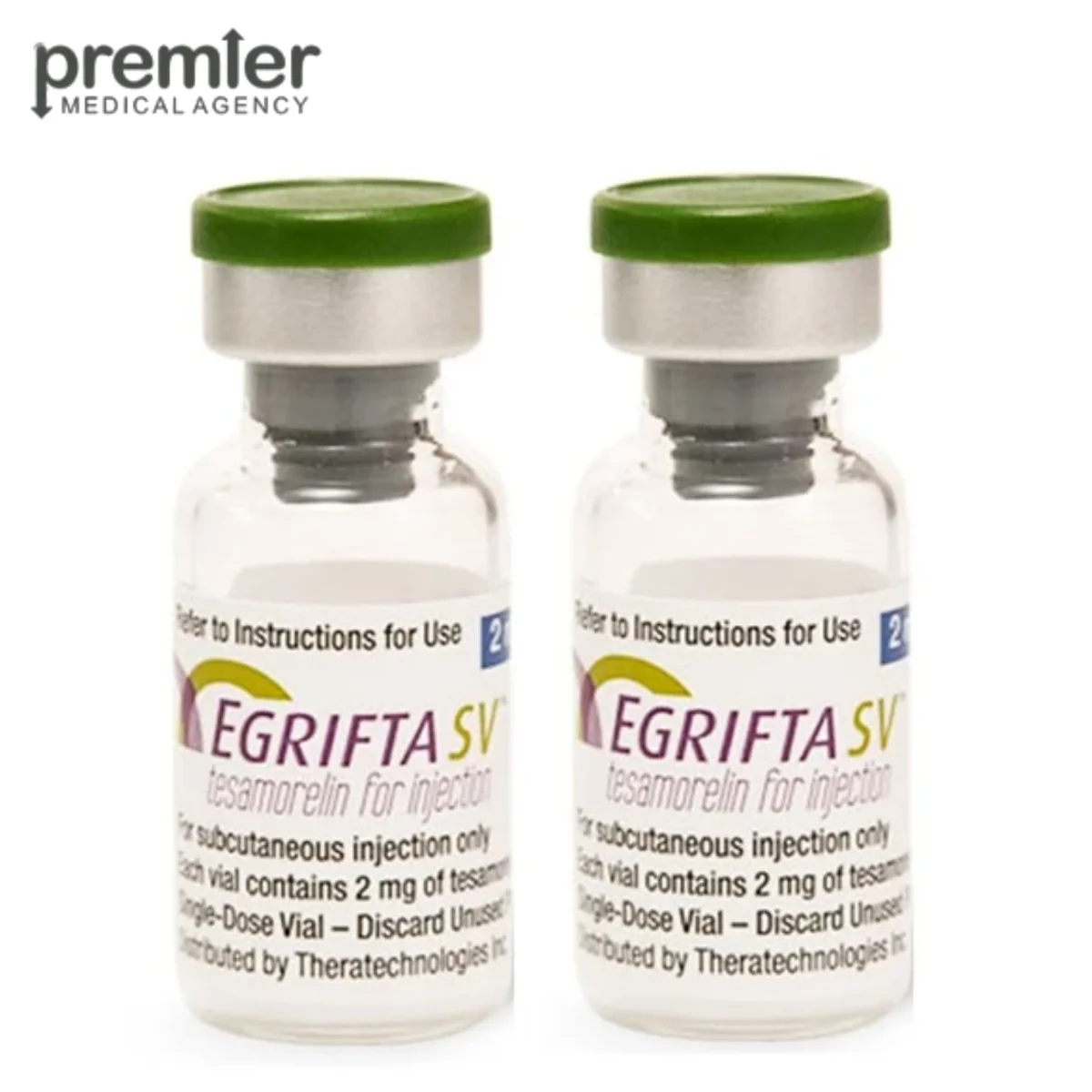
Prescription
Tesamorelin (Egrifta)
FDA-approved GHRH analog for visceral fat reduction
“The only GHRH analog with Phase III RCT data and an FDA approval — a genuinely unusual position in the peptide landscape.”
Last updated: April 23, 2026
Score Breakdown
Evidence
Purity
Cost Efficiency
Safety Profile
Pros & Cons
Pros
- Only GHRH analog with FDA approval and Phase III RCT data in human subjects
- Preserves physiological GH feedback loop, avoiding continuous IGF-1 elevation seen with exogenous GH
- Measurable, CT-verified visceral fat reduction in approved trial population
- Pharmaceutical-grade manufacturing with full regulatory oversight when sourced through prescription pathway
Cons
- Extremely high cost ($1,200–$3,500+ per month); insurance coverage typically limited to HIV-lipodystrophy indication
- VAT reductions largely reverse upon discontinuation — not a permanent intervention based on available research
- Narrow approved indication; off-label use lacks equivalent regulatory backing and evidence depth
Best For
- HIV-positive adults with confirmed lipodystrophy seeking FDA-approved pharmacological intervention through a licensed prescriber
- Researchers reviewing GHRH-analog pharmacology and the strongest available peptide RCT evidence base
- Clinicians evaluating GH-axis secretagogue options with a prescription pathway and documented safety profile
Avoid If
- Active malignancy or history of pituitary tumor — GH-axis stimulation is contraindicated in these contexts per prescribing information
- Pregnancy or breastfeeding — safety not established; also contraindicated in those with hypersensitivity to tesamorelin or mannitol
Full Review
Tesamorelin is a stabilized synthetic analog of endogenous growth hormone-releasing hormone (GHRH), structurally differentiated from native GHRH(1-44) by the addition of a trans-2-hexenoic acid group at the N-terminus. This modification substantially extends its plasma half-life relative to endogenous GHRH and improves proteolytic resistance. Developed by Theratechnologies and marketed as Egrifta in the United States, it is classified as a GHRH analog — distinct from growth hormone-releasing peptides (GHRPs) and from exogenous recombinant human growth hormone (rhGH). Its approval by the FDA in 2010 for HIV-associated lipodystrophy makes it one of a small number of peptides with a genuine, indication-specific regulatory approval in a major jurisdiction.
The mechanism of action, as characterized in published pharmacology, involves tesamorelin binding to GHRH receptors on pituitary somatotroph cells, stimulating synthesis and pulsatile secretion of endogenous GH. This maintains the physiological feedback loop: elevated GH triggers IGF-1 production, and rising IGF-1 feeds back to suppress further GH release — a key distinction from exogenous rhGH administration, which bypasses this regulation entirely. Research suggests this preserved feedback architecture may reduce the risk of sustained supraphysiologic IGF-1 elevation compared to direct GH administration. GH and IGF-1 in turn modulate lipolysis, particularly in visceral adipose tissue, which is proposed to explain the drug's primary clinical effect.
The evidence base for tesamorelin is unusually strong by peptide research standards. The FDA approval rests on two Phase III randomized controlled trials (Studies TH9507-CT-204 and TH9507-CT-205) involving over 800 HIV-positive adults with lipodystrophy. Both trials demonstrated statistically significant reductions in visceral adipose tissue (VAT) as measured by CT scan at 26 weeks — one trial reporting approximately 15-18% reductions in VAT relative to placebo. Secondary endpoints showed improvements in trunk fat, waist circumference, and lipid profiles in some analyses. Notably, VAT returned toward baseline in those who discontinued treatment, indicating effects are not permanent. Research in non-HIV populations is more limited: published studies in healthy older adults and individuals with abdominal obesity suggest VAT-reducing and cognitive effects (including a notable study of ~152 adults aged 60+ examining effects on cognitive function in tesamorelin-treated vs. placebo groups), but these do not carry the same regulatory weight as the lipodystrophy trial data. All outcome claims should be understood in the context of the study populations in which they were observed.
Dosing in published clinical research has consistently used 2 mg administered subcutaneously once daily. This is the dose studied in Phase III trials and reflected in the approved Egrifta prescribing information. Some investigator-initiated studies have explored lower ranges, but 2 mg/day subcutaneous injection represents the primary research-context dose. This information is reported for educational and research-comprehension purposes only — it is not a dosing recommendation, and tesamorelin outside of a legitimate prescription context is not sanctioned by regulatory authorities. Reconstitution is required; the lyophilized powder must be mixed with the provided diluent, and reconstituted solution should be refrigerated and used within the manufacturer's specified window.
Legally, tesamorelin occupies a different position than most peptides discussed in research-chemical communities. In the United States, Egrifta is FDA-approved and available by prescription for the specific indication of HIV-associated lipodystrophy — it is not a research chemical in that context. However, off-label prescribing (e.g., for general visceral obesity reduction or anti-aging purposes in non-HIV patients) exists in clinical practice, though it falls outside the approved label. Sourcing tesamorelin outside of a licensed prescriber-patient relationship — for example, through unregulated peptide vendors — raises significant legal and safety concerns and is strongly discouraged. The regulatory status in the UK (MHRA) and EU (EMA) differs from the US: Egrifta does not hold equivalent marketing authorization in those regions as of the most recent available information, making its status more complex for researchers and clinicians outside North America. This content is for educational purposes only and does not constitute medical advice.
Details
Reviews
No reviews yet. Be the first to share your experience.
Featured In
PEPTIDE-PROFILE
MK-677 (Ibutamoren): What the Research Shows on the Oral Growth Hormone Secretagogue
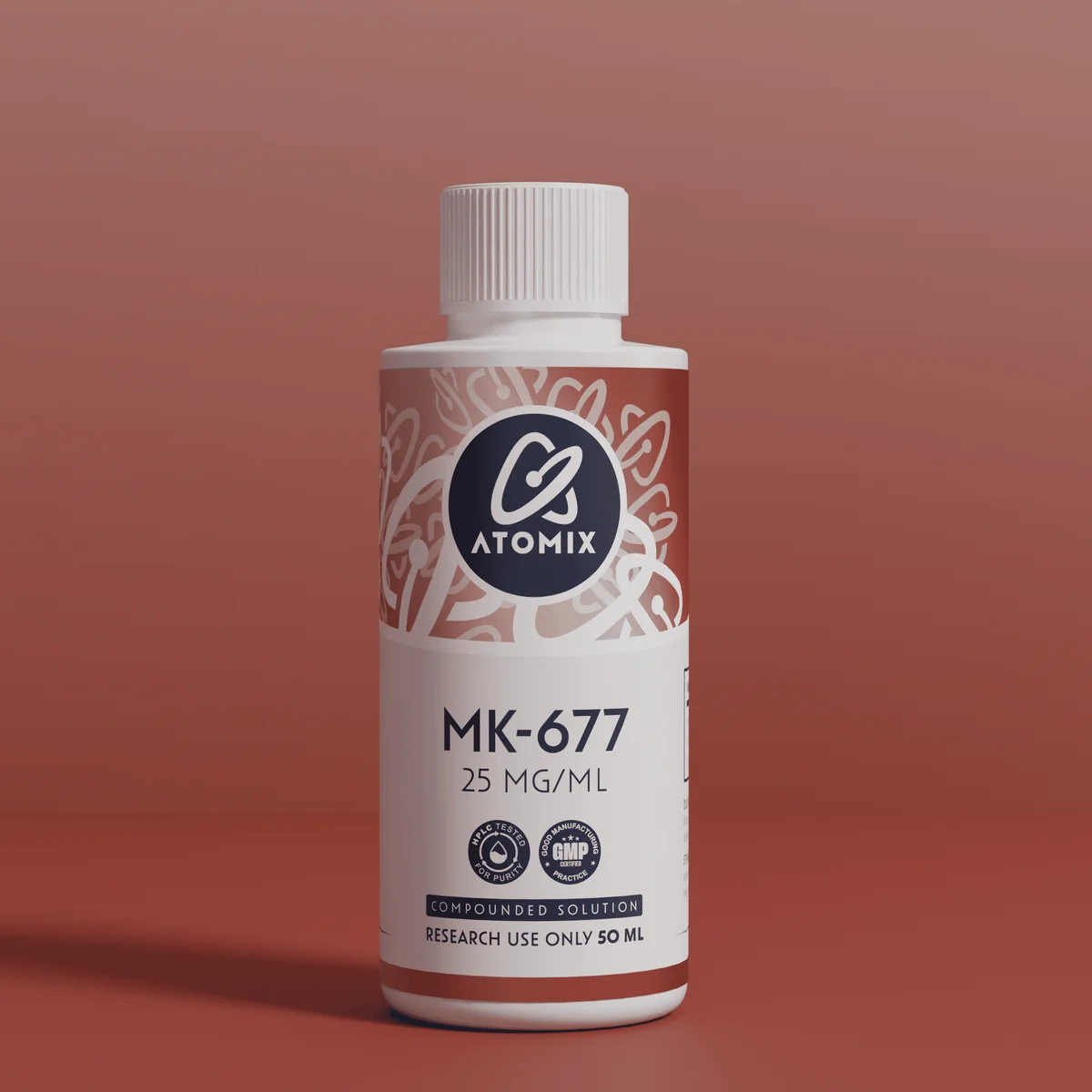
MK-677 (Ibutamoren) is the most comprehensively studied oral GH secretagogue in the research chemical space, with multiple completed double-blind, placebo-controlled human trials documenting sustained GH and IGF-1 elevation. Its oral bioavailability and documented sleep-architecture effects make it mechanistically interesting, but human trial evidence of insulin sensitivity impairment means any research application requires careful contextual scrutiny.
PEPTIDE-PROFILE
Tesamorelin (Egrifta): The Only FDA-Approved GHRH Analog Explained
Tesamorelin is a synthetic 44-amino-acid analog of growth hormone-releasing hormone (GHRH), modified with a trans-3-hexenoic acid group at the N-terminus to resist DPP-IV degradation. Developed by Theratechnologies and approved by the FDA in November 2010 under the brand name Egrifta, it is the only GHRH analog to complete Phase III randomized controlled trials and achieve U.S. regulatory approval. Its sole approved indication is the reduction of excess abdominal fat in HIV-infected adults with lipodystrophy, with mechanism research indicating pulsatile GH release and IGF-1-mediated visceral fat lipolysis.