
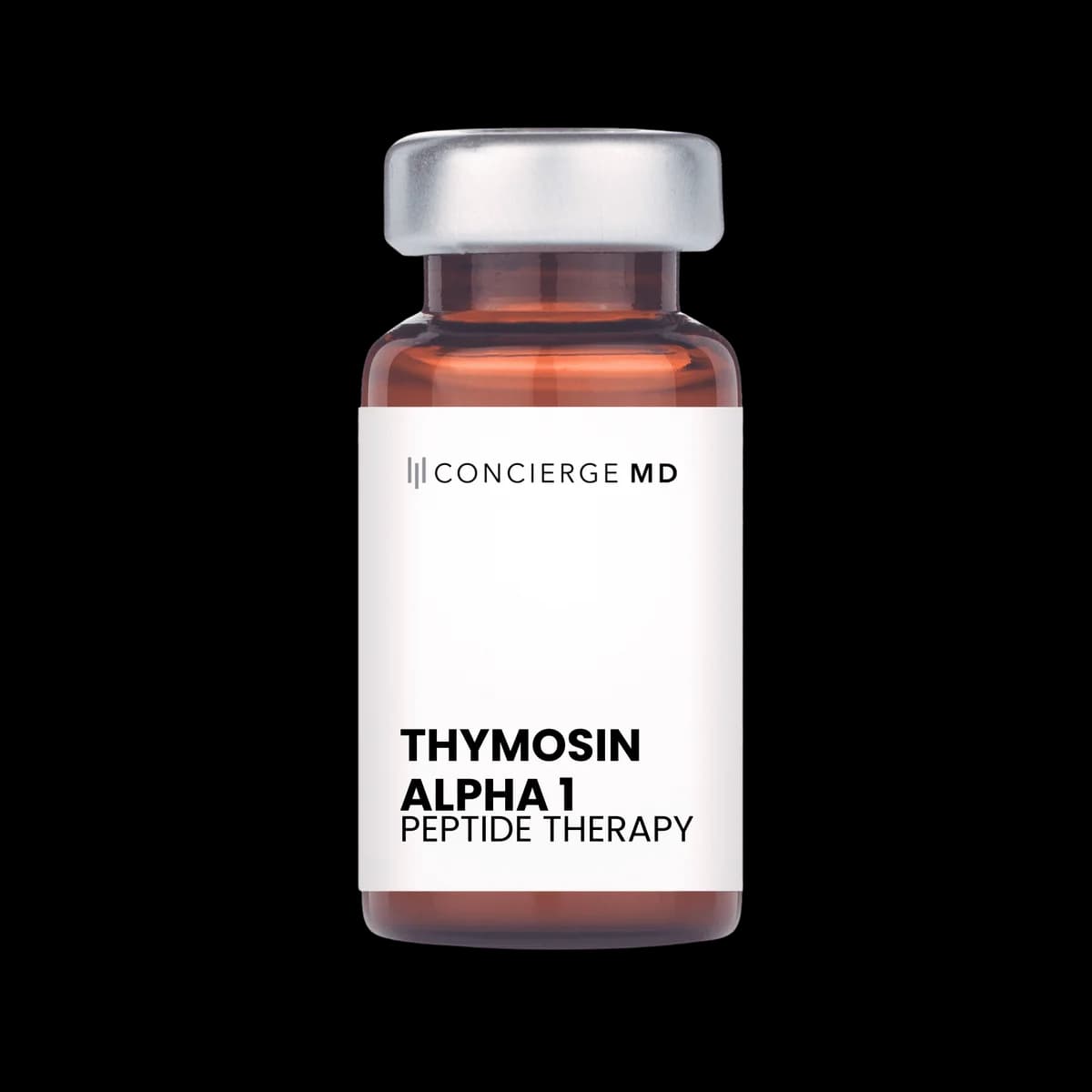
Research Peptide
Thymosin Alpha-1
Thymic immunomodulatory peptide with broad research interest
“One of the most evidence-supported immunomodulatory peptides in the research-chemical space, with a legitimate pharmaceutical history.”
Last updated: April 23, 2026
Score Breakdown
Evidence
Purity
Cost Efficiency
Safety Profile
Pros & Cons
Pros
- Comparatively robust human RCT evidence base for a peptide available as a research chemical
- Well-characterized mechanism of action supported by molecular and in vivo research
- Long safety track record in pharmaceutical use across multiple countries since the 1980s
- Generally mild and transient reported side-effect profile in clinical literature
Cons
- Not FDA, MHRA, or TGA approved — research-chemical sourcing carries inherent quality and legal risk
- Requires sterile subcutaneous injection and cold-chain storage, raising practical barriers
- Most robust evidence is in diseased populations (sepsis, hepatitis); extrapolation to healthy-user longevity contexts is speculative
Best For
- Researchers and biohackers focused on immune system modulation and resilience
- Longevity-oriented individuals interested in thymic function and immune aging research
- Those tracking literature on sepsis recovery and chronic viral infection adjunct therapies
Avoid If
- Currently undergoing immunosuppressive therapy or post-organ-transplant (potential immune stimulation may conflict with treatment goals)
- Unable or unwilling to source from vendors providing independently verified, current COAs with HPLC and MS data
Full Review
Thymosin Alpha-1 (Tα1), also referred to scientifically as thymalfasin in its pharmaceutical form, is a 28-amino-acid peptide naturally produced by thymic epithelial cells. It was first isolated and characterized by Allan Goldstein and colleagues at George Washington University in the mid-1970s as part of a broader thymosin fraction (Fraction 5) research program. Unlike many peptides in the research-chemical space that have sparse or exclusively animal-model evidence, Tα1 has accumulated a meaningful body of human clinical trial data, primarily in the context of chronic hepatitis B and C, sepsis, and certain cancers. Synthetic versions sold as research chemicals are structurally identical to the endogenous peptide but are not pharmaceutical-grade preparations and carry distinct legal and safety considerations. This content is for educational purposes only and does not constitute medical advice.
Mechanistically, research suggests Tα1 operates primarily through Toll-like receptor (TLR) signaling pathways — specifically TLR2 and TLR9 — which are central to pattern recognition in innate immunity. Published studies indicate Tα1 may enhance dendritic cell maturation, augment T-helper cell (Th1) responses, promote natural killer (NK) cell activity, and upregulate cytokines including interleukin-2 (IL-2) and interferon-gamma (IFN-γ). Additionally, research has implicated Tα1 in modulating regulatory T-cell (Treg) populations and suppressing excessive inflammatory signaling in certain disease contexts. Some mechanistic research also suggests interaction with autophagy pathways, which has drawn interest from longevity researchers. The overall picture from mechanistic studies is of a pleiotropic immunomodulator rather than a simple immunostimulant — it appears to recalibrate rather than uniformly amplify immune output.
The evidence base for Tα1 is broader than most peptides in this space, though it remains heterogeneous in quality. On the human-trial side, a notable randomized controlled trial published in Critical Care Medicine (2013, n=361) found that Tα1 administration in severe sepsis patients was associated with reduced 28-day mortality compared to placebo in a Chinese patient cohort. Multiple human trials in chronic hepatitis B (including a meta-analysis covering several thousand patients) have reported improved virological response rates when Tα1 was combined with antiviral therapy, though effect sizes and study designs vary considerably. In oncology, preliminary human trials suggest potential adjunctive benefit in non-small cell lung cancer and hepatocellular carcinoma, largely attributed to restoration of immune competence in immunosuppressed patients. Animal studies have extended these findings to models of influenza, HIV-adjacent immune deficiency, and autoimmune conditions. Anecdotal reports from the biohacker and longevity community — which should be interpreted with caution given the absence of controls — frequently describe subjective improvements in recovery from illness and general sense of immune resilience, though such reports cannot be used to draw causal conclusions.
In published research contexts, Tα1 has been studied across a range of doses. The pharmaceutical preparation Zadaxin is typically dosed at 1.6 mg administered subcutaneously twice weekly, a protocol that appears across the majority of the clinical hepatitis and sepsis literature. Some research protocols have used daily administration at 1.6 mg during acute infectious episodes. Doses as low as 900 mcg have appeared in preliminary trials. Cycle lengths in clinical studies range from 6 months (hepatitis protocols) to shorter acute-care windows. These figures are reported strictly as observed ranges from published research contexts — they are not dosing recommendations, and no inference should be drawn about appropriate use in any individual. Research-chemical preparations require reconstitution with bacteriostatic water and subcutaneous administration, with all the attendant sterility and accuracy considerations that implies.
Regarding legal status: Tα1 (as thymalfasin/Zadaxin) holds regulatory approval in approximately 35 countries including China, Italy, Singapore, and the Philippines for indications including chronic hepatitis B and as an adjunct in certain cancer therapies. It is not FDA-approved in the United States, not MHRA-approved in the United Kingdom, and not TGA-approved in Australia, meaning that outside of approved jurisdictions, it exists in a research-chemical gray zone. In the US, it is not DEA-scheduled and is not explicitly banned, placing it in the unregulated research-chemical category. Sourcing considerations are significant: credible vendors should provide a full Certificate of Analysis (COA) from an independent third-party laboratory confirming amino acid sequence, HPLC purity (ideally >98%), mass spectrometry confirmation, and absence of endotoxins. Lyophilized powder should be stored frozen; once reconstituted with bacteriostatic water, refrigeration is required and stability windows are typically cited at 28-30 days. Any vendor unable to produce a current, independently verified COA should be treated as a significant red flag.
Details
Reviews
No reviews yet. Be the first to share your experience.
Featured In
STACK
The Longevity Stack: How Epithalon, MOTS-c, and Thymosin Alpha-1 Are Studied Together
The longevity peptide stack pairing Epithalon, MOTS-c, and Thymosin Alpha-1 is a research-only combination targeting three distinct hallmarks of aging: telomere attrition, mitochondrial dysfunction, and immunosenescence, respectively. None of the three compounds carry FDA, MHRA, or TGA approval for human administration, and the evidence base is highly uneven—Thymosin Alpha-1 has decades of clinical RCT data, MOTS-c has solid mechanistic and animal research with emerging human studies, and Epithalon's literature, though substantial in volume, originates largely from a single Russian research group (the Khavinson laboratory) with limited independent Western replication.
PEPTIDE-PROFILE
Thymosin Alpha-1: Immune-Modulator Research Summary (2024 Evidence Review)
Thymosin Alpha-1 is a 28-amino-acid immunomodulatory peptide derived from prothymosin alpha, first isolated in 1977 by Allan Goldstein at George Washington University and marketed pharmaceutically as Zadaxin in parts of Asia and Eastern Europe. Research suggests it acts as an endogenous TLR2 and TLR9 ligand, promoting Th1 differentiation and increasing IFN-gamma, IL-2, and NK cell activity. Multiple randomized controlled trials support its use in chronic hepatitis B, hepatitis C, sepsis, and cancer-adjuvant contexts, but it remains unapproved in the US, UK, EU, and Australia, where it is sold under research-chemical status.