
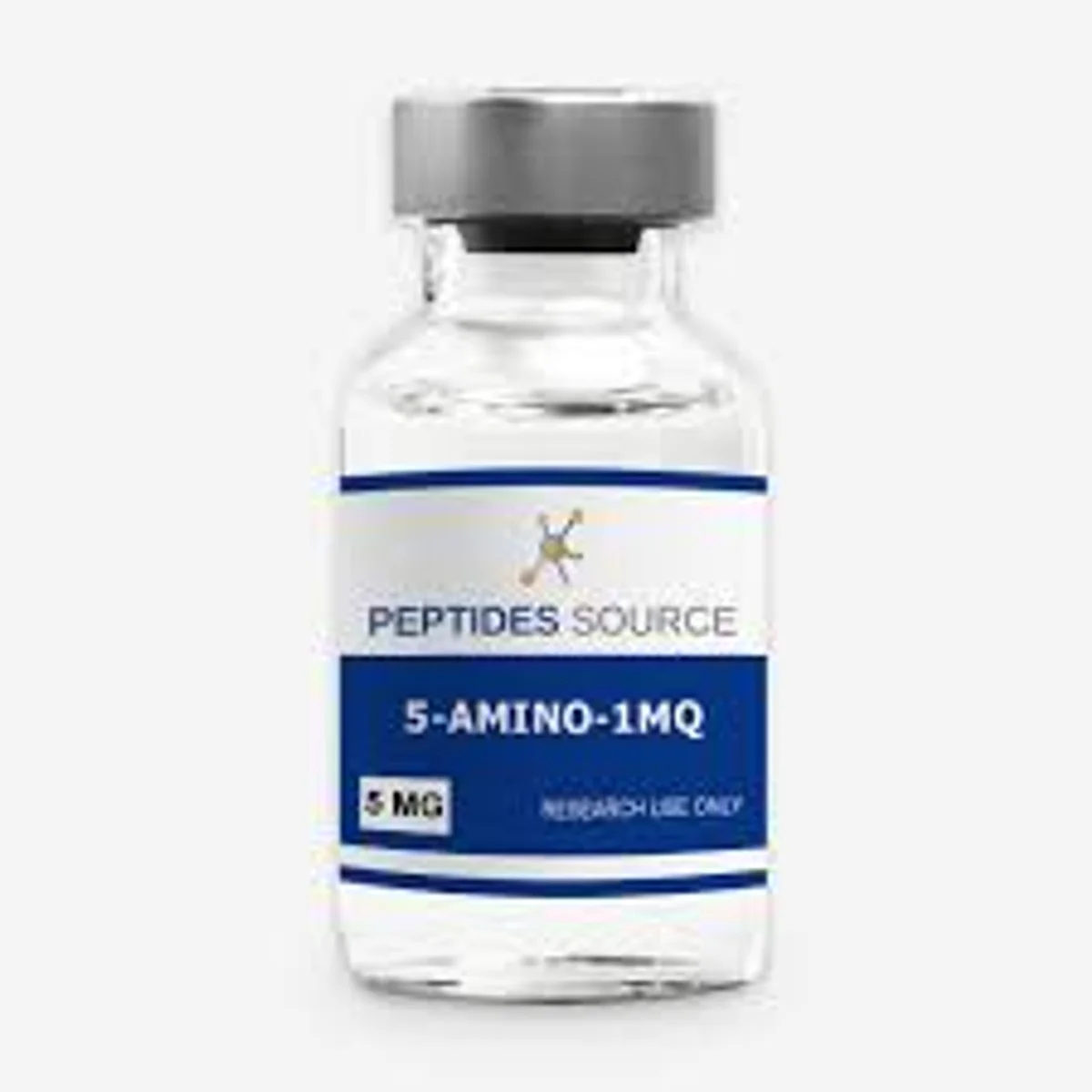
Research Peptide
5-Amino-1MQ
Small-molecule NNMT inhibitor under metabolic investigation
“A selective NNMT inhibitor studied in animal models for its potential influence on fat metabolism and NAD+ pathway dynamics.”
Last updated: April 27, 2026
Score Breakdown
Evidence
Purity
Cost Efficiency
Safety Profile
Pros & Cons
Pros
- Well-characterized mechanism of action at the enzymatic level — NNMT inhibition is a biologically plausible metabolic target
- Oral delivery route eliminates injection-related risks and compliance barriers present with many research peptides
- Published peer-reviewed animal study (Nature Communications 2019) provides a credible mechanistic anchor, distinguishing it from purely anecdotal compounds
- Potential NAD+ pathway interaction makes it of interest to researchers studying aging biology and mitochondrial function
Cons
- No published controlled human clinical trials — all human-context data is anecdotal and unverified
- Long-term safety profile is entirely unknown; NNMT plays roles in multiple tissue types beyond adipose, and systemic inhibition consequences are not well characterized
- Frequently miscategorized as a peptide when it is technically a small-molecule quinolinium compound — vendor labeling inconsistencies create sourcing confusion
Best For
- Preclinical researchers studying NNMT biology, adipogenesis, or NAD+ metabolism in cell or animal models
- Biohackers with high risk tolerance specifically investigating metabolic enzyme inhibition pathways who have reviewed the primary literature
- Longevity researchers monitoring emerging compounds in the NAD+/methylation axis with interest in early-stage metabolic targets
Avoid If
- Seeking compounds with established human safety and efficacy data — the evidence base here is insufficient for confident human-use assessment
- Currently taking methylation-cycle-sensitive medications or supplements (e.g., high-dose methionine, SAM-e, or MAO inhibitors) where NNMT pathway interference could have unpredictable interactions
Full Review
5-Amino-1MQ (full chemical name: 5-amino-1-methylquinolinium) is a synthetic small molecule, not a peptide in the classical sense — it lacks an amino acid chain structure — but is frequently categorized alongside research peptides due to overlapping vendor ecosystems and biohacker interest profiles. It is a cell-permeable, selective inhibitor of nicotinamide N-methyltransferase (NNMT), an enzyme that catalyzes the methylation of nicotinamide using S-adenosylmethionine (SAM) as a methyl donor. NNMT is expressed at high levels in adipose tissue and has been associated with metabolic dysfunction, obesity, and cellular aging in preclinical research.
The proposed mechanism centers on NNMT's role as a regulator of the methionine cycle and NAD+ precursor availability. By inhibiting NNMT, 5-Amino-1MQ is theorized to shift the balance toward higher intracellular NAD+ levels and reduce the availability of SAM for pro-adipogenic epigenetic modifications. Animal studies — including work published in Nature Communications (Neelakantan et al., 2019) using diet-induced obese mouse models — reported reductions in fat mass, body weight, and adipocyte size in treated animals compared to controls, without apparent changes in food intake. The same research group observed increases in energy expenditure markers, suggesting a thermogenic or mitochondrial component to the compound's action. These findings remain in murine models; direct extrapolation to human physiology requires significant caution.
Evidence Summary: The strongest published data come from animal studies (primarily rodent), with the Neelakantan 2019 Nature Communications paper representing the most-cited mechanistic anchor. That study used in vitro cell cultures and diet-induced obese mice, reporting statistically significant reductions in adipocyte differentiation and fat mass. No peer-reviewed, controlled human clinical trials have been published as of this writing. User self-reports circulating in biohacker communities (forums such as Longecity and various Reddit communities) describe anecdotal observations consistent with body recomposition, appetite modulation, and increased energy — but these are uncontrolled, unblinded, and not systematically collected. They should be weighted accordingly: as hypothesis-generating signals only, not evidence of efficacy.
Dosing in Research Contexts: Animal studies have employed a range of dosing protocols; the Neelakantan group used doses scaled to murine body weight that do not translate directly to human equivalents via simple conversion. Some research-community discussions reference oral doses in the range of 50–150 mg per day in human self-experimentation contexts, but this range is derived from extrapolation and anecdote rather than clinical pharmacokinetic data. This information is reported for educational purposes only and does not constitute a dosing recommendation. No established safe or effective dose has been determined for human use. Anyone citing specific human dose protocols is doing so without a clinical evidence base.
Legal Status and Sourcing: 5-Amino-1MQ is not approved for human therapeutic use by the FDA, MHRA, EMA, or TGA. It occupies a research-chemical status in most jurisdictions, meaning it is legal to purchase for in vitro or laboratory research purposes but not intended, labeled, or approved for human consumption. Sourcing considerations should prioritize vendors who provide third-party HPLC and mass spectrometry certificates of analysis (COA) confirming identity and purity, disclose synthesis source, and require age verification. The compound should be stored according to vendor specifications — typically in a cool, dry, dark environment — and handled with appropriate laboratory precautions. This profile is for educational purposes only and does not constitute medical or clinical advice.
Details
Reviews
No reviews yet. Be the first to share your experience.
Featured In
PEPTIDE-PROFILE
SS-31 / Elamipretide: The Mitochondrial-Targeted Peptide Research Summary
SS-31 (Elamipretide) ranks first in this guide because it carries more formal human RCT data than virtually any other research-chemical-status peptide - including registered Phase II and Phase III trials - with a well-characterized cardiolipin-binding mechanism and a consistently favorable safety profile across those trials. That said, the MMPOWER-3 Phase III primary endpoint failure is a material fact any serious researcher needs to weigh: mechanistic elegance doesn't automatically translate to clinical efficacy. This profile examines both sides without flinching.
CATEGORY-OVERVIEW
Peptides Studied for Fat Loss: GLP-1 Agonists, Mitochondrial Approaches, and Beyond (2026 Research Overview)

Prescription tirzepatide (Mounjaro / Zepbound) is the strongest-evidenced compound in this category by a significant margin. Phase III RCT data from SURMOUNT-1 shows up to ~21% mean body weight reduction at the 15mg dose, a signal no research chemical or investigational agent has come close to replicating in controlled human trials at scale. It's also legally accessible via prescription in all major markets, which puts it in a completely different category from the unregulated research chemicals covered elsewhere in this guide.
CATEGORY-OVERVIEW
Longevity and Anti-Aging Peptides: The 2026 Research Landscape — A Complete Category Overview
If you're evaluating longevity peptides by evidence quality rather than marketing copy, SS-31 (Elamipretide) is the most evidentially grounded research-chemical-status compound in this category. It's completed registered Phase II and Phase III human trials, has a well-characterized mitochondrial mechanism, and has a documented safety profile - though its Phase III primary endpoint failure means the clinical translation question is still genuinely open.