Research Peptide
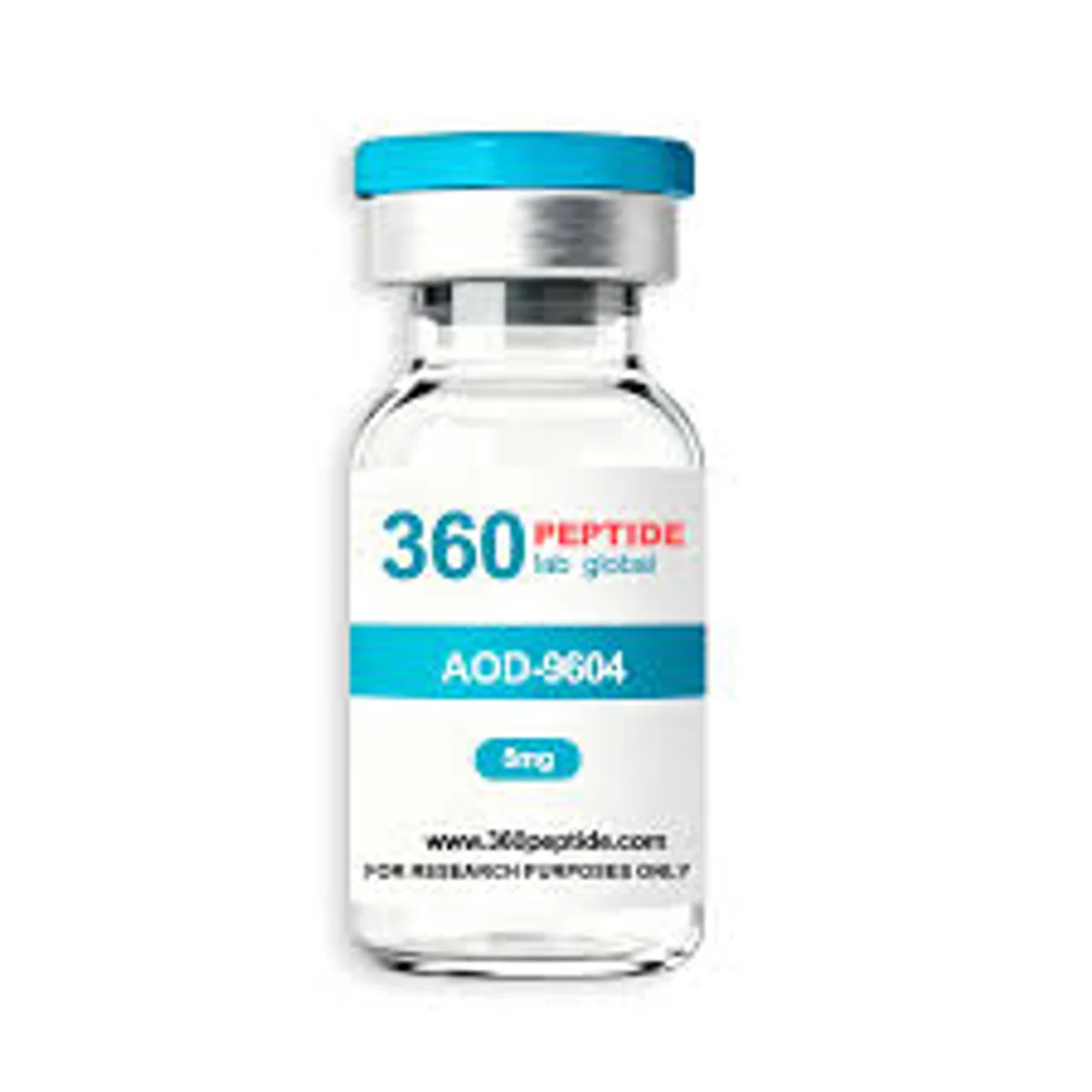
AOD-9604
GH-derived fragment researched for metabolic and fat-regulation effects
“A GH-derived C-terminal fragment that research has explored for lipolytic activity, with a discontinued-but-documented human trial history.”
Last updated: April 27, 2026
Score Breakdown
Evidence
Purity
Cost Efficiency
Safety Profile
Pros & Cons
Pros
- One of the few GH-fragment peptides with actual Phase II human trial data, however limited
- Research suggests separation from IGF-1 stimulation, avoiding a key hGH safety concern
- Relatively low reported side-effect burden in available trial literature
- Comparatively accessible price point per milligram versus full-spectrum secretagogue stacks
Cons
- Phase III development was discontinued, suggesting commercial-grade efficacy thresholds were not met
- Human evidence base is narrow, dated, and not well-represented in current peer-reviewed literature
- TGA Schedule 4 classification in Australia creates meaningful legal complexity for researchers in that jurisdiction
Best For
- Researchers studying GH-fragment lipolytic mechanisms in metabolic models
- Investigative comparison alongside GLP-1 class compounds in metabolic research contexts
- Secondary interest in cartilage/joint research given preliminary in vitro chondrocyte data
Avoid If
- Located in Australia without proper regulatory authorisation — TGA Schedule 4 applies
- Expecting effects comparable to full-length hGH or approved GLP-1 agonists — the evidence base does not support this equivalence
Full Review
AOD-9604 (Anti-Obesity Drug 9604) is a stabilized, synthetic analogue of the C-terminal fragment of human growth hormone, spanning residues 176–191 with a tyrosine group added at the N-terminus to improve stability. It belongs to the broader class of GH-fragment peptides and was originally developed by Metabolic Pharmaceuticals in Australia with the goal of separating the fat-metabolizing activity of growth hormone from its anabolic and mitogenic properties. Unlike full-length hGH, AOD-9604 does not appear to stimulate IGF-1 production or affect insulin sensitivity at the doses studied, which was the central rationale for its development as a potential anti-obesity agent. It is not approved for human use by the FDA, MHRA, EMA, or TGA, and is classified as a research chemical in most jurisdictions.
The proposed mechanism of action centers on beta-3 adrenergic receptor stimulation and direct interaction with hypothalamic receptors governing lipid metabolism. Animal models, particularly rodent studies, suggest AOD-9604 may promote lipolysis (the breakdown of stored fat) and inhibit lipogenesis (new fat formation) through pathways that partially overlap with those of endogenous growth hormone but appear to diverge at the IGF-1 axis. In vitro studies have also explored potential effects on chondrocyte proliferation and cartilage repair, which has generated secondary research interest in recovery and joint health contexts, though the mechanistic data here remains more preliminary.
The most substantive human evidence derives from a series of Phase II clinical trials conducted in the early 2000s under the Metabolic Pharmaceuticals program. One double-blind, placebo-controlled trial (n=300, reported approximately 2001–2004) examined oral AOD-9604 dosing across multiple cohorts and found modest but statistically significant reductions in body fat over 12 weeks compared to placebo; however, the effect sizes were relatively small and did not meet the thresholds required to advance the compound commercially. Phase III results were not published in peer-reviewed literature in a form that would constitute high-confidence evidence. Animal studies — predominantly in obese mice and rats — have consistently demonstrated lipolytic effects, but the translatability to humans remains uncertain. Anecdotal reports from the biohacker and research community describe use for body composition purposes, sometimes stacked with other peptides such as CJC-1295 or ipamorelin, though these reports are entirely self-reported and uncontrolled. All effects described here derive from published research or self-reported user data — not from clinical outcomes in approved therapeutic contexts.
In research contexts, doses studied in human trials ranged from approximately 1 mg/day (oral) to 250–500 mcg/day (subcutaneous injection), with subcutaneous protocols more commonly referenced in community research settings. The oral bioavailability data from the Phase II program was considered reasonable for a peptide, which was part of the commercial rationale. IMPORTANT DISCLAIMER: All dosing figures cited here are reported from published or publicly available research contexts only and do not constitute a recommendation, protocol, or medical advice of any kind. AOD-9604 is not approved for human use, and Peptide Guides does not advocate for its administration to humans.
Regarding legal status: in the United States, AOD-9604 is not scheduled under the DEA Controlled Substances Act and exists in a research-chemical grey zone, legal to purchase for research purposes but not approved for human consumption or sale as a drug or supplement. In Australia, the TGA has classified AOD-9604 as a Schedule 4 prescription-only medicine in some formulations, making its legal status more restrictive than in most other jurisdictions — a notable distinction given its Australian origins. In the UK and EU, it remains an unscheduled research chemical with no approved therapeutic indication. Sourcing considerations are significant: credible vendors should supply certificates of analysis (COAs) from third-party HPLC and mass spectrometry testing confirming identity, purity (>98% is a reasonable benchmark), and the absence of common contaminants including endotoxins. This content is for educational purposes only and does not constitute medical advice.
Details
Reviews
No reviews yet. Be the first to share your experience.