
PEPTIDE-PROFILE
Epithalon (Epitalon): Telomere Bioregulator Research Summary 2026
Soviet-era tetrapeptide, telomerase activation theory, and what the evidence actually shows
Last updated: May 1, 2026
Quick Answer
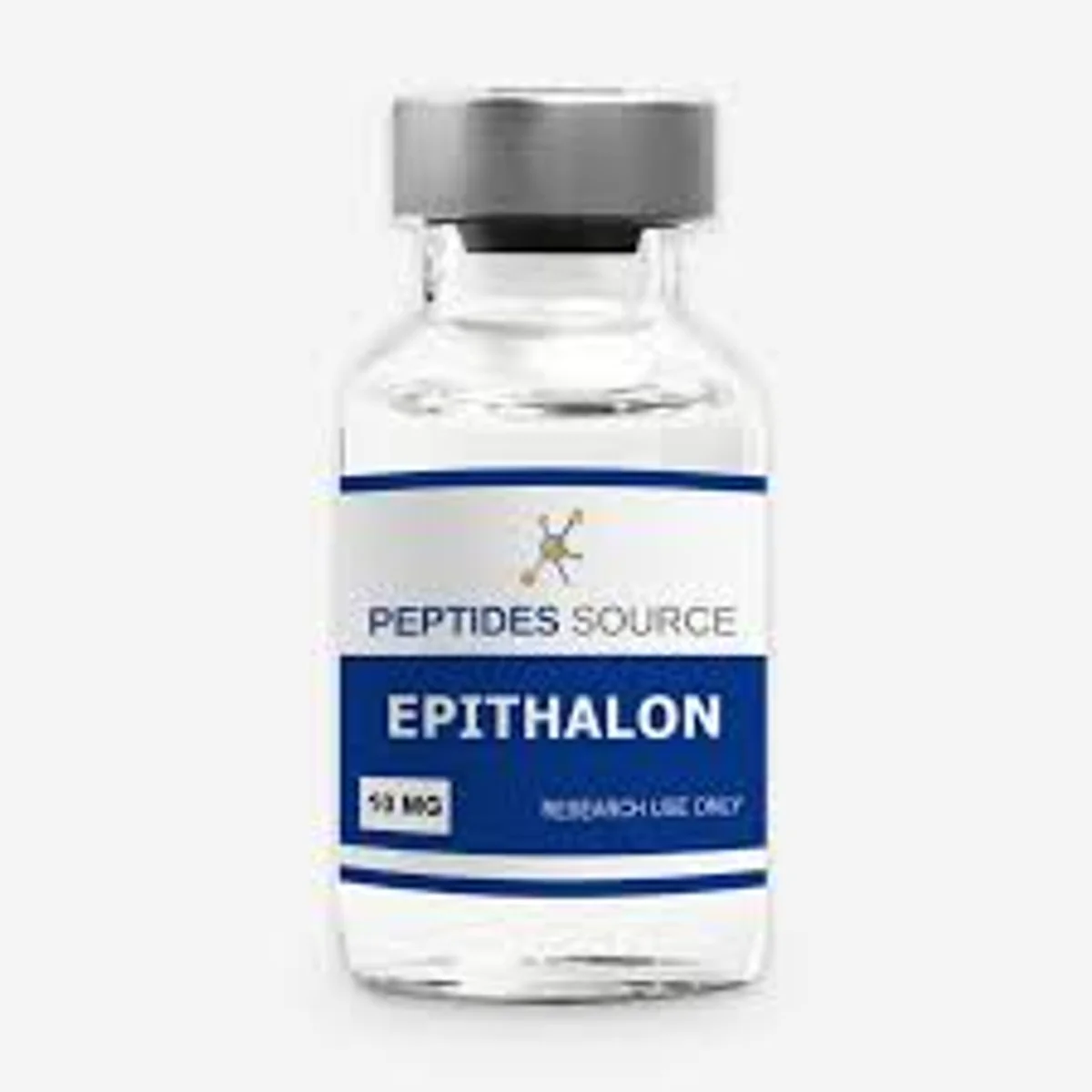
Epithalon (also spelled Epitalon) is a synthetic tetrapeptide with the sequence Ala-Glu-Asp-Gly, developed by Vladimir Khavinson and colleagues at the St. Petersburg Institute of Bioregulation and Gerontology beginning in the 1980s as a synthetic analog of the pineal extract Epithalamin. Its proposed mechanism is telomerase activation via upregulation of the TERT gene, and a published human-evidence base exists across roughly four decades of research. However, nearly all human trial data originates from that single Russian laboratory, with no meaningful independent replication, and Epithalon holds no FDA approval.
Epithalon (also spelled Epitalon, chemical name Ala-Glu-Asp-Gly) sits in a genuinely unusual position in peptide research. Most peptides covered here either have robust independent trial data with weak mechanistic explanations, or compelling mechanisms with almost no human data. Epithalon has both a mechanistically serious hypothesis - telomerase activation via pineal gland bioregulation - and a published human-evidence base. The problem is structural: that evidence base was produced almost entirely by one laboratory, the St. Petersburg Institute of Bioregulation and Gerontology, over roughly four decades, and hasn't been meaningfully replicated by independent groups elsewhere.
That single-source problem is the central issue this guide addresses. It doesn't make the research fraudulent or uninteresting. It does make it insufficient as a basis for confident claims about human outcomes. The gap between 'a credible mechanistic hypothesis supported by promising preliminary data' and 'a validated intervention' is large, and Epithalon sits clearly in the first category.
This summary compiles what the published literature actually says, labels evidence by its quality tier (human trials, animal models, anecdotal reports), and addresses the theoretical oncological concerns that follow logically from any exogenous telomerase-activation strategy. The goal is an accurate picture of the signal-to-noise ratio - not a promotional summary, and not a dismissal of research that's at minimum worth tracking.
Featured Peptides
Research Peptide Epithalon scores 58/100 - a score that accurately reflects a compound with genuine mechanistic interest and unusually extensive preliminary data for a research peptide, held back substantially by the single-group replication problem and absence of large independent human trials. The telomerase activation hypothesis is coherent; the evidence that it produces meaningful human longevity outcomes isn't established yet. Researchers tracking aging biology will find the literature worth reading critically. Those looking for validated intervention data won't find it here.
Epithalon is the subject of this profile and the only product covered in this guide, included because it's one of the more scientifically discussed peptides in longevity research circles despite its significant evidence limitations.
What Is Epithalon? Chemical Identity, Discovery, and Class
Epithalon is a synthetic tetrapeptide with the amino acid sequence Ala-Glu-Asp-Gly (alanine-glutamic acid-aspartic acid-glycine). Its molecular weight is approximately 390 daltons, making it one of the smaller peptides studied in longevity research contexts. It's the synthetic analog of Epithalamin, a natural polypeptide extract isolated from the bovine pineal gland.
The compound was developed by Vladimir Khavinson and colleagues at the St. Petersburg Institute of Bioregulation and Gerontology beginning in the 1980s. The conceptual framework - that short peptide fragments derived from specific tissues could act as tissue-specific bioregulators, restoring gene expression patterns that drift with age - is called the peptide bioregulator hypothesis. Epithalon is the most studied of these so-called cytomedins, which also include thymalin (thymus-derived), cortagen (cortex-derived), and a range of others.
Chemically, Epithalon is well-characterized. Its tetrapeptide structure is straightforward to synthesize and verify by HPLC, and its low molecular weight makes analytical confirmation relatively accessible. This is one of its practical advantages from a sourcing standpoint: a credible COA can actually resolve identity and purity questions at this molecular weight in ways that are harder with larger peptides.
---
Mechanism of Action: Telomerase Activation and the Pineal Bioregulator Hypothesis
The proposed primary mechanism is telomerase activation. Telomerase is a ribonucleoprotein enzyme responsible for maintaining telomere length during cell division. Most somatic cells in adult humans have low telomerase expression; telomeres shorten with each replication cycle; critically short telomeres trigger cellular senescence or apoptosis. This is the Hayflick limit translated to molecular machinery.
Research from Khavinson's group, as well as some independent cell-line work, suggests Epithalon may upregulate telomerase activity in somatic cells. The proposed pathway involves interaction with chromatin and modulation of the expression of the TERT gene (telomerase reverse transcriptase), the catalytic subunit of telomerase. If this mechanism holds at physiologically relevant concentrations in vivo, it would represent a direct engagement with one of the better-characterized molecular hallmarks of aging.
The secondary framework - the pineal bioregulator hypothesis - holds that the pineal gland produces peptide signals that regulate aging processes throughout the body, and that Epithalon mimics or augments these signals. Supporting data from Khavinson's group includes observations of melatonin pathway interactions and circadian rhythm effects in animal models. The mechanistic coherence here is real, but the supporting data isn't yet sufficient to distinguish primary mechanism from epiphenomenon.
What the Mechanism Does NOT Establish
A coherent mechanism doesn't confirm clinical efficacy. Telomere length is associated with aging outcomes in population studies, but extending telomere length by exogenous telomerase activation in already-aging tissue isn't the same thing as reversing the aging phenotype - and it raises oncological questions addressed below. The mechanistic story is worth taking seriously; it's not a substitute for outcome data.
---
Evidence Summary: Human Studies, Animal Models, and Anecdotal Reports
Human Studies (Limited; from a single research group)
Published human data on Epithalon exists, which distinguishes it from most peptides in this category. The quality and independence of that data, though, requires careful evaluation.
Khavinson et al. published a series of studies in the 1990s and 2000s examining Epithalamin (the natural precursor) and later Epithalon in elderly populations in Russia. Key reported findings include:
- Mortality reduction observations: A long-term follow-up study (Anisimov et al., published in the early 2000s) reported reduced all-cause mortality in elderly patients who received Epithalamin or Epithalon versus controls over multi-year follow-up periods. Sample sizes in these studies were in the range of 60-200 participants. These findings haven't been replicated in independent trials.
- Melatonin and circadian effects: Several small human studies reported increased melatonin secretion and improved circadian rhythm markers in elderly subjects. Sample sizes were typically under 50.
- Retinal function studies: A subset of Khavinson's human research examined age-related retinal degeneration and reported functional improvements. These remain among the most specific human outcomes reported but again lack independent replication.
Critical caveat: None of these studies were conducted as large, pre-registered, placebo-controlled, double-blind trials published in high-impact peer-reviewed journals outside Russia. The methodological detail available in English-language versions of these papers is often limited. That doesn't mean the findings are fabricated, but it does mean they can't be evaluated to the standards typically required for clinical inference.
Animal Model Evidence (More Extensive)
The animal data on Epithalon is substantially more extensive than the human data and comes from several research groups, including some outside Russia.
- Lifespan extension in rodents: Multiple studies in mice and rats report extended mean and maximum lifespan with Epithalon administration. A frequently cited study using cancer-prone HER-2/neu transgenic mice showed reduced tumor incidence and extended lifespan. These are animal models with significant translational limitations.
- Telomere length measurements: Cell-line studies (including somatic human cells in culture) have reported measurable telomerase activation and telomere elongation following Epithalon exposure. These findings are among the mechanistically most interesting but represent in vitro conditions, not in vivo human physiology.
- Melatonin and antioxidant effects in animal models: Reduced lipid peroxidation, improved antioxidant enzyme activity, and melatonin pathway modulation have been reported across multiple rodent studies.
Anecdotal and Self-Report Evidence (Labeled as Such)
Within self-experimenter communities - particularly longevity-focused forums and biohacker communities - self-reported use of Epithalon is relatively common compared to most research peptides. Commonly self-reported observations include improved sleep quality, subjective energy improvements, and in some cases telomere length measurements taken via commercial testing. These self-reports can't establish causation, are subject to significant placebo effects, and aren't systematically collected. They're noted here for completeness, not as evidence of efficacy.
---
The Single-Research-Group Problem: Why Independent Replication Matters
This is the central epistemological issue with Epithalon, and it deserves direct treatment rather than a footnote.
Scientific consensus is built on replication. When multiple independent groups, using different cohorts, different methodologies, and different institutional incentives, converge on similar findings, confidence in those findings increases substantially. When findings originate from a single group over decades - even a prolific and credentialed group - the probability that systematic errors, institutional biases, or unconventional methodological choices have shaped the results is meaningfully higher.
Khavinson's group has published extensively, and Khavinson himself holds academic credentials and has published in indexed international journals. The concern isn't fraud - it's the structural limitation of a literature built almost entirely within one research tradition, without the corrective pressure of attempted replication from skeptical external groups.
Why hasn't independent replication happened? Several factors likely contribute. Epithalon research developed primarily within Soviet and post-Soviet scientific infrastructure, which wasn't well-integrated into Western research networks during its formative decades. The commercial incentive to fund independent trials of an off-patent peptide is limited. And frankly, the longevity research field has many competing hypotheses for limited research funding.
None of this resolves the replication gap. Researchers and institutions interested in Epithalon should weight this structural issue heavily when interpreting the available evidence.
---
Dosing in Research Contexts: Ranges Reported in Published Studies
> Regulatory and safety disclaimer: The dosing information below is compiled from published research literature for informational purposes only. It does not constitute a dosing recommendation for human use. Epithalon is not approved by the FDA, MHRA, TGA, or EMA for any human indication. Administration outside approved clinical trial contexts carries unknown risks.
Published research has used a range of administration routes and dose levels:
- Subcutaneous injection (most common in published studies): Doses in the range of 0.1 to 1.0 mg per administration have been reported, typically in cycles of 10-20 days with intervals of several months.
- Intravenous administration: Used in some of Khavinson's clinical observations, generally at similar per-dose levels but over shorter cycle durations.
- Intranasal administration: Referenced in some research contexts but with less published data on pharmacokinetics via this route.
The tetrapeptide structure raises bioavailability questions for oral administration - enzymatic degradation in the GI tract would be expected to limit oral efficacy, though some vendors market oral forms. No published comparative bioavailability data between routes appears in the accessible literature.
Cycle protocols described in research contexts typically involve 10-20 consecutive days of administration repeated 2-4 times per year, though these parameters are derived from Khavinson's group protocols and lack comparative dosing studies to validate them.
---
Reported Side Effects and Theoretical Risks - Including Oncological Considerations
Reported Side Effects
Across the available published literature, Epithalon has a relatively benign reported side-effect profile. Injection site reactions (mild redness, transient discomfort) are the most commonly noted adverse events. No serious adverse events attributable to Epithalon have been prominently reported in the published research.
That said, the evidence base is small, the longest human follow-up periods are limited by the available studies, and serious adverse events in small trials can be missed by chance.
The Oncological Concern: A Logical Consequence of the Mechanism
This risk is theoretical but not dismissible, and it follows directly from the proposed mechanism.
Telomerase activation is a defining feature of most cancer cells. Cancer cells escape replicative senescence largely by upregulating telomerase, allowing unlimited division. This is why telomerase inhibition - not activation - is an active area of oncology research.
If Epithalon activates telomerase in somatic cells as proposed, the theoretical question of whether this increases cancer risk in already-transformed or pre-transformed cells is legitimate and unresolved. Some animal studies have actually shown reduced tumor incidence with Epithalon, and proponents argue that restoring normal telomere dynamics in healthy cells is categorically different from the pathological telomerase activation seen in cancer cells. That's a coherent counterargument. It's not, however, a resolved one.
Individuals with active malignancies, personal or strong family history of certain cancers, or any condition involving cellular proliferation concerns should treat the theoretical oncological risk seriously. This isn't a concern to wave away as overcautious - it's an open mechanistic question with real implications.
---
Legal and Regulatory Status by Region
United States
Epithalon is not FDA-approved for any human indication and isn't scheduled as a controlled substance. It exists in a regulatory grey zone as a research chemical. The FDA has taken action against suppliers marketing peptides for human use; possession for legitimate research purposes is generally not a criminal matter, but sale for human consumption isn't legally permitted.
United Kingdom
Not licensed by the MHRA for any human indication. Not classified as a controlled substance under the Misuse of Drugs Act. The Medicines Act 1968 restricts the sale of unlicensed medicines for human use. Research chemical status applies.
European Union
Not approved by the EMA. Regulatory status varies by member state. In some jurisdictions, sale for human consumption would engage national medicines law. Research use regulations differ by country.
Australia
Not listed on the ARTG (Australian Register of Therapeutic Goods). The TGA has moved to schedule several peptides including some in this category. Researchers should verify current scheduling status, as the regulatory environment has tightened considerably since 2022. Importation for personal use without a valid prescription is generally not permitted for unscheduled therapeutic goods either.
---
Sourcing Considerations: COA Standards, Vendor Red Flags, and Purity Verification
Epithalon's low molecular weight (approximately 390 daltons) is a practical advantage for quality verification. HPLC purity testing is accessible and meaningful at this size, and mass spectrometry confirmation of identity is straightforward.
What a Credible COA Should Include
- HPLC purity result with chromatogram, not just a percentage number without supporting data
- Molecular weight confirmation via mass spectrometry (LCMS or HRMS)
- Specific peptide identity confirmation - not just 'tetrapeptide' but sequence verification
- Water content / net peptide content (some vendors list gross weight including water; peptide content can be significantly lower)
- Batch number traceable to the COA
- Third-party testing laboratory name and, ideally, contact information
Vendor Red Flags
- COAs that show only a purity percentage with no chromatographic data
- Vendors who can't name the third-party laboratory that conducted testing
- Marketing language that makes explicit human health claims ('anti-aging supplement', 'telomere repair')
- No age verification or ID verification on purchase
- Claims of oral bioavailability equivalent to injection without supporting pharmacokinetic data
- Pricing significantly below market without explanation (raw peptide synthesis at this quality level has a cost floor)
---
How Epithalon's Evidence Base Compares to Similar Longevity-Adjacent Peptides
Putting Epithalon in context requires some honest comparisons.
BPC-157: Has a larger volume of published animal-model data across more independent research groups, particularly for healing and repair mechanisms. Human trial data is similarly limited. The independent replication situation is somewhat better than Epithalon's.
Thymalin (another Khavinson bioregulator): Shares the same single-group evidence problem. Similar mechanistic frameworks. No better replicated than Epithalon.
GLP-1 agonists (semaglutide, tirzepatide): Included here only for scale reference. These have large, multicenter, placebo-controlled RCTs with thousands of participants and are FDA-approved for specific indications. They represent the gold standard of what a validated intervention evidence base looks like. Epithalon's evidence base is orders of magnitude thinner - not because it's implausible, but because the research investment simply hasn't happened.
NAD+ precursors (NMN, NR): Have attracted more recent independent research attention than Epithalon, with some small human trials from multiple independent groups now available. Still not validated at clinical scale but the replication situation is improving faster.
The honest summary: Epithalon is more interesting than most research peptides from a mechanistic standpoint, and has more human-level data than many. It has less independent validation than it would need to justify strong confidence in human efficacy claims.
---
Where to Learn More: PubMed, ClinicalTrials.gov, and Primary Literature Pointers
- PubMed search terms: 'Epithalon telomerase', 'Epitalon aging', 'Khavinson peptide bioregulator', 'Epithalamin longevity' - these will surface the primary literature, which is available in varying levels of English-language detail
- ClinicalTrials.gov: As of the compilation of this guide, no large registered trials of Epithalon appear in the ClinicalTrials.gov database under standard search terms - a significant gap that reflects the replication problem directly
- Key authors to search: V. Kh. Khavinson, V.N. Anisimov - these are the primary investigators whose work comprises the bulk of the published literature
- Journals where primary research has appeared: Bulletin of Experimental Biology and Medicine, Mechanisms of Ageing and Development, Biogerontology - the latter two are indexed international journals, which adds some external review to the published record
- Telomere biology background: The foundational work of Elizabeth Blackburn, Carol Greider, and Jack Szostak on telomeres and telomerase (Nobel Prize 2009) provides essential mechanistic context and is widely available
---
Editorial Disclaimer and Regulatory Notice
This guide is published for educational and research-informational purposes only. Nothing in this guide constitutes medical advice, a treatment recommendation, or an endorsement of human use of any peptide described. Epithalon is not approved by the FDA, MHRA, TGA, or EMA for any human indication and is classified as a research chemical in most jurisdictions.
Research chemicals are sold for laboratory and research use only. Human consumption of unapproved research chemicals carries unknown risks, including those not yet identified in the available literature. Individuals with any health condition - particularly any history of malignancy - should consult a qualified physician before engaging with any compound discussed here.
Peptide Guides does not sell, manufacture, or directly endorse any specific peptide vendor. Vendor quality assessments are based on publicly available COA standards and documented vendor practices, not commercial relationships.
Tips
- 1.Before sourcing Epithalon for research purposes, request a COA that includes an HPLC chromatogram and LCMS identity confirmation - a purity percentage alone isn't sufficient verification for a tetrapeptide at this price point.
- 2.Read the primary Khavinson literature directly rather than relying on secondary summaries. The methodological details, sample sizes, and follow-up periods in the original papers are often more limited than secondary sources suggest.
- 3.Take the theoretical oncological risk seriously: if your research context involves subjects with any cellular proliferation concerns, the unresolved telomerase-activation oncology question isn't a footnote - it's a primary safety consideration that warrants consultation with an oncologist before any research design proceeds.
- 4.Check ClinicalTrials.gov periodically. The absence of registered independent trials as of 2025 is a meaningful data point, and any new registrations would signal a shift in the evidence trajectory worth following.
The Bottom Line
Epithalon is the most scientifically substantive of the Soviet-era peptide bioregulators, with a mechanistically credible hypothesis and a human data footprint larger than most research peptides can claim. Its 58/100 score reflects that real but limited foundation honestly. The single-group replication problem isn't a minor caveat - it's the defining limitation of this evidence base, and it should be the first thing any serious researcher holds in mind when reading the Khavinson literature. Independent replication, particularly in pre-registered trials outside Russia, would substantially change the evidentiary picture. Until that happens, Epithalon is a peptide worth monitoring, not one with a validated case for human application.
Frequently Asked Questions
What is Epithalon and what is it made from?
How does Epithalon supposedly work to affect aging?
Is there human clinical trial evidence for Epithalon, or is it only animal research?
What is the legal status of Epithalon in the US, UK, EU, and Australia?
What dosing ranges appear in Epithalon research, and does Peptide Guides recommend a dose?
What side effects have been reported with Epithalon in research and user accounts?
Related Guides
STACK
The Longevity Stack: How Epithalon, MOTS-c, and Thymosin Alpha-1 Are Studied Together
The longevity peptide stack pairing Epithalon, MOTS-c, and Thymosin Alpha-1 is a research-only combination targeting three distinct hallmarks of aging: telomere attrition, mitochondrial dysfunction, and immunosenescence, respectively. None of the three compounds carry FDA, MHRA, or TGA approval for human administration, and the evidence base is highly uneven—Thymosin Alpha-1 has decades of clinical RCT data, MOTS-c has solid mechanistic and animal research with emerging human studies, and Epithalon's literature, though substantial in volume, originates largely from a single Russian research group (the Khavinson laboratory) with limited independent Western replication.
PEPTIDE-PROFILE
PT-141 (Bremelanotide) Research Summary: Mechanism, Evidence, and Legal Status
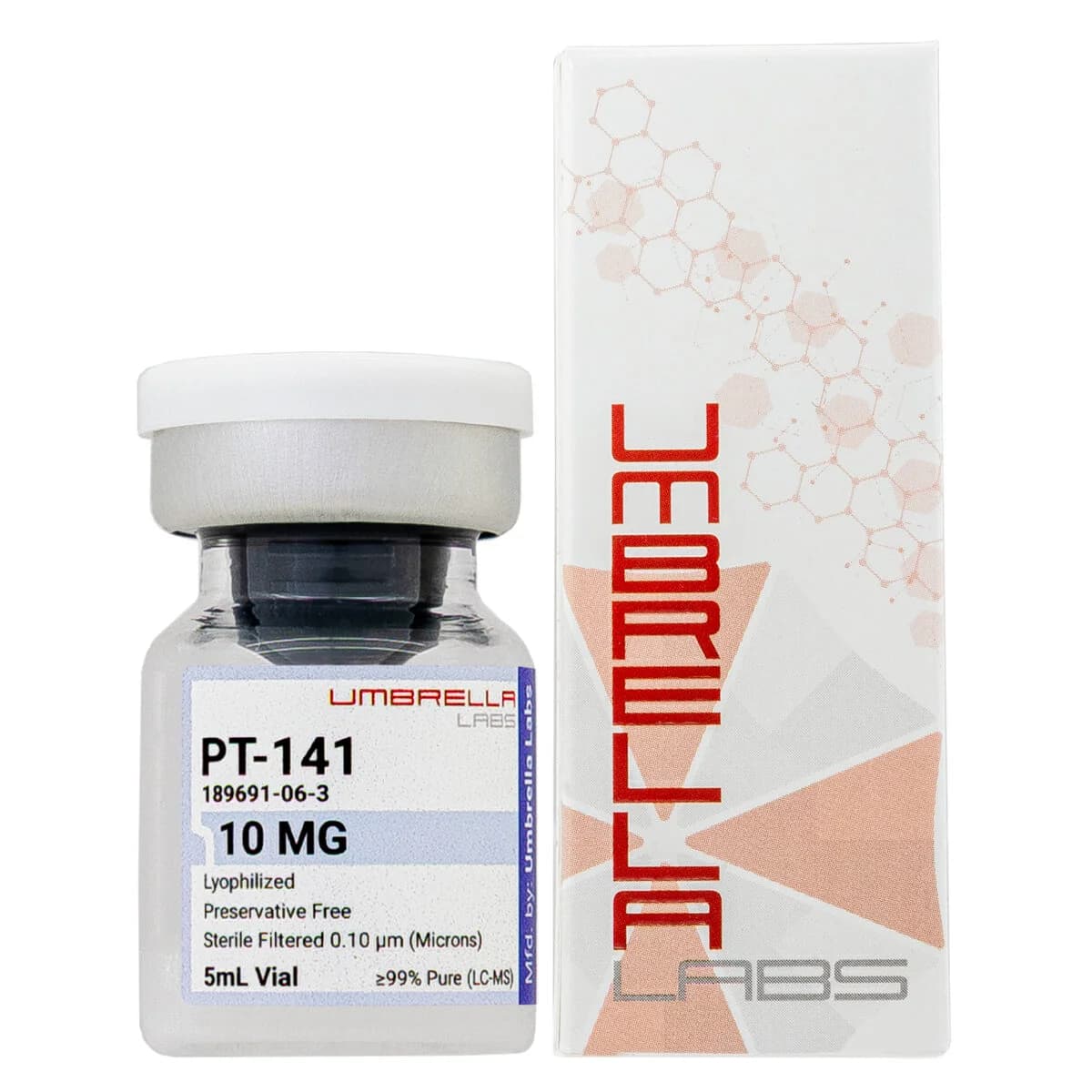
PT-141 (bremelanotide) is a synthetic cyclic heptapeptide and melanocortin receptor agonist (acting primarily at MC3R and MC4R) that the FDA approved as Vyleesi on June 21, 2019, for acquired, generalized hypoactive sexual desire disorder in premenopausal women. The approval was supported by the Phase 3 RECONNECT program (Studies 301 and 302), two placebo-controlled trials enrolling roughly 1,200 women using 1.75 mg subcutaneous injections. Research-chemical PT-141 shares bremelanotide's amino acid sequence but is not manufactured to pharmaceutical GMP standards and carries no approved indication; legitimate clinical access requires a Vyleesi prescription.
PEPTIDE-PROFILE
Thymosin Alpha-1: Immune-Modulator Research Summary (2024 Evidence Review)
Thymosin Alpha-1 is a 28-amino-acid immunomodulatory peptide derived from prothymosin alpha, first isolated in 1977 by Allan Goldstein at George Washington University and marketed pharmaceutically as Zadaxin in parts of Asia and Eastern Europe. Research suggests it acts as an endogenous TLR2 and TLR9 ligand, promoting Th1 differentiation and increasing IFN-gamma, IL-2, and NK cell activity. Multiple randomized controlled trials support its use in chronic hepatitis B, hepatitis C, sepsis, and cancer-adjuvant contexts, but it remains unapproved in the US, UK, EU, and Australia, where it is sold under research-chemical status.