
PEPTIDE-PROFILE
PT-141 (Bremelanotide) Research Summary: Mechanism, Evidence, and Legal Status
What the clinical data on melanocortin-based sexual health research actually shows
Last updated: August 18, 2026
Quick Answer
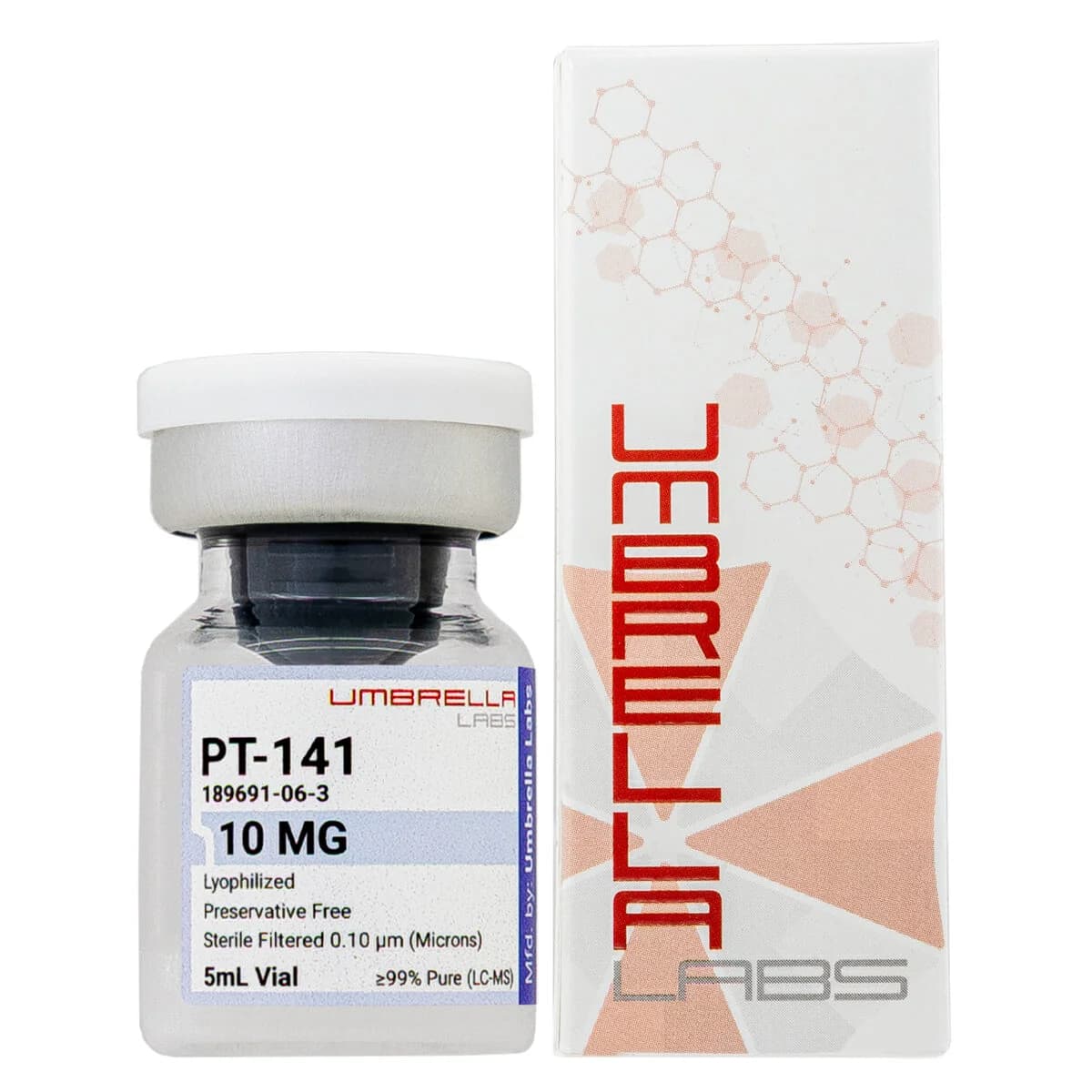
PT-141 (bremelanotide) is a synthetic cyclic heptapeptide and melanocortin receptor agonist (acting primarily at MC3R and MC4R) that the FDA approved as Vyleesi on June 21, 2019, for acquired, generalized hypoactive sexual desire disorder in premenopausal women. The approval was supported by the Phase 3 RECONNECT program (Studies 301 and 302), two placebo-controlled trials enrolling roughly 1,200 women using 1.75 mg subcutaneous injections. Research-chemical PT-141 shares bremelanotide's amino acid sequence but is not manufactured to pharmaceutical GMP standards and carries no approved indication; legitimate clinical access requires a Vyleesi prescription.
PT-141 sits in a position almost no other research-chemical peptide can claim: its core mechanism is validated by a drug the FDA actually approved. Vyleesi (bremelanotide injection, 1.75 mg) got the green light in 2019 for hypoactive sexual desire disorder (HSDD) in premenopausal women - the first pharmacotherapy to target a central nervous system mechanism for female sexual dysfunction. That approval represents years of controlled human trial data, including Phase 2 and Phase 3 randomized controlled trials with thousands of participants, peer-reviewed outcomes, and a genuine regulatory record.
The complication is straightforward: research-chemical PT-141 is not Vyleesi. The peptide sold by gray-market vendors shares the same amino acid sequence as bremelanotide, but that's where the similarity ends. Sterility, excipient composition, dosing precision, and manufacturing oversight are categorically different between an FDA-approved injectable drug and a lyophilized powder shipped from a research-chemical supplier. This guide treats those two things as what they are - related but legally and practically distinct.
What follows is a methodology-first summary of what the published record actually says about bremelanotide: the mechanism, the human trial evidence, the tolerability profile, and an honest picture of what gray-market sourcing involves. The goal is to draw a hard line between the clinical trial record and what the market is actually selling, so readers can assess both the science and the risk profile accurately.
Featured Peptides
PT-141/bremelanotide holds a genuinely unusual position: it has the strongest human evidence base of any peptide in the sexual health category, backed by Phase 3 RCT data that supported an actual FDA approval. The catch is that the research-chemical form isn't that approved product - it lacks the manufacturing standards, sterility assurance, and dose precision of Vyleesi. The roughly 40% nausea incidence documented in trials is a significant tolerability constraint that applies regardless of where the compound comes from. For laboratory researchers, the mechanistic evidence base is the strongest available in this category. For individuals with an actual health concern, the prescription pathway via telehealth is the appropriate route - not a peptide vendor.
PT-141/bremelanotide is the only peptide in the sexual health research category with a direct FDA-approved analog, which makes it uniquely useful for illustrating the critical distinction between validated pharmaceutical pharmacology and gray-market research chemicals.
What Is PT-141 (Bremelanotide)? - Chemical Identity, Classification, and Relationship to Vyleesi
PT-141 is the research designation for bremelanotide, a synthetic cyclic heptapeptide and melanocortin receptor agonist. Its IUPAC name is cyclo-[Nle4, Asp5, His6, DPhe7, Arg8, Trp9, Lys10]-alpha-MSH (4-10), and its molecular formula is C50H68N14O10. It was originally derived from Melanotan II (MT-II), a synthetic analog of alpha-melanocyte-stimulating hormone (alpha-MSH), during early tanning peptide research at the University of Arizona in the 1980s and 1990s.
As a melanocortin receptor agonist, PT-141/bremelanotide acts primarily at the MC3R and MC4R receptor subtypes in the central nervous system. This separates it fundamentally from PDE5 inhibitors like sildenafil or tadalafil, which act peripherally on vascular smooth muscle. The CNS-mediated mechanism is the basis of the drug's sexual health application - and why research suggests its effects can occur independently of direct genital stimulation.
Vyleesi (bremelanotide 1.75 mg/0.3 mL subcutaneous injection, manufactured by AMAG Pharmaceuticals, now marketed by Palatin Technologies under license) received FDA approval on June 21, 2019, specifically for acquired, generalized HSDD in premenopausal women. It's a prescription drug in the United States with a defined label, documented contraindications, and a patient risk management program. Research-chemical PT-141 shares the peptide sequence but is not manufactured to pharmaceutical GMP standards and has no approved indication.
---
Mechanism of Action - How Melanocortin Receptor Agonism Differs from PDE5 Inhibitors
Bremelanotide binds to melanocortin receptors (principally MC3R and MC4R) in hypothalamic and limbic regions of the brain. These receptors are involved in regulating sexual function, energy homeostasis, and autonomic nervous system activity. Activation of MC4R in particular is understood to modulate dopaminergic and oxytocin pathways that influence sexual motivation and arousal - distinct from the mechanical vasodilatory effects produced by PDE5 inhibition.
That distinction matters both clinically and pharmacologically:
- PDE5 inhibitors (sildenafil, tadalafil) require sexual stimulation to work; they enhance blood flow to erectile tissue by preventing cGMP degradation but don't independently initiate desire or arousal signaling.
- Bremelanotide research suggests it acts upstream of the vascular component, modulating CNS circuitry associated with sexual motivation. Studies in animal models demonstrated mounting behavior and increased sexual receptivity through central melanocortin pathway activation, independent of peripheral stimulation.
Preliminary research also indicates that MC4R agonism activates dopaminergic circuits in the medial preoptic area (MPOA), a region strongly implicated in mammalian sexual behavior. This is the mechanistic basis cited in Vyleesi's approval rationale.
A secondary pharmacological effect - and a real tolerability concern - is bremelanotide's action on MC1R in melanocytes (relevant to pigmentation) and its autonomic effects via central melanocortin signaling, which include transient blood pressure reductions and nausea via central emetic pathways.
---
Evidence Summary - Human RCT Data, Animal Studies, and Anecdotal Reports
Human Trial Evidence (Strongest Quality)
The human trial record for bremelanotide is unusually robust for a peptide covered on this platform, because the FDA-approval pathway for Vyleesi required full Phase 3 RCT data.
Phase 3 trials (RECONNECT program): Two double-blind, placebo-controlled trials (Study 301 and Study 302) enrolled a combined approximately 1,200 premenopausal women with diagnosed HSDD. Subjects self-administered subcutaneous bremelanotide 1.75 mg or placebo 45 minutes before anticipated sexual activity. Primary endpoints were changes in the Female Sexual Function Index desire domain (FSFI-D) and the Female Sexual Distress Scale - Desire/Arousal/Orgasm (FSDS-DAO). Results published in the Journal of Sexual Medicine (2019, Simon et al.) showed statistically significant improvements in both endpoints vs. placebo, with roughly 25% of treated subjects showing clinically meaningful FSFI-D improvement vs. roughly 17% on placebo.
Those are the numbers the FDA actually reviewed. They represent a real, measured effect - but also a modest one. The drug was approved for a defined population (premenopausal women with acquired HSDD), and the responder rate wasn't dramatically higher than placebo.
Earlier Phase 2 trials studied both intranasal and subcutaneous routes across mixed-sex populations. A Phase 2 study (Safarinejad, 2008, International Journal of Impotence Research) examining subcutaneous bremelanotide in men with erectile dysfunction reported improvements in erectile function scores, though that indication wasn't pursued to Phase 3 approval.
Animal Study Evidence
Animal model research (primarily rodent) shows dose-dependent induction of sexual behavior following central and peripheral bremelanotide administration. Studies in female rats showed an increased lordosis quotient (a measure of receptivity); in male rats, reduced ejaculatory latency was reported. These effects were blocked by MC4R antagonists, confirming receptor specificity. Animal models also documented the autonomic effects - transient hypotension and nausea-like behavior - consistent with the human tolerability profile.
*Note: Animal study findings don't translate directly to human dosing or outcomes. They're cited here for mechanistic context only.*
Anecdotal and Self-Report Data
A substantial volume of user self-reports exists across forums including Reddit (r/Peptides, r/PEDs) and dedicated research communities. Commonly reported experiences include:
- Onset of sexual arousal and increased desire within 45-90 minutes of subcutaneous administration
- Nausea as the most frequently cited adverse effect, consistent with Phase 3 trial data
- Facial flushing
- Spontaneous erections in male self-experimenters
- Some reports of prolonged or unwanted erections
These self-reports are anecdotal, uncontrolled, and can't be used to draw conclusions about efficacy or safety. Dosing, product purity, and individual health status vary enormously across self-reporting populations. They're noted here because they exist and form part of the information environment - not because they constitute evidence.
---
Vyleesi vs. Research-Chemical PT-141 - Why These Aren't the Same Product
This is the most important section in this guide for anyone considering practical decisions.
Vyleesi:
- FDA-approved prescription drug
- Manufactured under pharmaceutical GMP (Good Manufacturing Practice) conditions
- Sterility-tested, endotoxin-tested, and assayed for potency
- Pre-filled autoinjector with a precise 1.75 mg dose
- Contraindications and drug interactions formally documented
- Available through licensed prescribers and pharmacies, including telehealth platforms
- Covered by some insurance plans; patient assistance programs exist
Research-chemical PT-141:
- Sold as a research reagent, not for human use
- Lyophilized powder requiring reconstitution with bacteriostatic water
- No mandatory sterility or endotoxin testing (COAs vary widely in what they actually test)
- No standardized dose per vial - vendors sell vials ranging from 5 mg to 10 mg with variable fill accuracy
- Not subject to FDA manufacturing oversight
- Legal status is ambiguous (see Legal Status section below)
- No patient safety monitoring, no contraindication enforcement, no adverse event reporting
The molecular sequence is the same. What you're actually injecting is not. A research-chemical vial can fail in ways a pharmaceutical product can't: microbial contamination, endotoxin load (which causes fever and sepsis), incorrect peptide content, incorrect reconstitution, and adulteration. None of these failure modes are theoretical - they're documented outcomes in the gray-market injectable peptide space.
Individuals who want access to bremelanotide for a legitimate health concern should pursue the prescription pathway. Telehealth platforms including Ro, Hims/Hers, and specialized women's sexual health providers offer Vyleesi consultations in the United States. That's the path that provides the pharmacological profile the clinical trials actually studied.
---
Dosing in Research Contexts - Ranges From Published Studies
> Disclaimer: The dosing information below is drawn from published clinical research and is presented for educational and research contextualization purposes only. It isn't a clinical recommendation, a dosing guide, or medical advice. Peptide Guides does not recommend self-administration of research-chemical PT-141.
In the Phase 3 RECONNECT trials supporting Vyleesi's approval:
- Dose: 1.75 mg subcutaneous injection
- Route: Subcutaneous, lower abdomen or thigh
- Timing: 45 minutes before anticipated sexual activity
- Frequency: No more than once in 24 hours; not studied for daily use
In earlier Phase 2 studies examining male erectile dysfunction:
- Doses ranged from 0.3 mg to 10 mg via intranasal and subcutaneous routes
- Higher intranasal doses were associated with greater nausea incidence
- The subcutaneous 1.75 mg dose was selected for the Phase 3 program based on tolerability-efficacy balance
Animal model studies used weight-based dosing (typically 0.1-1 mg/kg in rodent models) that doesn't translate directly to human dosing contexts.
The research-chemical market typically sells PT-141 in 5 mg or 10 mg vials, reconstituted with bacteriostatic water to a concentration the end user determines. That introduces significant dose imprecision relative to the pharmaceutical product actually studied in trials.
---
Reported Side Effects and Contraindications - Nausea, Hypotension, and Cardiovascular Cautions
Side Effects From Phase 3 Trial Data
- Nausea: Roughly 40% of subjects in the RECONNECT trials reported nausea - the most common adverse effect by a significant margin. This isn't a minor tolerability footnote; it resulted in study discontinuation for a meaningful proportion of subjects. The Vyleesi prescribing information recommends taking an anti-emetic before administration.
- Flushing: Roughly 20% of subjects reported facial flushing or hyperhidrosis.
- Injection site reactions: Pain, bruising, and injection site discomfort were reported.
- Transient hypotension: Blood pressure decreases were documented within 12 hours of dosing. The Vyleesi prescribing information specifically warns against use in subjects with cardiovascular disease.
- Focal hyperpigmentation: With repeated use, some subjects developed areas of hyperpigmentation (face, gums, breasts) - a predictable consequence of MC1R agonism.
Contraindications Documented in the Vyleesi Label
- Known cardiovascular disease
- Uncontrolled hypertension or orthostatic hypotension
- Concurrent use of nitrate medications (risk of severe hypotensive interaction)
- Concurrent use of naltrexone or other opioid medications (potential interaction)
- Pregnancy
Risks Specific to the Research-Chemical Form
Beyond the pharmacological risks documented in trials, the research-chemical form adds:
- Sterility and endotoxin risk from non-GMP manufacturing
- Dosing error risk from manual reconstitution
- Product misrepresentation risk - unlabeled substitution of Melanotan II (a closely related but distinct compound with a broader side effect profile) for PT-141 has been reported in the gray market
---
Legal and Regulatory Status by Region
United States
Bremelanotide (Vyleesi) is an FDA-approved prescription drug. It's legal to possess with a valid prescription. Research-chemical PT-141 sits in a gray area: it's not a scheduled controlled substance under DEA schedules, but selling it for human use without FDA approval is prohibited. Vendors sell it under the "research chemical" classification, theoretically for in-vitro or animal research. Purchasing it for personal injection isn't legally protected.
United Kingdom
Bremelanotide is not approved by the MHRA for human use in the UK. It's not currently a controlled substance under the Misuse of Drugs Act, but the Medicines Act makes it illegal to sell an unlicensed medicine for human use. Gray-market peptide importation operates in a legal gray zone; personal importation for research isn't clearly regulated but carries legal risk.
European Union
Bremelanotide doesn't hold EMA (European Medicines Agency) approval for any indication in the EU. Regulatory status varies by member state, but the general framework makes human use of unapproved injectables legally problematic. Some EU member states treat unauthorized injectable peptides more strictly than others.
Australia
The TGA has not approved bremelanotide. The TGA has issued specific warnings about research peptides sold online, including melanocortin agonists, and Australian customs has seized peptide shipments. The TGA classifies unauthorized importation of prescription-status compounds as a regulatory offense.
---
Sourcing Considerations - COA Standards, Vendor Red Flags, and Sterility Risks
For researchers conducting legitimate in-vitro or in-vivo animal research, sourcing quality matters. For anyone else, the primary recommendation is the prescription pathway - Vyleesi via telehealth where applicable.
What a Credible COA for Research Peptide PT-141 Should Include
- Identity confirmation: Mass spectrometry (LC-MS/MS) confirming the correct peptide sequence and molecular weight
- Purity: HPLC purity of 98%+ minimum; anything below 95% is a significant concern
- Endotoxin testing: LAL (Limulus Amebocyte Lysate) test result, with a value below 1 EU/mg for injectables
- Sterility test: USP-standard sterility assay (not just visual inspection)
- Moisture content: Relevant for lyophilized peptides; affects accurate dosing by weight
- Certificate date and lot number: COAs without lot-specific testing and recent dates aren't meaningful
Vendor Red Flags
- COA includes only HPLC purity with no identity confirmation by mass spec
- No endotoxin testing listed, or endotoxin results omitted from the customer-facing COA
- Vials labeled with round numbers ("5 mg" or "10 mg") without fill weight verification
- No age verification or ID requirement at checkout
- Vendor makes direct efficacy claims for human use (this also suggests regulatory non-compliance)
- Product described as "Melanotan II" and "PT-141" interchangeably - these are different compounds with different safety profiles
- Website imagery using before/after human testimonials for any peptide sold as a research chemical
Melanotan II vs. PT-141 - Worth Clarifying
Melanotan II (MT-II) is PT-141's predecessor compound. It shares the melanocortin agonist mechanism but additionally produces significant tanning effects (MC1R), carries greater reported side effect frequency, and has a less defined safety record. The two are sometimes conflated or mislabeled in the gray market. Any vendor selling MT-II and PT-141 as equivalent or interchangeable is either uninformed or deliberately misleading - those are the only two options.
---
Contextual Comparisons - Melanotan II, Prescription Pathways, and What Legitimate Access Looks Like
Compared to Melanotan II
MT-II preceded bremelanotide and shares the melanocortin agonist mechanism. Key differences: MT-II is a linear peptide (less stable), produces stronger pigmentation effects via MC1R, and has a less thoroughly characterized human safety profile. PT-141/bremelanotide represents the more selectively refined compound developed from MT-II - the cyclic structure improves stability, and the side-chain modifications aimed to improve receptor selectivity. Neither has pharmaceutical-grade oversight in research-chemical form.
The Prescription Pathway Model (Relevant Comparison)
The GLP-1 agonist category (semaglutide, tirzepatide) demonstrates what a real prescription access pathway looks like: FDA-approved drugs available through telehealth platforms with prescriber oversight, standardized dosing, and genuine adverse event monitoring. Vyleesi follows the same model. Telehealth platforms including Ro, Hims/Hers, and specialized sexual health providers offer bremelanotide prescription consultations for qualified premenopausal women in the US. That's the legitimate pathway for individuals interested in the pharmacology the clinical trials actually studied - not gray-market sourcing.
---
Where to Learn More
- PubMed: Search "bremelanotide HSDD" or "PT-141 melanocortin" for the primary literature. Key authors include Robert Simon (RECONNECT trials), Raymond Rosen, and Anita Clayton in the HSDD research space. PMID 31127793 (Simon et al., 2019, Journal of Sexual Medicine) is the primary Phase 3 publication.
- ClinicalTrials.gov: Search NCT01382719 and NCT01382706 for the RECONNECT Phase 3 trial registrations. Additional completed trials are visible under "bremelanotide" as the intervention.
- FDA Drug Label: The full Vyleesi prescribing information is available via the FDA Drugs@FDA database and provides the most complete documented contraindication and adverse effect record for the clinical formulation.
- FDA Approval Letter (2019): Available via FDA.gov; covers the approval rationale and the clinical evidence summary reviewers used.
- AMAG/Palatin Investor Materials: The companies' published clinical data summaries provide accessible lay-language overviews of trial outcomes.
---
Regulatory Disclaimer
The content on this page is published for educational and research informational purposes only. It doesn't constitute medical advice, a clinical recommendation, or a dosing guide. PT-141 (bremelanotide) sold as a research chemical is not FDA-approved, MHRA-approved, EMA-approved, or TGA-approved for human use and is not the same product as FDA-approved Vyleesi. Peptide Guides does not recommend self-administration of any research peptide. Individuals with medical concerns related to sexual health should consult a licensed healthcare provider. Vyleesi is a prescription drug in the United States; legitimate access requires a prescriber consultation.
---
Research Peptide PT-141 (Bremelanotide) - Full Profile
Best For
Laboratory researchers studying melanocortin receptor pharmacology, CNS sexual behavior models, and hypothalamic signaling. In the self-experimentation community, PT-141 is most closely associated with on-demand use patterns, given the 45-90 minute onset window studied in trials. Individuals seeking the actual pharmacological effect studied in human RCTs should pursue the Vyleesi prescription pathway - not research-chemical sourcing.
Evidence Quality
Among the highest of any peptide in the sexual health category. The existence of FDA-approved Vyleesi means there's a genuine Phase 3 RCT record with thousands of participants, not just animal data or anecdote. That said, the effect sizes in those trials were modest - the responder advantage over placebo was real but not dramatic - and the roughly 40% nausea incidence is a genuine tolerability challenge that can't be minimized.
Mechanism Context
The CNS-mediated, melanocortin receptor-based mechanism is meaningfully distinct from PDE5 inhibitors. Research suggests it can produce effects without peripheral vascular stimulation, which is the pharmacological rationale for its use in HSDD - a desire-phase condition rather than an arousal-phase vascular condition. Animal studies support the MC4R pathway's role in sexual motivation. Human trial data shows the translation is real, if modest.
Tolerability Profile
Nausea isn't a minor footnote here. Roughly 40% nausea incidence in Phase 3 trials, with flushing in roughly 20% of subjects, means a significant proportion of users will have a meaningful adverse experience. The Phase 3 protocol recommended pre-dosing with an anti-emetic. The cardiovascular contraindications (nitrates, cardiovascular disease) create safety constraints that require pre-use screening - something a gray-market purchase can't provide.
Pricing and Access
As a research chemical, PT-141 is sold in 5-10 mg vials, typically ranging from roughly $25-75 depending on vendor. As Vyleesi via prescription, the drug is significantly more expensive without insurance, though patient assistance programs exist. The prescription pathway costs more in time and money upfront; it delivers a pharmaceutical-grade product with a known safety record. The research-chemical route is cheaper but introduces sterility, purity, and dosing variables that the trial record simply can't speak to.
Tips
- 1.If you're a premenopausal woman in the US with acquired HSDD and want legitimate access to bremelanotide pharmacology, the Vyleesi prescription pathway via telehealth is the route supported by clinical trial evidence - not research-chemical sourcing.
- 2.When evaluating a COA for any injectable research peptide, confirm it includes mass spectrometry identity verification and an LAL endotoxin test with an actual numerical result - not just HPLC purity. Purity testing alone can't confirm you have the correct compound or rule out endotoxin contamination.
- 3.The nausea incidence documented in Phase 3 Vyleesi trials was roughly 40% - that's not a minor footnote. Any research planning or self-experimentation context that doesn't account for this as a primary tolerability variable isn't engaging honestly with the published evidence.
The Bottom Line
PT-141/bremelanotide scores highest in this category for one specific reason: the human trial evidence base is real, large, and peer-reviewed, unlike most research peptides. The mechanism is validated, the Phase 3 data exists, and a prescription pathway (Vyleesi) provides legitimate access for qualified individuals. The research-chemical form shares the molecule but not the manufacturing standards - and that's not a technicality. It's the central fact any credible assessment of this compound has to start with. Researchers should engage with the primary literature; individuals with health concerns should consult a licensed prescriber.
Frequently Asked Questions
What is PT-141 and how is it different from Viagra or Cialis?
Is PT-141 (bremelanotide) FDA approved?
What does the research say about PT-141 for sexual dysfunction in men?
What side effects have been reported with PT-141 (bremelanotide)?
What is the legal status of PT-141 in the US, UK, EU, and Australia?
How do I evaluate the quality of a PT-141 research peptide from a vendor?
Related Guides
PEPTIDE-PROFILE
DSIP (Delta Sleep-Inducing Peptide): Research Summary and Evidence Review
DSIP (Delta Sleep-Inducing Peptide) is an endogenous nonapeptide (sequence Trp-Ala-Gly-Gly-Asp-Ala-Ser-Gly-Glu) isolated in 1977 from rabbit cerebral venous blood by Marcel Monnier's group at the University of Basel. Over 150 papers were published through the mid-1990s reporting effects on slow-wave sleep, HPA-axis activity, and opiate withdrawal in small human and animal cohorts, but research largely stalled thereafter, and no DSIP receptor has been characterized. It is not FDA-approved for any indication and remains a research-only compound with no modern adequately powered randomized controlled trials.
PEPTIDE-PROFILE
Melanotan II: What the Research Shows — and Why the Safety Record Matters
Melanotan II is a synthetic cyclic analog of alpha-MSH with real human trial data - small University of Arizona studies in the 1990s documented pigmentation and erectile effects - and an equally real adverse-event record: consistent dose-dependent nausea, flushing, spontaneous erections, and a growing cluster of case reports linking use to changing moles and melanoma diagnoses. It remains unapproved in every major jurisdiction. For the melanocortin mechanism it pioneered, the FDA-approved derivative bremelanotide (Vyleesi) - not the research chemical - is the defensible clinical route.
PEPTIDE-PROFILE
Thymosin Alpha-1: Immune-Modulator Research Summary (2024 Evidence Review)
Thymosin Alpha-1 is a 28-amino-acid immunomodulatory peptide derived from prothymosin alpha, first isolated in 1977 by Allan Goldstein at George Washington University and marketed pharmaceutically as Zadaxin in parts of Asia and Eastern Europe. Research suggests it acts as an endogenous TLR2 and TLR9 ligand, promoting Th1 differentiation and increasing IFN-gamma, IL-2, and NK cell activity. Multiple randomized controlled trials support its use in chronic hepatitis B, hepatitis C, sepsis, and cancer-adjuvant contexts, but it remains unapproved in the US, UK, EU, and Australia, where it is sold under research-chemical status.
PEPTIDE-PROFILE
GHK-Cu (Copper Peptide) Explained: A Research Summary of Evidence, Mechanisms, and Limitations
GHK-Cu is a naturally occurring copper-chelating tripeptide (glycyl-L-histidyl-L-lysine bound to copper(II)) first isolated from human plasma albumin in 1973 by Loren Pickart, with plasma concentrations reported to decline from roughly 200 ng/mL in young adults to around 80 ng/mL in those over 60. It is not approved by the FDA, MHRA, TGA, or EMA for any therapeutic indication and is sold in most jurisdictions as a research chemical. Published research includes in vitro fibroblast and antioxidant studies, animal wound-healing models, and several small human randomized controlled trials of topical formulations.