
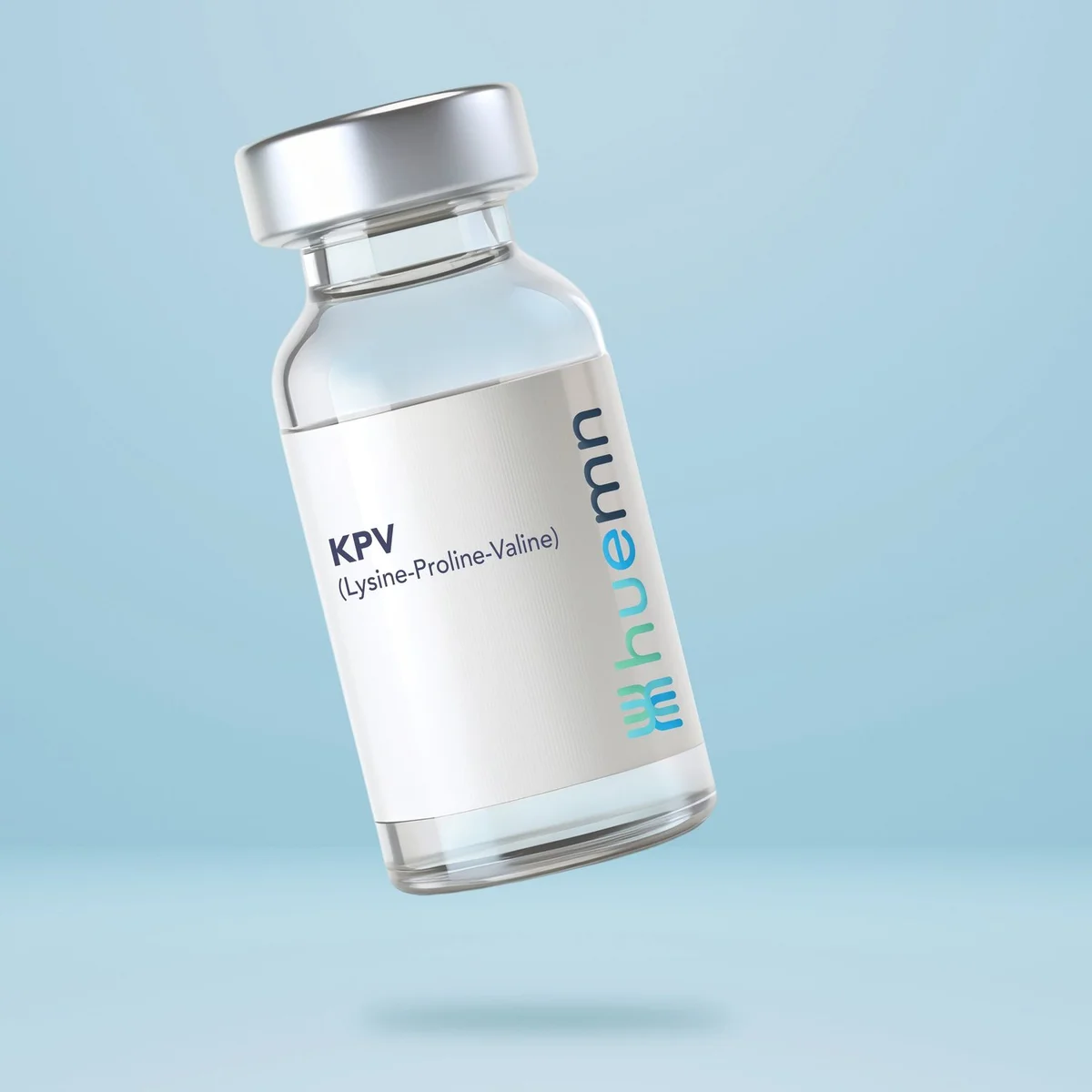
Research Peptide
KPV (Lysine-Proline-Valine)
Anti-inflammatory tripeptide derived from alpha-MSH
“A melanocortin-derived tripeptide that research suggests may modulate gut inflammation at the cellular level — with promising preclinical data and no human RCT evidence yet.”
Last updated: April 27, 2026
Score Breakdown
Evidence
Purity
Cost Efficiency
Safety Profile
Pros & Cons
Pros
- Mechanistically well-characterized relative to its tripeptide size — NF-κB and FPRL-1 pathways studied in cell and animal systems
- Preclinical colitis research is directionally consistent across multiple model types
- Short amino acid sequence and low molecular weight may support oral bioavailability with appropriate formulation
- Appears to dissociate anti-inflammatory signaling from melanocortin receptor pigmentation effects based on current mechanistic data
Cons
- No published human RCTs — the entire therapeutic evidence base is preclinical
- Half-life is very short, which may limit practical research utility without advanced delivery vehicles
- Vendor quality and COA standards are inconsistent across the research chemical market for this compound
Best For
- Researchers investigating melanocortin-derived anti-inflammatory peptides in preclinical gut models
- Biohackers with a specific interest in intestinal inflammation modulation who have reviewed the preclinical literature and understand the evidence limitations
- Longevity researchers exploring cytokine modulation as an adjunct to other protocols with a tolerance for low human-evidence compounds
Avoid If
- Expecting human-trial-level evidence to support therapeutic decisions — none exists for this compound
- Located in Australia without appropriate research or prescribing authorization, given TGA scheduling of unapproved peptides
Full Review
KPV — shorthand for its amino acid sequence Lys-Pro-Val — is a tripeptide derived from the C-terminal end of alpha-melanocyte-stimulating hormone (α-MSH), itself a peptide hormone with well-documented immunomodulatory properties. α-MSH has been studied for decades in the context of inflammation regulation, fever suppression, and gut barrier integrity. KPV was isolated as the minimal active fragment responsible for much of α-MSH's anti-inflammatory signaling, and early research investigated whether it could replicate those effects without activating melanocortin receptors that drive pigmentation changes. As a research compound, KPV sits in the broader class of melanocortin-derived anti-inflammatory peptides, distinct from BPC-157 or thymosin beta-4 in both sequence and receptor profile.
Mechanism of action research suggests KPV exerts its effects through multiple pathways. In vitro studies indicate it may inhibit pro-inflammatory cytokine signaling — particularly IL-1β, IL-6, and TNF-α — independently of classical melanocortin receptor binding. Research also points toward NF-κB pathway modulation, a central node in inflammatory cascades. In gut-focused studies, KPV has been explored for its apparent capacity to penetrate intestinal epithelial cells and act intracellularly, which is mechanistically notable given its small size. Some preliminary research suggests interaction with formyl peptide receptor-like 1 (FPRL-1 / FPR2), a receptor involved in inflammation resolution. These proposed mechanisms remain active areas of basic science inquiry.
The evidence base for KPV is weighted heavily toward preclinical data. Animal model studies — primarily in murine colitis models — have reported reductions in inflammatory markers, mucosal damage scores, and disease activity indices when KPV was administered orally or locally. A frequently cited study published in the journal Inflammatory Bowel Diseases demonstrated that orally delivered KPV-loaded nanoparticles reduced colitis severity in mice, an important finding because it suggests oral bioavailability may be achievable with appropriate formulation. In vitro work using human intestinal epithelial cell lines has shown reduced cytokine output following KPV exposure. Critically, as of this writing, no large-scale randomized controlled trials in humans have been completed or published for KPV. User self-reports in biohacker communities describe experimentation with subcutaneous injection and oral capsule formats for gut inflammation management, but these anecdotal accounts carry no controlled evidence weight and should be evaluated accordingly. This content is for educational purposes only and does not constitute medical advice.
Dosing ranges reported in research contexts vary substantially by model and administration route. In murine colitis studies, researchers have used formulations delivering doses in the range of approximately 100–500 mcg per administration, often in nanoparticle-encapsulated oral form or via local instillation. In vitro concentrations used in cell studies are not directly translatable to human dosing. No standardized human research dose has been established. Dosing information referenced here is drawn from published research contexts only — it is not a recommendation for human use, and KPV is not approved for human therapeutic application in any major regulatory jurisdiction. Anyone handling this compound should do so within the applicable legal framework for research chemicals in their region.
Legally, KPV occupies the research chemical space in the United States, United Kingdom, and European Union — it is not scheduled as a controlled substance in most jurisdictions but is also not approved for human use. In Australia, unapproved peptides fall under stricter TGA scheduling rules and importation for personal use without a prescription is not permitted under standard provisions. From a sourcing standpoint, credible vendors of KPV should supply a certificate of analysis (COA) from an independent third-party lab confirming peptide identity via HPLC and mass spectrometry, purity of 98% or higher, and absence of common contaminants. Vials should be clearly labeled with lot number, molecular weight, and storage instructions. Lyophilized powder is the standard commercial form, requiring reconstitution with bacteriostatic water. Vendors who cannot provide third-party COAs on request, who make explicit therapeutic claims, or who do not implement basic age verification should be avoided.
Details
Reviews
No reviews yet. Be the first to share your experience.
Featured In
STACK
The Skin and Anti-Aging Peptide Stack: GHK-Cu, BPC-157, Pentadeca Arginate, and KPV in Research (2026 Guide)
GHK-Cu is the strongest compound in this stack on evidence quality alone - it's the only one with multiple small human RCTs, decades of published mechanistic research dating back to 1973, and a reasonably clean preliminary safety profile across topical and in vitro models. The other three compounds are preclinical-only, which makes GHK-Cu the clearest anchor for any researcher building a skin and recovery peptide stack in 2026.
PEPTIDE-PROFILE
Melanotan II: What the Research Shows — and Why the Safety Record Matters
Melanotan II is a synthetic cyclic analog of alpha-MSH with real human trial data - small University of Arizona studies in the 1990s documented pigmentation and erectile effects - and an equally real adverse-event record: consistent dose-dependent nausea, flushing, spontaneous erections, and a growing cluster of case reports linking use to changing moles and melanoma diagnoses. It remains unapproved in every major jurisdiction. For the melanocortin mechanism it pioneered, the FDA-approved derivative bremelanotide (Vyleesi) - not the research chemical - is the defensible clinical route.