
STACK
The Skin and Anti-Aging Peptide Stack: GHK-Cu, BPC-157, Pentadeca Arginate, and KPV in Research (2026 Guide)
What the preclinical and early clinical evidence actually says about stacking these four peptides for skin and tissue research
Last updated: May 1, 2026
Quick Answer
GHK-Cu is the strongest compound in this stack on evidence quality alone - it's the only one with multiple small human RCTs, decades of published mechanistic research dating back to 1973, and a reasonably clean preliminary safety profile across topical and in vitro models. The other three compounds are preclinical-only, which makes GHK-Cu the clearest anchor for any researcher building a skin and recovery peptide stack in 2026.
The GHK-Cu, BPC-157, Pentadeca Arginate, and KPV stack has become one of the more talked-about combinatorial protocols in longevity and recovery-focused peptide research circles. The appeal isn't hard to understand: each compound targets a different axis of tissue maintenance and inflammation, and together they're theorized to address wound healing, skin remodeling, gut-skin crosstalk, and systemic recovery through partially overlapping but distinct mechanisms. The problem is that most content covering this stack treats mechanistic plausibility as if it were clinical evidence, collapses animal data and human outcomes into a single narrative, and rarely acknowledges that the entire combinatorial premise has never been tested in a controlled human trial.
This guide doesn't do that. What follows is a compound-by-compound breakdown of what the evidence actually supports, where it comes from, and how confident any researcher should reasonably be in drawing conclusions from it. GHK-Cu sits in a meaningfully different evidence tier than the other three compounds. BPC-157 has a large preclinical footprint but zero completed human RCTs. Pentadeca Arginate (PDA) is structurally related to BPC-157 but has even less independent data. KPV has mechanistically interesting preclinical data and almost no human evidence at all.
Legal status, compounding quality control, and sourcing transparency aren't footnotes here - they're central to the research validity problem. A stack is only as reliable as its lowest-quality input, and in a market where COA standards are inconsistent across all four of these compounds, that's not a minor concern. This guide maps all of it honestly.
Featured Peptides
GHK-Cu is the only compound in this stack with any completed human RCT evidence, and that evidence - while limited to small topical studies - puts it in a meaningfully higher evidence tier than everything else here. For researchers prioritizing quality of evidence over breadth of mechanistic claims, GHK-Cu is the most defensible starting point in this stack. The critical caveat is copper chelation verification: a product without confirmed chelated copper in the COA isn't GHK-Cu in the form the research literature describes.
The strongest evidence tier in this stack, with topical human RCT data and nearly five decades of mechanistic research - the clearest anchor compound for any skin and recovery research protocol.
BPC-157 has the largest preclinical literature in this stack and the broadest tissue-type coverage in animal models, but the absence of any completed human RCT as of mid-2025 is a fundamental gap that popular coverage consistently underweights. The heavy reliance on a single research group for much of the animal data, combined with the FDA's recent compounding-restriction flag, are both real considerations for any serious researcher evaluating this compound. The preclinical record is genuinely extensive - the translation to humans remains entirely unvalidated.
The most extensively self-researched healing peptide in biohacker communities, with a large rodent literature that provides mechanistic context even without human trial validation.
KPV is mechanistically well-characterized for its size, and the preclinical colitis literature is directionally consistent across multiple model systems - but the very short half-life is a genuine practical constraint that formulation-naive research protocols may not adequately address. The gut-skin axis rationale for including KPV in a skin stack is theoretically coherent but preclinically, not clinically, supported. Without advanced delivery formulation, the research utility of KPV is substantially limited relative to the other compounds in this stack.
The proposed gut-skin axis mechanism makes KPV a theoretically distinct addition to this stack, and its NF-kB pathway characterization provides more mechanistic specificity than many tripeptides of comparable research-market interest.
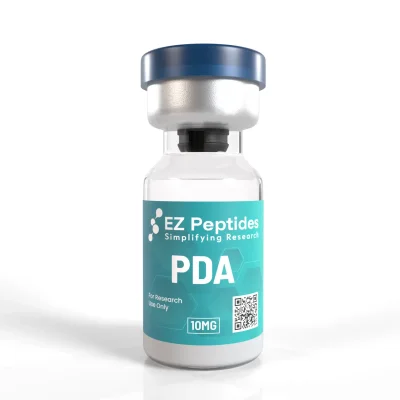
PDA occupies the weakest independent evidence position in this stack - it borrows its mechanistic rationale almost entirely from BPC-157 literature while having no substantial independent preclinical data of its own. The arginine modification and claimed solubility or NO-pathway advantages are theoretically interesting but unvalidated in peer-reviewed research. Researchers considering PDA as a BPC-157 alternative or complement should be clear that they're extrapolating from structural analogy, not from independent experimental evidence.
Actively marketed and self-researched as part of this stack, which warrants an honest assessment of its evidence gaps relative to its structural predecessor BPC-157.
What Is a Peptide Stack - and Why This One Exists
A peptide stack refers to the concurrent or sequential use of two or more peptide compounds, theorized to produce complementary or synergistic effects that none of the individual compounds would produce alone. The GHK-Cu / BPC-157 / PDA / KPV combination has gained traction in biohacker and longevity research communities primarily because its individual components address different but plausible axes of tissue repair and inflammation resolution.
The theoretical rationale is structurally reasonable: GHK-Cu for extracellular matrix remodeling and oxidative signaling, BPC-157 for multi-tissue healing and angiogenic support, PDA as a potentially more stable BPC-157 variant, and KPV for inflammatory tone modulation - including the theorized gut-skin axis. Whether this theoretical logic maps onto measurable human outcomes is an entirely separate question, and the honest answer in 2025 is that no one knows.
One framing point worth getting clear before reviewing each compound: stacking compounds doesn't multiply their individual evidence bases. If three out of four compounds in a stack have no completed human RCTs, the stack itself has no completed human RCTs, regardless of how compelling the mechanistic rationale looks.
---
Compound 1: Research Peptide GHK-Cu (Copper Peptide)
Score: 72/100 | Evidence Tier: Strongest in this stack
What It Is
GHK-Cu is a naturally occurring copper-chelating tripeptide composed of glycine, histidine, and lysine, first isolated from human plasma by Loren Pickart in 1973. It belongs to the class of endogenous signal peptides and is found in plasma, saliva, and urine - with plasma concentrations declining with age, from roughly 200 ng/mL at age 20 to approximately 80 ng/mL by age 60, according to early measurements by Pickart. That endogenous status gives GHK-Cu a meaningful safety-profile starting point that purely synthetic peptides don't share.
Mechanism of Action
Research suggests GHK-Cu operates through multiple pathways. Studies indicate it promotes collagen and glycosaminoglycan synthesis in fibroblasts, modulates matrix metalloproteinase (MMP) activity to support extracellular matrix remodeling, and activates antioxidant defenses - particularly by upregulating superoxide dismutase activity in cell models. A frequently cited claim that GHK-Cu influences expression of approximately 4,000 human genes originates from a 2012 connectivity map analysis by Pickart and Margolina. That's a computational gene-expression dataset query, not a clinical outcome study, and it shouldn't be interpreted as evidence of 4,000 established biological benefits.
Copper availability appears central to the mechanism: the chelated copper component is theorized to support enzymatic reactions involved in collagen cross-linking and angiogenesis. This matters for sourcing - if a vendor's product doesn't confirm copper chelation in its COA, the compound may be GHK without the copper fraction, which is structurally and functionally a different compound.
Evidence Summary
Human trials: GHK-Cu has a comparatively robust topical evidence base for a research peptide. Multiple small randomized controlled trials have examined topical GHK-Cu formulations in the context of skin aging. A 2015 study (n=67) published in the *Journal of Wound Care* reported improvements in skin laxity and fine line appearance at 12 weeks. Earlier work by Leyden et al. documented collagen density changes in facial skin with GHK-Cu-containing creams. Sample sizes in these trials are small, follow-up periods are short (typically 8-12 weeks), and most were conducted with topical formulations - not injectable research protocols. Those limitations are real, but the existence of any human RCT data at all distinguishes GHK-Cu from every other compound in this stack.
Animal and in vitro data: Extensive. Wound healing acceleration, nerve regeneration signaling, anti-inflammatory cytokine modulation, and hair follicle stimulation have all been reported in rodent models and cell culture systems across multiple independent research groups.
Anecdotal and community reports: Broadly positive for topical use, with consistent self-reports of improved skin texture, reduced fine lines, and wound healing acceleration. Injectable use-case reports exist but are sparse and difficult to evaluate without controlled data.
Dosing Ranges Reported in Research Contexts
*The following ranges are drawn from published research literature. They are not recommendations for human use.*
Topical formulations studied in human trials have typically used GHK-Cu concentrations of 0.1% to 2% by weight in cream vehicles. Injectable research protocols described in preclinical literature vary widely; no peer-reviewed human dosing data exists for systemic GHK-Cu administration. Community-reported injectable protocols exist in online forums but represent anecdotal self-experimentation, not validated research dosing.
Pros and Cons
Pros: Endogenous compound with nearly five decades of published research. Topical human RCT evidence exists, which is rare in this category. Favorable preliminary safety profile with no serious adverse events documented at studied doses. Broad mechanistic research footprint across multiple tissue systems.
Cons: Injectable human evidence is essentially absent from peer-reviewed literature - systemic use cases rest on animal and in vitro data only. The 4,000-gene claim is computationally derived and is frequently misrepresented as clinical benefit. Copper chelation is rarely confirmed in vendor COAs, which creates meaningful quality gaps for injectable research supply.
---
Compound 2: Research Peptide BPC-157
Score: 67/100 | Evidence Tier: Extensive preclinical, no human RCTs
What It Is
BPC-157 (Body Protection Compound-157) is a synthetic pentadecapeptide consisting of 15 amino acids, derived from a partial sequence of human gastric juice protein BPC. It doesn't occur endogenously in the same form as GHK-Cu. BPC-157 was developed and studied extensively by Predrag Sikiric and colleagues at the University of Zagreb, whose research group accounts for a disproportionate share of the published literature.
Mechanism of Action
Research suggests BPC-157 promotes tissue healing through multiple partially independent pathways. Studies indicate activation of the nitric oxide (NO) system, vascular endothelial growth factor (VEGF) upregulation supporting angiogenesis, early growth response factor-1 (EGR-1) gene activation relevant to tendon and muscle repair, and modulation of dopaminergic and serotonergic signaling in certain animal models. The breadth of reported mechanistic effects across tissue types is one reason BPC-157 attracts broad research interest - and also one reason the literature deserves careful reading, since diffuse mechanistic claims without human validation are a pattern associated with both genuinely pleiotropic compounds and with overstated research programs.
Evidence Summary
Human trials: As of mid-2025, no completed peer-reviewed human RCTs for BPC-157 have been published. A Phase II trial for inflammatory bowel disease was initiated (NCT04677634) but results haven't been published. This is the most important single fact about BPC-157, and it's frequently underemphasized in popular coverage.
Animal and in vitro data: Extensive. Rodent models have shown accelerated tendon-to-bone healing, gastroprotective effects, nerve regeneration support, and reduced NSAID-induced gut damage across multiple studies - predominantly from the Zagreb group. Several independent groups have partially replicated specific findings (gastroprotection in particular has multi-group support), but the breadth of tissue claims rests heavily on a single primary research institution.
Anecdotal reports: BPC-157 is one of the most widely self-reported peptides in biohacker communities. User reports of reduced joint pain, faster recovery from musculoskeletal injuries, and gut healing are common. These reports are directionally consistent with the animal literature but don't constitute evidence.
Dosing Ranges Reported in Research Contexts
*The following ranges are drawn from published research literature. They are not recommendations for human use.*
Rodent studies have most commonly used doses in the range of 10 mcg/kg body weight administered subcutaneously or orally. Allometric scaling from rodent to human doses is a rough approximation and hasn't been validated for this compound in clinical settings. Community-reported protocols typically describe 200-500 mcg daily or every other day subcutaneous administration, but this is anecdotal extrapolation, not human trial data.
Pros and Cons
Pros: Largest preclinical literature of any compound in this stack. Consistently low side-effect profile in both animal studies and community self-reports. Relatively affordable per-cycle cost. Multiple independent mechanistic pathways provide biological plausibility.
Cons: Zero completed human RCTs published as of mid-2025. Animal literature is heavily concentrated within one research group. Research-chemical legal status provides no regulatory quality assurance on commercial supply. The gap between preclinical promise and clinical validation is substantial.
---
Compound 3: Research Peptide Pentadeca Arginate (PDA)
Score: 52/100 | Evidence Tier: Weakest independent evidence base in this stack
What It Is
Pentadeca Arginate (PDA) is a synthetic peptide structurally related to BPC-157, in which one or more amino acid residues are modified to incorporate arginine. The modification is theorized to improve water solubility and, separately, to enhance nitric oxide pathway activity given arginine's role as a NO precursor. PDA is sometimes positioned as a more stable or more bioavailable alternative to BPC-157, but those claims need independent peer-reviewed validation before they can be treated as established facts.
Mechanism of Action
The mechanistic rationale for PDA extrapolates heavily from BPC-157 literature. Research suggests the structural overlap means tissue repair and gastroprotective mechanisms may be partially shared, but this is theoretical inference, not direct comparative data. The claim that arginine modification specifically enhances nitric oxide activity over and above BPC-157's already documented NO pathway engagement hasn't been demonstrated in peer-reviewed comparative studies.
Evidence Summary
Human trials: None published as of mid-2025 for PDA as an independent compound.
Animal and in vitro data: Limited and not independently substantial. Most characterizations of PDA in the research community rely on structural analogy to BPC-157 rather than direct experimental evidence for PDA specifically.
Anecdotal reports: Self-reported tolerability is generally favorable in online communities. Comparison reports between BPC-157 and PDA exist but are subjective and methodologically uncontrolled.
Why PDA Is in This Stack Despite Its Evidence Gaps
PDA is included here because it's actively marketed and self-researched as part of skin and recovery stacks, and researchers deserve an honest assessment rather than a gap in coverage. Its score of 52/100 reflects both the plausibility borrowed from BPC-157 structural analogy and the significant limitation of having no direct independent evidence base.
Dosing Ranges Reported in Research Contexts
*The following ranges are drawn from community anecdotal data and structural extrapolation from BPC-157 research. No validated human or animal dosing data for PDA as a distinct compound exists in published peer-reviewed literature. This is not a dosing recommendation.*
Community-reported protocols typically mirror BPC-157 dosing in the 200-500 mcg range, but this extrapolation has no independent scientific basis.
Pros and Cons
Pros: Partial mechanistic relevance borrowed from BPC-157 literature. Arginine modification may offer genuine solubility advantages. Accessible price point. Favorable anecdotal tolerability profile.
Cons: No independent human or animal RCT data for PDA as a distinct compound. Arginine-NO enhancement claims are unvalidated in peer-reviewed literature. Vendor quality control is highly variable. Structural analogy to BPC-157 isn't the same as demonstrated equivalence or superiority.
---
Compound 4: Research Peptide KPV (Lysine-Proline-Valine)
Score: 52/100 | Evidence Tier: Mechanistically characterized preclinically, no human data
What It Is
KPV is a C-terminal tripeptide fragment of alpha-melanocyte stimulating hormone (alpha-MSH), consisting of lysine, proline, and valine. It's notable for being one of the smallest peptides in common research use and for apparently retaining the anti-inflammatory properties of the parent molecule while dissociating from melanocortin receptor-mediated pigmentation effects - a pharmacological property of genuine interest for therapeutic specificity.
Mechanism of Action
Cell and animal research suggests KPV exerts anti-inflammatory effects primarily through two pathways: inhibition of NF-kappa B signaling (a central regulator of inflammatory gene expression) and activation of formyl peptide receptor-like 1 (FPRL-1). Studies in murine colitis models suggest oral administration of KPV, particularly in nanoparticle formulations designed to enhance intestinal delivery, can reduce colonic inflammation markers including pro-inflammatory cytokines. The gut-skin axis connection in this stack's rationale rests on the hypothesis that reducing intestinal inflammatory tone may have downstream effects on cutaneous inflammation - theoretically plausible, but preclinically rather than clinically supported.
Evidence Summary
Human trials: None published for therapeutic applications of KPV as of mid-2025.
Animal and in vitro data: Directionally consistent across multiple model types for anti-inflammatory effects. The colitis work, including nanoparticle-encapsulated oral delivery studies, represents the most developed preclinical body of evidence. Half-life is reported as very short under physiological conditions, which is why formulation (encapsulation, delivery vehicle) matters substantially for any research application.
Anecdotal reports: Less community self-reporting exists for KPV compared to BPC-157 and GHK-Cu. Reports that do exist are generally positive for gut-related applications but remain sparse.
Dosing Ranges Reported in Research Contexts
*The following ranges are drawn from preclinical literature and are not recommendations for human use.*
Murine studies have used a range of dosing approaches depending on delivery route; oral nanoparticle delivery studies have used formulation-adjusted doses to account for the short half-life. No validated human dosing range exists. The short half-life under physiological conditions means that dosing frequency and delivery vehicle aren't minor considerations - they're central ones.
Pros and Cons
Pros: Well-characterized mechanistic pathways for its size. Directionally consistent preclinical colitis data. Low molecular weight potentially supports oral bioavailability with appropriate formulation. Apparent dissociation from melanocortin pigmentation effects.
Cons: No published human RCTs. Very short half-life limits practical research utility without advanced delivery systems. COA standards are inconsistent across the vendor market for this compound.
---
Stack Rationale: How These Four Compounds Are Theorized to Work Together
The theoretical logic of this stack positions the four compounds as addressing distinct but interconnected aspects of tissue maintenance and inflammation:
- GHK-Cu is theorized to drive extracellular matrix remodeling, collagen synthesis, and oxidative stress signaling - most relevant to skin and wound repair.
- BPC-157 is theorized to provide broad multi-tissue healing support through NO, VEGF, and EGR-1 pathways, with particular preclinical relevance to musculoskeletal and gut tissue.
- PDA is theorized to replicate or complement BPC-157's mechanisms with potentially improved stability or solubility characteristics.
- KPV is theorized to reduce systemic and gut-local inflammatory tone through NF-kB and FPRL-1 pathways, with the working hypothesis that gut inflammation reduction supports skin outcomes through the gut-skin axis.
This is a coherent mechanistic narrative. It's also entirely speculative at the stack level. No study has examined these four compounds in combination in any model system. The combinatorial premise relies on the assumption that individual mechanisms are additive or synergistic rather than antagonistic - an assumption that hasn't been tested.
---
Evidence Summary Table: Human Trials vs. Animal Models vs. Anecdotal Reports
| Compound | Human RCT Evidence | Animal/In Vitro Evidence | Anecdotal Reports | Overall Evidence Tier |
|---|---|---|---|---|
| GHK-Cu | Multiple small RCTs (topical); none for injectable | Extensive, multi-group | Broadly positive, especially topical | Strongest in stack |
| BPC-157 | None completed (1 trial registered, unpublished) | Extensive; primarily single research group | Very extensive; consistent | Preclinical only |
| PDA | None | Minimal independent data | Limited; generally positive tolerability | Weakest independent base |
| KPV | None | Moderate; directionally consistent | Sparse | Preclinical only |
---
Dosing Ranges Reported in Research Contexts - Not a Recommendation
> Regulatory note: The dosing information below is compiled from published preclinical research, registered clinical trial protocols, and (where noted) community anecdotal self-experimentation data. It's presented for educational and research-contextualization purposes only. Peptide Guides does not recommend, endorse, or advise the use of any of these compounds in humans. These compounds are sold as research chemicals and are not approved for human consumption by the FDA, MHRA, TGA, or EMA.
| Compound | Preclinical Dose Range | Human Data Available | Community Anecdotal Range | Notes |
|---|---|---|---|---|
| GHK-Cu (topical) | 0.1-2% concentration in studied formulations | Yes (small RCTs) | Consistent with studied concentrations | Copper chelation verification important |
| GHK-Cu (injectable) | Varies by model; no standardized range | No peer-reviewed human data | 1-2 mg reported in community protocols | No validated human dosing |
| BPC-157 | ~10 mcg/kg in rodent studies | No completed human RCT data | 200-500 mcg/day subcutaneous anecdotal | Allometric scaling from rodent is unvalidated |
| PDA | Extrapolated from BPC-157 | None | Similar to BPC-157 community protocols | No independent validated dosing |
| KPV | Formulation-dependent in animal models | None | Variable; formulation-dependent | Half-life requires delivery vehicle consideration |
---
Reported Side Effects, Contraindications, and Compounding Interactions
GHK-Cu
Topical use has a well-characterized minimal adverse event profile in studied populations. Mild skin irritation and transient redness have been noted in some users at higher concentrations. Injectable administration side-effect data in humans is essentially absent from peer-reviewed literature. Copper accumulation with high-dose systemic use is a theoretical concern that hasn't been characterized in human research.
BPC-157
Animal studies consistently report low toxicity at studied doses. Community self-reports describe occasional nausea, mild dizziness, or injection-site reactions. No serious adverse events are well-documented at commonly reported community doses, but the absence of human RCT safety data means this isn't a validated safety profile.
PDA
Self-reported tolerability is generally favorable. No human safety data exists. The same caveats as BPC-157 apply, with the additional uncertainty of no independent animal safety characterization for PDA specifically.
KPV
Animal studies report a favorable tolerability profile. The very short half-life means accumulation concerns are low under most circumstances, but no human pharmacokinetic or safety data has been published.
Compounding Interactions
No peer-reviewed data exists on interactions among any two - let alone all four - of these compounds. Pharmacodynamic interactions are theoretically possible at overlapping pathway nodes (particularly shared NO and inflammatory signaling) but haven't been characterized. Anyone researching these compounds should treat interaction data as nonexistent.
---
Legal Status by Region
United States
All four compounds are classified as research chemicals. GHK-Cu, BPC-157, PDA, and KPV are not FDA-approved for human use. BPC-157 and PDA were subject to an FDA bulk drug substances advisory in 2023 that flagged BPC-157 as a compound of concern for inclusion in compounded formulations. Sourcing or administering these compounds outside of a licensed research context operates in a regulatory gray area with real legal ambiguity.
United Kingdom
None of the four compounds are MHRA-approved medications. They fall under the general medicines legislation framework that makes unlicensed sale for human consumption illegal. Research-chemical sourcing exists but carries attendant legal risk for human use.
European Union
None are EMA-approved. EU member state regulation varies, but the general framework for unapproved medicinal products applies. Several member states have stricter research-chemical enforcement than others.
Australia
All four compounds are Schedule 4 or unscheduled depending on current TGA classification. The TGA has moved to restrict several peptides in recent regulatory cycles. Australian researchers should verify current scheduling status directly with the TGA before sourcing, as classifications can change.
---
Sourcing Considerations: What a Credible COA Looks Like
The compounding quality-control problem isn't peripheral to this stack discussion - it's central to it. A stack built on low-purity or mis-sequenced inputs doesn't test the research hypotheses that the published literature describes. It tests something else entirely.
What a Credible COA Should Include for Each Compound
GHK-Cu specifically: HPLC purity confirmation (95%+ is a minimum baseline; 98%+ is preferable for research-grade material). Mass spectrometry confirmation of the copper-chelated form, not just the free peptide sequence. This is non-negotiable for GHK-Cu - a product without copper chelation confirmation is selling a different compound.
BPC-157 and PDA: HPLC purity confirmation with documented sequence verification by mass spectrometry. Given that BPC-157 is a 15-amino acid sequence, sequencing confirmation matters more than for short tripeptides. Look for third-party lab identification rather than in-house testing. Endotoxin testing (LAL assay) is a meaningful quality indicator for injectable research applications.
KPV: As a tripeptide, sequence verification by mass spectrometry is relatively straightforward. Purity documentation and sterility testing matter for injectable formats. Oral formats add formulation complexity that should be disclosed.
Red Flags Across All Four Compounds
- No third-party COA available on request or posted publicly
- COA lists purity without specifying the analytical method used
- Vendor ships without any identity or age verification process
- No lot number traceable to specific COA documentation
- Claimed purity above 99.9% without mass spec documentation (a statistical near-impossibility for peptides at scale)
- No endotoxin testing for injectable-format products
- Price significantly below market rate (may indicate lower-purity or shorter-sequence material)
---
Critical Limitations: What This Stack Can't Tell Us Without Human RCT Data
The most important limitation of this stack as a research topic is that three of four compounds have no human trial data at all, and the fourth (GHK-Cu) has human data only for topical skin applications - not for any injectable or systemic protocol. This means:
1. No validated efficacy signal exists for any compound in this stack at the systemic dose levels commonly described in community protocols. Mechanistic plausibility isn't clinical efficacy.
2. No safety profile exists for the combination. Animal studies on individual compounds showing low toxicity don't characterize the combination's safety.
3. Bioavailability assumptions are largely unvalidated in humans. KPV's half-life issues, BPC-157's oral vs. injectable bioavailability debate, and GHK-Cu's systemic distribution at injectable doses - none of these are characterized with human pharmacokinetic data.
4. Dose-response relationships are unknown in humans. Allometric scaling from rodent doses is a rough approximation, not a validated translation method for any of these compounds.
5. Individual variation is uncharacterized. Pre-existing conditions, concurrent medications, and individual metabolism all represent potential moderating variables with no RCT data to anchor analysis.
This doesn't mean the stack is without scientific interest. It means that any researcher engaging with these compounds should hold expectations proportionate to the evidence level - which is, for this stack as a whole, primarily preclinical.
---
Regulatory Disclaimer and Where to Learn More
> This content is for educational and research-contextualization purposes only. It does not constitute medical advice. None of the compounds described in this guide are approved by the FDA, MHRA, TGA, or EMA for human consumption. These compounds are sold as research chemicals. Peptide Guides does not recommend, endorse, or advise the administration of any of these compounds in humans. Always consult a licensed healthcare provider before making any decisions related to your health.
Where to Learn More
- PubMed (pubmed.ncbi.nlm.nih.gov): Search GHK-Cu, BPC-157, alpha-MSH KPV, or Pentadeca Arginate for primary literature. Filter by human studies where available.
- ClinicalTrials.gov: Search BPC-157 for registered trials and their current status. As of mid-2025, completed published results remain absent.
- The Cochrane Library (cochranelibrary.com): Systematic reviews on wound healing peptides, though GHK-Cu and related compounds aren't yet the subject of Cochrane reviews.
- FDA CDER Bulk Drug Substances List: For current US regulatory status on BPC-157 and compounding policy.
- TGA Australian Register of Therapeutic Goods (tga.gov.au): For current Australian scheduling of these compounds, which is subject to change.
Tips
- 1.Before evaluating any compound in this stack, distinguish topical GHK-Cu evidence (human RCTs exist) from injectable or systemic GHK-Cu evidence (no peer-reviewed human data). These aren't interchangeable evidence bases and shouldn't be discussed as if they are.
- 2.When sourcing any of these four compounds for research purposes, request a COA that specifies the analytical method used - HPLC purity percentage alone isn't sufficient. For GHK-Cu specifically, confirm copper chelation by mass spectrometry, not just sequence purity.
- 3.Treat the entire stack combination as having zero validated combinatorial evidence. The theoretical mechanistic rationale for using these four compounds together is coherent, but no study has examined them in combination in any model system, and interaction effects at overlapping pathway nodes remain entirely uncharacterized.
The Bottom Line
GHK-Cu is the strongest compound in this stack by a meaningful margin - it's the only one with completed human RCT evidence, and that topical dermatological evidence base, while limited in scale, represents a different category of scientific support than the preclinical-only records of BPC-157, PDA, and KPV. Any researcher engaging with this stack should calibrate expectations to the actual evidence tier: one compound with limited human topical data, two with extensive-to-moderate preclinical records and no human validation, and one with largely borrowed mechanistic rationale. The sourcing quality-control problem isn't a minor footnote - in a market where COA standards are inconsistent across all four compounds, the stack a researcher thinks they're running may differ meaningfully from the compounds the published literature actually describes.
Frequently Asked Questions
Can you stack GHK-Cu, BPC-157, and KPV together for skin and anti-aging?
What does GHK-Cu (copper peptide) actually do according to research?
Is Pentadeca Arginate (PDA) the same as BPC-157, and which is better for skin repair research?
What is KPV peptide and what does research suggest it does for inflammation and skin?
What should a legitimate COA (Certificate of Analysis) include when buying GHK-Cu or BPC-157 as a research peptide?
Are GHK-Cu, BPC-157, KPV, and Pentadeca Arginate legal to buy in the US, UK, and Australia?
Related Guides
PROTOCOL-FRAMEWORK
Peptide Dosing Ranges Reported in Research: A Protocol Framework Reference (Not a Recommendation)
Peptide dosing ranges reported in published research span five evidence tiers, from FDA-approved Phase III RCT data (tirzepatide, semaglutide, tesamorelin) down to compounds where credible human dosing data is essentially absent. The strongest dataset belongs to tirzepatide, where SURMOUNT-1 (n=2,539, 72 weeks) reported approximately 20.9% mean body weight reduction at the 15 mg weekly dose versus placebo. Tier 1 compounds are prescription drugs accessed through licensed prescribers; Tiers 3–5 (including BPC-157, GHK-Cu, and ipamorelin) are not approved by the FDA, MHRA, TGA, or EMA for human therapeutic use.
COMPARISON
BPC-157 vs GHK-Cu: Two Research Peptides, Two Approaches to Tissue and Skin Repair
BPC-157 and GHK-Cu are two distinct research peptides often compared for tissue repair, but they occupy different evidence positions. GHK-Cu is an endogenous copper-binding tripeptide first isolated from human plasma in 1973, with multiple small human randomized controlled trials supporting its topical dermatological use and documented plasma decline from about 200 ng/mL in young adults to 80 ng/mL by age 60. BPC-157 is a synthetic 15-amino-acid construct derived from human gastric juice protein, supported largely by rodent studies with zero completed human RCTs as of mid-2026. Neither is approved for human therapeutic use.
HOW TO
How to Read a Peptide Certificate of Analysis (COA): A Researcher's Field Guide
A peptide Certificate of Analysis (COA) is a laboratory-issued document reporting identity, purity, and safety testing for a specific batch of compound, answering three questions: is it the right compound, how much is present, and is it safe to handle. Prescription peptides like semaglutide are manufactured under FDA-enforced GMP standards with legally accountable COAs, while research chemicals such as BPC-157 and GHK-Cu carry no mandated COA content, making ISO 17025 laboratory accreditation, HPLC purity, mass spectrometry identity confirmation, and endotoxin testing the key fields researchers must evaluate independently.