Research Peptide
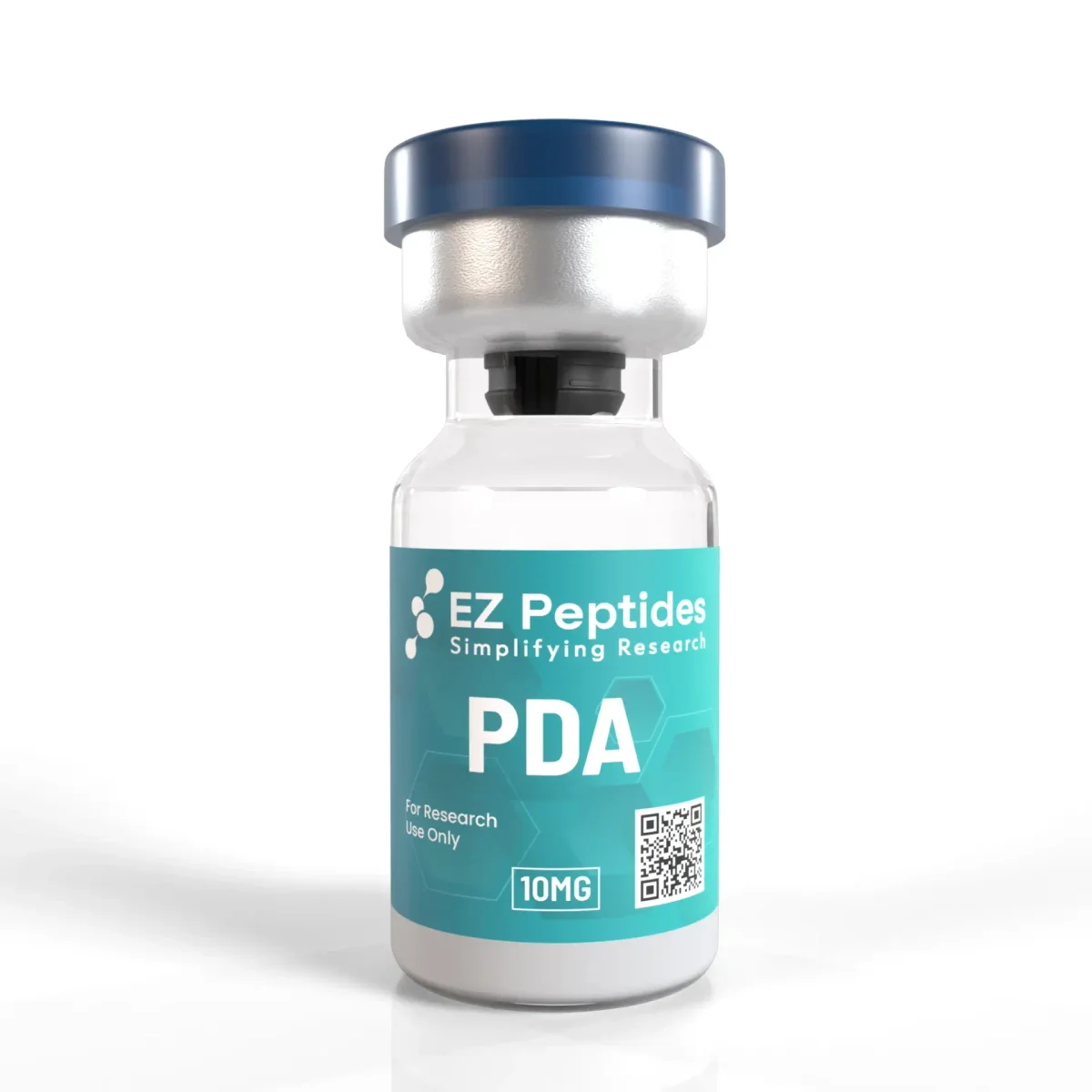
Pentadeca Arginate (PDA)
Arginine-stabilized BPC-157 analog under early investigation
“A structural BPC-157 variant whose arginine modification generates research interest but whose independent evidence base remains largely underdeveloped.”
Last updated: April 27, 2026
Score Breakdown
Evidence
Purity
Cost Efficiency
Safety Profile
Pros & Cons
Pros
- Structural similarity to BPC-157 means the broader preclinical literature on tissue repair and gastroprotection may offer partial mechanistic relevance
- Arginine modification theorized to improve water solubility, potentially reducing reconstitution complexity compared to some BPC-157 formulations
- Relatively accessible price point within the research-chemical peptide market
- Self-reported tolerability appears favorable in community data, with few serious adverse events noted in anecdotal literature
Cons
- No independent human clinical trial data exists for PDA as a distinct compound — the evidence gap relative to BPC-157 is significant
- Mechanistic claims regarding the arginine modification and enhanced nitric oxide activity remain unvalidated in peer-reviewed literature
- Vendor quality control is highly variable; without mandatory third-party COAs, sequence integrity and purity cannot be assumed
Best For
- Researchers investigating BPC-family peptide analogs and structure-activity relationships in tissue repair contexts
- Preclinical study design exploring arginine-modified peptide stability and bioavailability
- Comparative analysis with BPC-157 in gut mucosal and wound-healing animal model research
Avoid If
- Seeking compounds with a validated human-trial evidence base before research use — PDA does not meet this threshold
- Unable to source from vendors providing full third-party COA with HPLC and mass spectrometry confirmation of the correct peptide sequence
Full Review
Pentadeca Arginate (PDA) is a synthetic peptide consisting of 15 amino acids — a sequence closely related to BPC-157 (Body Protection Compound 157) — modified through the substitution or addition of an arginine residue, a structural change that vendors and some researchers claim enhances both water solubility and stability under physiological conditions. BPC-157 itself was originally isolated from human gastric juice and has been studied in preclinical and limited clinical contexts since the early 1990s. PDA belongs to the BPC-family class of peptides and does not have a separate International Nonproprietary Name (INN) or regulatory dossier. It remains a research chemical with no approved indication in any major jurisdiction.
The proposed mechanism of action for PDA mirrors what has been reported for BPC-157 in the preclinical literature: upregulation of growth factor signaling pathways (notably VEGF and EGF), modulation of nitric oxide synthesis, interaction with the FAK-paxillin pathway involved in cytoskeletal repair, and possible effects on dopaminergic and GABAergic neurotransmission. The arginine modification is theorized to confer additional nitric oxide pathway activity given arginine's role as the primary substrate for nitric oxide synthase, though this hypothesis has not been independently validated in peer-reviewed trials as of the knowledge cutoff. Mechanism clarity is largely inferred from BPC-157 analogs rather than PDA-specific pharmacodynamic studies.
The evidence base for PDA specifically is sparse to the point of being nearly absent in indexed literature. The broader BPC-157 literature — from which PDA's profile is primarily extrapolated — includes multiple rodent studies demonstrating accelerated wound healing, tendon-to-bone repair, and gastroprotective effects, with sample sizes typically in the range of 8–30 animals per cohort. A small number of human case reports and very preliminary pilot data exist for BPC-157, but no large-scale randomized controlled trials have been completed or published as of the available record. PDA-specific human trial data does not appear in PubMed or ClinicalTrials.gov registries in any substantive form. The performance profile attributed to PDA in the research-chemical marketplace is almost entirely derived from BPC-157 studies and user self-reports on forums such as Reddit and specialized biohacker communities. These anecdotal reports should be treated with corresponding epistemic caution.
Dosing ranges reported in preclinical research for BPC-157 — the closest analog with published data — typically fall between 1–10 mcg/kg body weight in rodent models, with some extrapolated human-equivalent doses cited in community contexts at roughly 250–500 mcg per day via subcutaneous or intramuscular injection. PDA-specific dosing protocols observed in the research-chemical community broadly mirror these ranges. These figures are reported here in research and observational contexts only and do not constitute a dosing recommendation. Administration methods noted in both published BPC-157 research and community self-report include subcutaneous injection, intramuscular injection, and, in some experimental contexts, oral administration, though oral bioavailability data for PDA specifically is not established.
For educational purposes only: PDA is not approved for human use by the FDA, MHRA, EMA, or TGA. It is classified as a research chemical in the United States, United Kingdom, and European Union, meaning it occupies a legal grey zone — not a controlled substance per se, but not authorized for human consumption. In Australia, it falls under the broader scheduling framework that restricts compounding and sale of unapproved peptide therapeutics. Sourcing considerations are significant: given the lack of any regulatory oversight on production, buyers should require a full Certificate of Analysis (COA) from an accredited third-party laboratory confirming identity via HPLC and mass spectrometry, purity above 98%, and absence of endotoxins. Vendors who cannot provide these documents on request represent a meaningful quality and safety risk. The fact that PDA is structurally distinct from BPC-157 means that COA verification against the correct sequence is particularly important.
Details
Reviews
No reviews yet. Be the first to share your experience.