
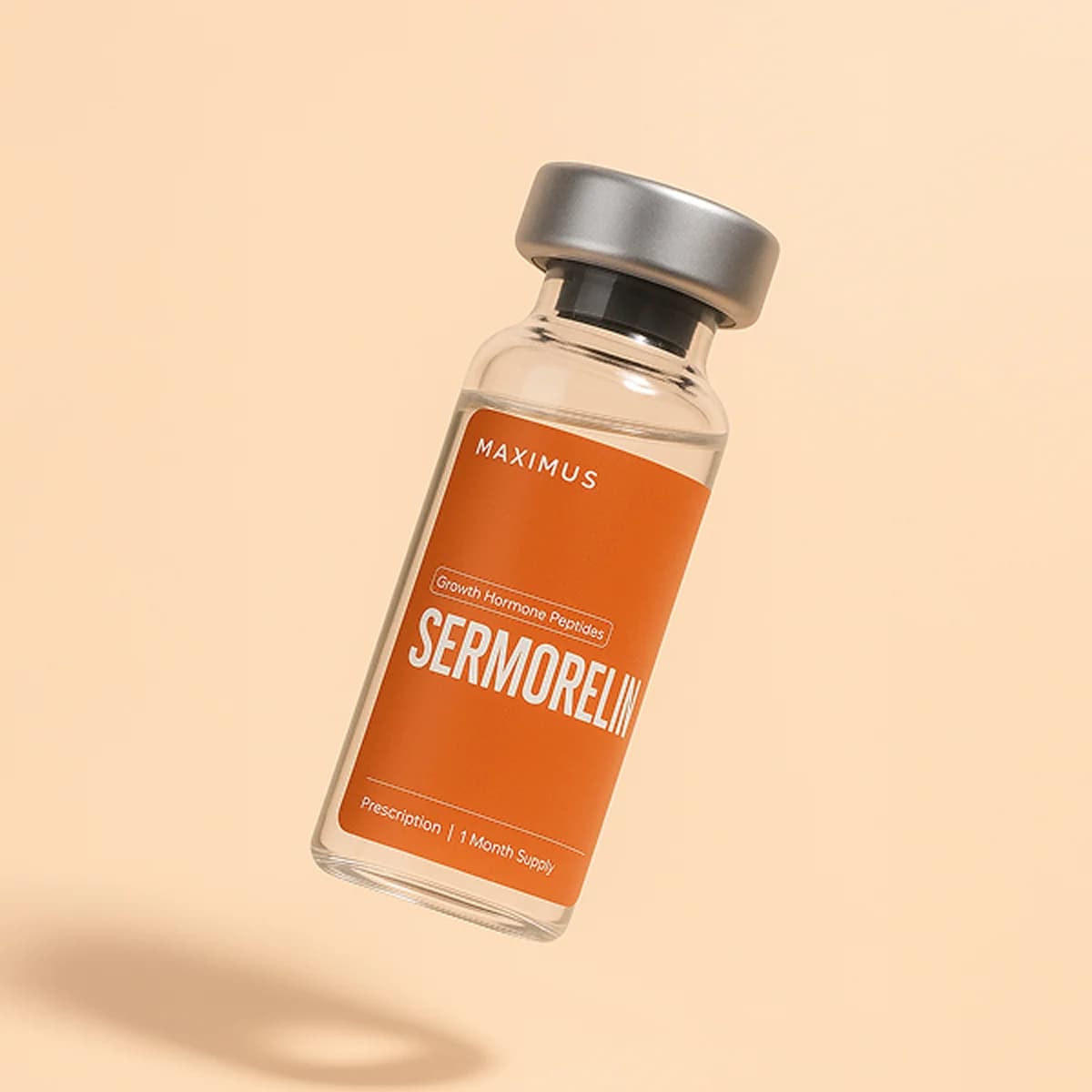
Research Peptide
Sermorelin
GHRH analog targeting pituitary growth hormone release
“A GHRH analog that research suggests prompts the pituitary to release its own growth hormone — preserving the body's feedback loop rather than bypassing it.”
Last updated: April 27, 2026
Score Breakdown
Evidence
Purity
Cost Efficiency
Safety Profile
Pros & Cons
Pros
- Stimulates endogenous GH release rather than bypassing the hypothalamic-pituitary axis, preserving physiological feedback
- Human trial data exists — more than many research-chemical peptides can claim, including at least one small RCT
- Half-life of approximately 10-20 minutes means rapid clearance and limited systemic accumulation
- Compounding pharmacy pathway exists in the US, offering a regulated sourcing option unavailable for most research peptides
Cons
- Extremely short half-life requires frequent administration to sustain GH stimulation, which may reduce practical utility versus longer-acting GHRH analogs like CJC-1295
- Human clinical evidence for anti-aging and body composition outcomes remains preliminary, small-scale, and not replicated in large RCTs
- Research-chemical sourcing carries no quality assurance guarantees; purity and sterility vary significantly across vendors
Best For
- Researchers examining pituitary GH axis responsiveness in aging models
- Individuals with documented GH axis dysfunction exploring options within a supervised clinical or compounding pharmacy framework
- Comparative research contexts evaluating GHRH analogs with intact versus disrupted feedback mechanisms
Avoid If
- Active malignancy or history of hormone-sensitive cancers — GH axis stimulation warrants caution per oncology literature
- Hypothyroidism or other untreated pituitary/endocrine disorders that could amplify unpredictable GH responses
Full Review
Sermorelin acetate is a 29-amino acid truncated analog of endogenous growth hormone-releasing hormone (GHRH 1-44), representing the shortest fragment of GHRH known to retain full biological activity. It belongs to the GHRH-analog peptide class and was originally developed by Serono Laboratories. The FDA approved sermorelin (as Geref) for diagnostic assessment of GH secretory capacity in children with suspected growth hormone deficiency, and it was later explored therapeutically before the branded pharmaceutical was withdrawn from the US market in 2008 for commercial rather than safety reasons. It now exists in a regulatory grey zone: available through compounding pharmacies in the US under specific prescriber oversight, but also widely sold as an unregulated research chemical by peptide vendors — a distinction that carries meaningful legal and quality implications.
Sermorelin's mechanism of action is meaningfully different from exogenous recombinant human growth hormone (rhGH). Rather than bypassing the hypothalamic-pituitary axis entirely, sermorelin binds to GHRH receptors on somatotroph cells in the anterior pituitary, stimulating endogenous GH synthesis and release. This preserves negative feedback mechanisms — meaning the body's own regulatory systems remain intact, theoretically limiting the risk of supraphysiological GH levels. Research suggests this pulsatile, physiologically regulated GH release is qualitatively distinct from rhGH injections, though whether this translates to a meaningfully different safety or efficacy profile in human populations remains an open question.
The evidence base for sermorelin is broader than for many peptides in the research-chemical space, though it is important to distinguish evidence tiers carefully. Human clinical trials do exist: a frequently cited randomized controlled trial by Vittone et al. (1997) in healthy older men reported modest improvements in sleep quality, lean body mass, and GH pulse amplitude, though sample sizes were small (n=89) and effect sizes were not dramatic. Additional human data from compounding-pharmacy-adjacent clinical practice suggests sermorelin may support GH axis function in adults with diagnosed GH deficiency, but robust Phase III RCT data in healthy aging populations is sparse. Animal models have demonstrated more pronounced effects on GH secretion, muscle preservation, and metabolic parameters. A substantial portion of the circulating evidence comes from self-reported user data in biohacker and anti-aging communities, which should be weighted accordingly — not dismissed, but clearly labeled as anecdotal.
Dosing ranges reported in published research and clinical compounding contexts — presented here strictly as research reference points, NOT as a recommendation for human use — have typically ranged from 200mcg to 500mcg administered subcutaneously, most commonly in the evening to align with endogenous GH pulse timing. Some clinical protocols have used doses up to 1mg. Research in adult populations has examined both daily and pulsatile dosing schedules. Cycle durations in clinical literature have ranged from 3 to 6 months. This information is reported from research contexts only. Peptide Guides does not recommend any dosing protocol, and sermorelin sourced outside a licensed compounding pharmacy or prescriber relationship is not approved for human use.
In the United States, sermorelin occupies a nuanced legal position: it is not a DEA-scheduled substance, and licensed compounding pharmacies can legally prepare it for patients under a valid prescription. However, sermorelin sourced from unregulated research-chemical vendors is not intended for human use, is not subject to pharmaceutical-grade manufacturing standards, and exists outside any regulatory approval framework. In the UK and EU, sermorelin is not MHRA- or EMA-approved and is generally classified as an unregulated research chemical. In Australia, it falls under TGA scheduling as a controlled substance requiring prescription. Researchers sourcing sermorelin should prioritize vendors providing comprehensive Certificates of Analysis from accredited third-party laboratories, with HPLC purity data (ideally >98%), mass spectrometry confirmation of molecular identity, and endotoxin testing. The absence of any of these should be treated as a disqualifying red flag. This content is provided for educational purposes only and does not constitute medical advice.
Details
Reviews
No reviews yet. Be the first to share your experience.
Featured In
PEPTIDE-PROFILE
MK-677 (Ibutamoren): What the Research Shows on the Oral Growth Hormone Secretagogue
MK-677 (Ibutamoren) is the most comprehensively studied oral GH secretagogue in the research chemical space, with multiple completed double-blind, placebo-controlled human trials documenting sustained GH and IGF-1 elevation. Its oral bioavailability and documented sleep-architecture effects make it mechanistically interesting, but human trial evidence of insulin sensitivity impairment means any research application requires careful contextual scrutiny.
STACK
Peptide Stacks for Body Recomposition: How Researchers Combine GH-Axis, GLP-1, and Mitochondrial Compounds (2026 Research Guide)
For researchers building a GH-axis protocol with the strongest available human trial data, MK-677 (Ibutamoren) is the most defensible starting point - it's one of the only research chemicals in this class with completed double-blind, placebo-controlled human trials, oral administration, and documented GH/IGF-1 elevation. The insulin sensitivity impairment documented in those same trials, though, makes it a poor fit for any protocol layered with metabolic agents unless that interaction is explicitly part of the research question.
STACK
The GH-Axis Peptide Stack: CJC-1295, Ipamorelin, Sermorelin, and IGF-1 LR3 in Research Context (2026 Guide)
For researchers building a GH-axis peptide stack, CJC-1295 paired with Ipamorelin is the most evidence-supported GHRH+GHRP combination in the literature. CJC-1295 takes the top spot because of its published Phase II pharmacokinetic data (n=64), characterised mechanism at the GHRH receptor, and DAC modification that allows less frequent dosing. All compounds discussed here are research chemicals not approved for human use - this is a research-context summary only.