
COMPARISON
BPC-157 vs GHK-Cu: Two Research Peptides, Two Approaches to Tissue and Skin Repair
Comparing mechanisms, evidence quality, and research contexts for two popular repair peptides
Last updated: May 1, 2026
Quick Answer
BPC-157 and GHK-Cu are two distinct research peptides often compared for tissue repair, but they occupy different evidence positions. GHK-Cu is an endogenous copper-binding tripeptide first isolated from human plasma in 1973, with multiple small human randomized controlled trials supporting its topical dermatological use and documented plasma decline from about 200 ng/mL in young adults to 80 ng/mL by age 60. BPC-157 is a synthetic 15-amino-acid construct derived from human gastric juice protein, supported largely by rodent studies with zero completed human RCTs as of mid-2026. Neither is approved for human therapeutic use.
BPC-157 and GHK-Cu are two of the most discussed research peptides in longevity and recovery circles, and they almost always get mentioned together. That's understandable - both are associated with tissue repair, both circulate heavily in biohacker communities, and both are sold as research chemicals by overlapping vendor pools. But treating them as competitors in the same category, as though one is simply a 'better' version of the other, is a category error that obscures more than it reveals.
The more useful question isn't which peptide is superior - it's which type of evidence each peptide is supported by, and for what tissue targets. GHK-Cu is an endogenous tripeptide with a research history going back to 1973 and a topical human evidence base that, while still limited by clinical standards, includes multiple small randomized controlled trials. BPC-157 is a synthetic pentadecapeptide with an extensive rodent-model literature and zero completed human RCTs as of mid-2026. Those are fundamentally different positions on the evidence pyramid.
This guide is structured to help researchers understand those differences without inflating either peptide's clinical status. Both remain research chemicals in most jurisdictions. Neither is approved for human therapeutic use outside specific licensed research contexts. What follows is an honest mapping of mechanism, evidence quality, tissue targets, safety signals, and sourcing considerations - so researchers can ask sharper questions rather than reach premature conclusions.
Featured Peptides
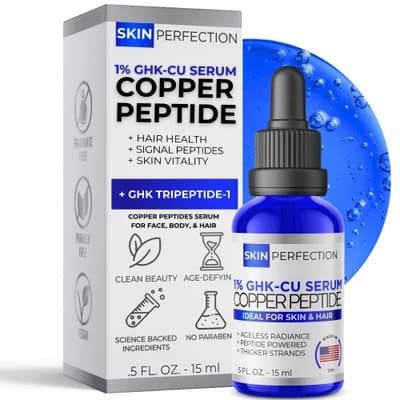
GHK-Cu earns its higher score primarily on the strength of its topical dermatological evidence base and its endogenous status - two advantages BPC-157 doesn't have. For researchers whose work involves skin remodeling, wound healing, or topical applications, the small-but-real human RCT literature gives GHK-Cu a credibility foundation that puts it ahead on evidence quality. The copper chelation verification gap is a genuine sourcing problem that researchers should address directly, and injectable systemic use lacks any human trial support.
GHK-Cu represents the topical-evidence-strong side of this comparison, with a research history dating to 1973 and the only human RCT data present in either peptide's profile.
BPC-157's preclinical record across tendon, gut, and nerve tissue targets is genuinely broad and mechanistically interesting - but the single-group replication problem and the complete absence of human trial data aren't minor caveats, they're fundamental limitations on what conclusions can be drawn. Researchers working in rodent models of musculoskeletal or gastrointestinal injury have a useful preclinical literature to engage with. Researchers looking for human evidence won't find it here.
BPC-157 represents the preclinical-heavy, systemically-researched side of this comparison, with the largest rodent-model literature of any healing peptide in the research-chemical space.
Overview: Why Compare These Two Peptides?
The pairing of BPC-157 and GHK-Cu in research discussions typically happens for practical reasons: both are associated with wound healing and tissue repair, both are accessible through the research-chemical market, and both appear on the same vendor pages. But their chemical identities, evidence profiles, and primary research contexts are distinct enough that comparing them head-to-head as competing interventions misrepresents the literature.
A more productive frame is to ask what each peptide can and cannot claim support for, where that support comes from (human trials, animal studies, or in vitro data), and what gaps remain. That frame drives the structure of this guide.
---
Chemical Identity and Classification: What BPC-157 and GHK-Cu Actually Are
BPC-157
BPC-157 (Body Protection Compound 157) is a synthetic pentadecapeptide - a 15-amino acid sequence - derived from a protein found in human gastric juice. Its full sequence is Gly-Glu-Pro-Pro-Pro-Gly-Lys-Pro-Ala-Asp-Asp-Ala-Gly-Leu-Val. It doesn't occur naturally in isolation at physiologically meaningful concentrations; it's a research construct derived from the parent gastric protein BPC. It belongs to no established pharmaceutical class and has no approved regulatory status in any major jurisdiction for human therapeutic use.
GHK-Cu
GHK-Cu (Glycyl-L-histidyl-L-lysine copper) is a naturally occurring tripeptide-copper complex. The tripeptide GHK was first isolated from human plasma by Loren Pickart in 1973, giving it a discovery history substantially longer and independently reproducible compared to BPC-157. GHK is endogenous - it exists in human plasma, saliva, and urine, with plasma concentrations declining from roughly 200 ng/mL in young adults to around 80 ng/mL by age 60. The copper chelation form (GHK-Cu) is the biologically active version investigated in most research contexts.
Key distinction: GHK-Cu is an endogenous molecule with a documented decline pattern tied to aging. BPC-157 is a synthetic research construct with no endogenous analog. This matters when evaluating physiological plausibility arguments.
---
Mechanisms of Action: How Research Suggests Each Peptide Works
BPC-157: Multiple Proposed Pathways, All Preclinical
Research in animal models proposes several mechanisms by which BPC-157 may exert its reported effects:
- Nitric oxide (NO) modulation: Rodent studies suggest BPC-157 interacts with the nitric oxide system, which may help explain reported vascular and healing effects.
- VEGF upregulation: Animal model data indicates possible stimulation of vascular endothelial growth factor, which would support angiogenesis in damaged tissue.
- EGR-1 pathway activation: Some preclinical research implicates early growth response protein 1, a transcription factor involved in tissue repair signaling.
- Tendon-to-bone healing: Rat studies from the primary research group (Sikiric et al.) report accelerated tendon fibroblast recovery and bone-to-tendon junction repair.
None of these mechanisms have been validated in human tissue through controlled trials. They're mechanistically plausible but unconfirmed in human biology.
GHK-Cu: A Broader and Older Mechanistic Record
GHK-Cu's mechanistic research base is wider and spans multiple decades of independent investigation:
- Collagen synthesis stimulation: Multiple in vitro studies report GHK-Cu increases collagen I and III synthesis in fibroblast cultures.
- Antioxidant signaling: Research suggests GHK-Cu activates antioxidant defense genes, potentially through Nrf2 pathway interactions.
- Gene expression modulation: A widely cited computational analysis using the Connectivity Map database associated GHK with modulation of roughly 4,000 genes related to inflammation, tissue remodeling, and metabolism. This figure needs careful interpretation - it comes from a bioinformatics analysis, not a clinical trial, and shouldn't be read as evidence of established clinical benefit.
- Wound contraction and healing: Animal wound models and several small human studies report accelerated wound closure with topical GHK-Cu application.
- Stem cell recruitment: Some in vitro research suggests GHK-Cu may recruit circulating stem cells to wound sites, though human evidence for this mechanism is absent.
---
Evidence Quality Comparison: Animal Models, In Vitro Data, and Human Trials
This is the section that most clearly separates the two peptides.
BPC-157: Strong Preclinical Record, No Human RCTs
The BPC-157 literature is extensive in rodent models. Studies report effects on tendon healing, intestinal repair (with relevance to IBD-adjacent research), peripheral nerve recovery, and muscle damage. Several methodological concerns limit interpretation, though:
1. Single-group concentration: A disproportionate share of the BPC-157 animal literature originates from the Sikiric research group at the University of Zagreb. Independent replication across separate institutions is limited.
2. No human RCTs published as of mid-2026: There are no peer-reviewed, completed randomized controlled trials in humans for BPC-157. ClinicalTrials.gov has listed exploratory trials, but none have produced published efficacy results as of this writing.
3. Route variability in animal studies: Animal studies use intraperitoneal, subcutaneous, and oral routes. Translating these findings to human dosing and administration routes isn't straightforward.
GHK-Cu: Weaker Systemic Evidence, Stronger Topical Evidence
GHK-Cu sits in a different position. Its topical dermatological evidence base includes multiple small human studies:
- A 2001 study by Leyden et al. (n=67) reported improvements in periorbital wrinkle appearance with GHK-Cu topical application over 12 weeks, assessed via skin replica analysis.
- Studies published in peer-reviewed dermatology journals have reported improvements in skin density, thickness, and fine line appearance in small RCTs, though sample sizes rarely exceed 100 participants.
- In vitro fibroblast data is extensively replicated across independent laboratories.
The systemic (injectable) evidence for GHK-Cu in humans is essentially absent. Injectable research-chemical formulations sold in the research market don't have a corresponding human trial literature behind them. The human evidence is topical and dermatological.
Summary Table: Evidence Tiers
| Evidence Type | BPC-157 | GHK-Cu |
|---|---|---|
| Human RCTs | None published (mid-2026) | Multiple small trials (topical only) |
| Animal studies | Extensive, multiple tissue types | Moderate, primarily wound/skin models |
| In vitro data | Moderate | Extensive, widely replicated |
| Independent replication | Limited | Strong (for topical/fibroblast work) |
| Endogenous precedent | None | Yes (plasma, saliva, urine) |
---
Topical vs. Injectable Research Contexts: Where Each Peptide Has Stronger Evidence
GHK-Cu: Topical Is the Evidence-Supported Route
The research literature that exists for GHK-Cu in humans is almost entirely topical. Dermatological applications - anti-aging creams, wound dressings, post-procedure skin recovery - represent the contexts where GHK-Cu has the most defensible evidence base. Researchers and clinicians working in dermatological contexts have a meaningful literature to reference.
Injectable GHK-Cu formulations exist in the research-chemical market, but the human evidence to support injectable use isn't present in the peer-reviewed literature. Researchers considering systemic routes should recognize they're operating well outside the evidence base.
BPC-157: Injectable and Oral Routes in Animal Research, No Confirmed Human Route
BPC-157 animal studies use parenteral (typically intraperitoneal or subcutaneous) and oral routes. Some researchers have noted that oral administration in rodent models produces systemic effects, which is a point of interest given potential gut-stability claims. None of these routes have been validated for efficacy or safety in humans through controlled trials, though. Community self-reports describe subcutaneous injection and oral capsule use, but these are anecdotal and carry no clinical weight.
---
Tissue Targets: Skin, Tendon, Gut, Nerve - Who Does What in the Literature
Skin
- GHK-Cu: Has the stronger evidence base here. Small human RCTs support topical skin remodeling signals. In vitro collagen synthesis data is extensively replicated.
- BPC-157: Some rodent wound-healing data exists, but skin isn't a primary research focus in the BPC-157 literature compared to tendon and gut.
Tendon and Musculoskeletal Tissue
- BPC-157: This is where the rodent-model literature is strongest. Multiple studies report accelerated tendon-to-bone healing and fibroblast proliferation in rat injury models. It's also the most cited application in community self-research contexts.
- GHK-Cu: Musculoskeletal applications appear in some wound-healing adjacent research, but tendon-specific data is limited compared to BPC-157's rodent record.
Gut and Gastrointestinal Tissue
- BPC-157: Animal models report significant gastrointestinal protective effects - including in models of NSAID-induced gastric damage, inflammatory bowel disease-adjacent models, and fistula healing. The origin of BPC-157 from gastric protein provides some mechanistic basis for this research direction.
- GHK-Cu: Gastrointestinal research applications aren't a meaningful focus in the published literature.
Peripheral Nerve
- BPC-157: Some rat studies report peripheral nerve recovery benefits following crush injuries. This remains a preclinical finding without human replication.
- GHK-Cu: Neuroprotective signals appear in some in vitro and animal research, but this isn't a primary evidence domain for GHK-Cu.
---
Reported Side Effect Profiles and Safety Signals
> Disclaimer: The following reflects reported findings from published animal studies and community self-reports. Neither peptide has completed human safety trials adequate to establish a formal adverse event profile. This information should not be interpreted as safety clearance for human use.
BPC-157
Animal studies consistently report a low acute toxicity profile for BPC-157 across multiple routes and dose ranges in rodent models. Community self-reports - which should be treated as anecdotal evidence only - largely describe mild and transient effects including nausea and injection-site irritation. No serious adverse events have been documented in the peer-reviewed animal literature.
The absence of human trial data means medium and long-term safety signals in humans are entirely unknown, though. Researchers should treat the apparently favorable animal safety profile with appropriate caution - animal toxicity studies don't translate directly to human safety clearance.
GHK-Cu
Topical GHK-Cu has a favorable safety record in published dermatological trials, with no serious adverse events reported at studied doses. Skin irritation at higher topical concentrations has been noted in some studies.
For injectable formulations, the safety profile is essentially uncharacterized in humans. The copper component adds a consideration that doesn't apply to BPC-157 - copper toxicity at supraphysiological doses is a documented clinical concern, and the copper chelation status of research-chemical GHK-Cu preparations is rarely independently verified. This is a meaningful gap for researchers considering non-topical routes.
---
Legal Status by Region: US, UK, EU, and Australia
United States
- BPC-157: Not FDA approved. Not a scheduled substance under the Controlled Substances Act. Sold as a research chemical. The FDA has issued warning letters regarding peptide compounding, and BPC-157 was removed from the list of bulk substances that FDA-registered compounding pharmacies may use (as of 2022 guidance). Possession for personal use isn't explicitly criminalized, but the legal landscape is evolving and researchers should verify current status.
- GHK-Cu: Not FDA approved for any indication. Sold as a research chemical for injectable formulations. Topical GHK-Cu appears in cosmetic products, which operate under a different regulatory framework than drugs. No scheduled substance status.
United Kingdom
Neither BPC-157 nor GHK-Cu is licensed as a medicine by the MHRA. Both are sold under research-chemical designations. Importation of unlicensed medicines for personal use sits in a legal gray area. Researchers should consult current MHRA guidance.
European Union
Neither peptide holds EMA approval. Country-level variation in research-chemical importation law applies, and some EU member states enforce more strictly than others.
Australia
Australia's TGA has historically taken a stricter approach to peptide imports. BPC-157 and GHK-Cu are not TGA-approved. The TGA's Customs (Prohibited Imports) Regulations affect many research-chemical peptides. Australian researchers should review current TGA scheduling and importation rules before sourcing either peptide.
---
Sourcing Considerations: COA Verification, Copper Chelation Testing, and Vendor Red Flags
General COA Standards
For any research-peptide purchase, a credible certificate of analysis should include:
- Identity confirmation: HPLC (high-performance liquid chromatography) purity percentage, mass spectrometry molecular weight confirmation
- Purity threshold: Research-grade peptides are generally expected to show 98%+ purity on HPLC
- Third-party testing: COAs from vendors' in-house labs carry less weight than those from independent analytical laboratories
- Lot-specific documentation: COAs should match the specific lot number of the product being purchased, not be generic documents
GHK-Cu-Specific: Copper Chelation Verification
GHK-Cu's biological activity depends on copper chelation - the copper ion being bound to the tripeptide in the correct coordination. Standard HPLC analysis confirms peptide purity but doesn't confirm copper chelation status. Researchers should look for:
- ICP-MS (inductively coupled plasma mass spectrometry) data confirming copper content
- Copper-to-peptide ratio analysis
Few vendors provide this level of verification. The absence of chelation confirmation is a meaningful quality gap specific to GHK-Cu that doesn't apply to BPC-157.
Red Flags for Either Peptide
- No COA provided, or COA not available before purchase
- COA dates that don't match current stock
- Vendors making therapeutic or clinical claims ("treats", "heals", "cures") - this is both legally problematic and a credibility signal
- No independent lab identification on COA documentation
- Pricing significantly below market norms (peptide synthesis has real cost floors)
- No age verification or requirement at checkout
---
Research Context Summary: Choosing the Right Tool for the Right Question
The practical takeaway from this comparison isn't that one peptide is better than the other - it's that they occupy different evidence spaces and answer different research questions.
Research Peptide GHK-Cu (Score: 72/100) is the more defensible choice for researchers focused on skin remodeling and wound healing applications where topical administration is the research context. Its endogenous status, decades of independent research, and small but real human RCT data for topical use give it a credibility floor that BPC-157 can't match. The gaps are real - systemic use lacks human evidence, copper chelation verification is underperformed in the vendor market, and the '4,000 genes' claim is frequently overstated - but the mechanistic foundation is solid for topical applications.
Research Peptide BPC-157 (Score: 67/100) is the more relevant tool for researchers interested in tendon, gut, or peripheral nerve applications in preclinical model contexts. Its rodent-model literature is extensive across multiple tissue types, it's relatively affordable, and community tolerability reports are broadly consistent with animal safety data. The limitation is fundamental, though: no human trial has validated any of these findings. Researchers who need to draw conclusions about human biology are working without a floor of human evidence.
For researchers who need the strongest evidence available, GHK-Cu's topical applications represent the more validated territory. For researchers mapping preclinical rodent findings, BPC-157 offers a richer tissue-repair literature - with the understanding that independent replication is limited and human translation is unconfirmed.
---
Regulatory Disclaimer and Where to Find Primary Literature
Regulatory Disclaimer: Neither BPC-157 nor GHK-Cu is approved by the FDA, MHRA, EMA, or TGA for human therapeutic use. Both are sold as research chemicals in most jurisdictions. Nothing in this guide constitutes medical advice, a treatment recommendation, or an endorsement of human use. Researchers are responsible for understanding and complying with the legal status of these compounds in their jurisdiction.
Primary Literature Resources
- PubMed (pubmed.ncbi.nlm.nih.gov): Search "BPC-157" and "GHK-Cu" or "glycyl-histidyl-lysine" for peer-reviewed literature. Filter by study type (animal, human, in vitro) to assess evidence tiers accurately.
- ClinicalTrials.gov: Search current and past trial registrations for BPC-157. As of mid-2026, no completed RCTs with published results exist, but the registry reflects ongoing research activity.
- Cochrane Library (cochranelibrary.com): Systematic reviews relevant to peptide wound healing research may provide useful methodological context.
- Examine.com: Provides lay-accessible evidence summaries with study-type labeling for several peptides including GHK-Cu.
Researchers are strongly encouraged to read primary sources rather than relying on secondary summaries - including this one - for research decisions.
Tips
- 1.When reading BPC-157 animal studies, check author affiliations before drawing conclusions - a disproportionate share of the literature comes from a single research group at the University of Zagreb, which limits how much independent replication confidence you can reasonably have.
- 2.For GHK-Cu sourcing, request ICP-MS copper content data alongside standard HPLC purity analysis. Most vendors won't proactively provide this, but it's the only way to actually confirm chelation status in the product you're purchasing - and that matters for biological activity.
- 3.Check ClinicalTrials.gov for current registration status on both peptides before designing any research protocol. The regulatory landscape for compounded and research-chemical peptides has shifted in the US and it's likely to keep evolving.
The Bottom Line
BPC-157 and GHK-Cu aren't competing answers to the same question - they're tools with different evidence profiles suited to different research contexts. GHK-Cu, with its topical human RCT data and endogenous precedent, is the more evidence-supported choice for skin and wound healing research. BPC-157, with its extensive but largely unreplicated rodent literature, remains the reference point for preclinical multi-tissue healing research while human trial validation is still absent. Researchers who understand that distinction will ask better questions of the literature and make more defensible sourcing decisions.
Frequently Asked Questions
What is the difference between BPC-157 and GHK-Cu for tissue repair?
Has BPC-157 been tested in human clinical trials?
Is GHK-Cu safe to use topically, and is it FDA approved?
Can BPC-157 and GHK-Cu be stacked or used together?
Where is BPC-157 legal, and can I buy it without a prescription?
What should a legitimate certificate of analysis (COA) include when buying GHK-Cu or BPC-157 as research peptides?
Related Guides
PROTOCOL-FRAMEWORK
Peptide Dosing Ranges Reported in Research: A Protocol Framework Reference (Not a Recommendation)
Peptide dosing ranges reported in published research span five evidence tiers, from FDA-approved Phase III RCT data (tirzepatide, semaglutide, tesamorelin) down to compounds where credible human dosing data is essentially absent. The strongest dataset belongs to tirzepatide, where SURMOUNT-1 (n=2,539, 72 weeks) reported approximately 20.9% mean body weight reduction at the 15 mg weekly dose versus placebo. Tier 1 compounds are prescription drugs accessed through licensed prescribers; Tiers 3–5 (including BPC-157, GHK-Cu, and ipamorelin) are not approved by the FDA, MHRA, TGA, or EMA for human therapeutic use.
STACK
The Skin and Anti-Aging Peptide Stack: GHK-Cu, BPC-157, Pentadeca Arginate, and KPV in Research (2026 Guide)
GHK-Cu is the strongest compound in this stack on evidence quality alone - it's the only one with multiple small human RCTs, decades of published mechanistic research dating back to 1973, and a reasonably clean preliminary safety profile across topical and in vitro models. The other three compounds are preclinical-only, which makes GHK-Cu the clearest anchor for any researcher building a skin and recovery peptide stack in 2026.
HOW TO
How to Read a Peptide Certificate of Analysis (COA): A Researcher's Field Guide
A peptide Certificate of Analysis (COA) is a laboratory-issued document reporting identity, purity, and safety testing for a specific batch of compound, answering three questions: is it the right compound, how much is present, and is it safe to handle. Prescription peptides like semaglutide are manufactured under FDA-enforced GMP standards with legally accountable COAs, while research chemicals such as BPC-157 and GHK-Cu carry no mandated COA content, making ISO 17025 laboratory accreditation, HPLC purity, mass spectrometry identity confirmation, and endotoxin testing the key fields researchers must evaluate independently.