
STACK
The Longevity Stack: How Epithalon, MOTS-c, and Thymosin Alpha-1 Are Studied Together
A research-first look at three peptides studied in combination for aging and immune resilience
Last updated: May 1, 2026
Quick Answer
The longevity peptide stack pairing Epithalon, MOTS-c, and Thymosin Alpha-1 is a research-only combination targeting three distinct hallmarks of aging: telomere attrition, mitochondrial dysfunction, and immunosenescence, respectively. None of the three compounds carry FDA, MHRA, or TGA approval for human administration, and the evidence base is highly uneven—Thymosin Alpha-1 has decades of clinical RCT data, MOTS-c has solid mechanistic and animal research with emerging human studies, and Epithalon's literature, though substantial in volume, originates largely from a single Russian research group (the Khavinson laboratory) with limited independent Western replication.
Most peptide content treats each compound as a standalone intervention - profile the mechanism, cite the animal studies, list the dosing ranges, move on. That approach has real limits when the actual research question is about combining compounds with distinct but potentially complementary biological targets. The stack examined here - Epithalon, MOTS-c, and Thymosin Alpha-1 - has built a following in longevity and biohacking communities because each compound appears to address a different axis of biological aging: telomere dynamics, mitochondrial metabolic regulation, and thymic immune decline.
The mechanistic rationale for combining these three is genuinely interesting. Aging isn't a single-mechanism problem. Telomere attrition, declining mitochondrial efficiency, and immunosenescence are distinct but interrelated processes, and there's legitimate scientific logic in asking whether compounds targeting each of these pathways might produce additive or complementary effects. That's the hypothesis. What the evidence actually supports is a more complicated question.
This guide does not recommend this stack for human use. All three compounds are sold as research chemicals in most jurisdictions. None carry FDA, MHRA, or TGA approval for human administration. What this guide does is examine the published evidence honestly, characterize the mechanistic arguments for and against combining these compounds, and give researchers and informed readers a realistic framework for understanding what's known, what's speculated, and what remains genuinely unresolved.
Featured Peptides
Thymosin Alpha-1 is the most evidence-grounded compound in this stack by a substantial margin. Decades of pharmaceutical use across multiple countries, published RCT evidence in clinical populations, and a well-characterized mechanism make it the most defensible inclusion from a research-quality standpoint. The honest caveat is that extrapolation to healthy aging contexts remains speculative - the strongest human evidence is in diseased populations, not longevity protocols.
Represents the highest evidence quality in the stack and anchors the immunosenescence axis of the longevity rationale.
MOTS-c sits in a middle tier: the mechanistic story is compelling, the animal data is replicated across independent groups, and the centenarian population association adds some plausibility. The premium price point is harder to justify given the absence of large human interventional trials. For researchers specifically interested in mitochondrial aging biology, the mechanistic depth warrants attention - but the human evidence base needs to mature considerably before stronger conclusions are possible.
Addresses mitochondrial dysfunction and metabolic aging, one of the most biologically relevant axes of the longevity stack rationale, with replicated preclinical data.
Epithalon carries the most speculative evidence profile of the three. The telomerase-activation mechanism is theoretically aligned with cellular aging biology, and the Russian research program has produced a substantial volume of data over several decades. The problem is the single-group concentration of evidence, the absence of independent large-scale replication, and an unresolved theoretical question about telomerase activation and oncogenic risk - collectively, these demand significant interpretive caution. It's not without interest; it's without adequate independent verification.
Represents the telomere attrition axis of the longevity stack and is one of the few research chemicals with any published human-level data, however limited in scope and independence.
What Is a Longevity Peptide Stack? Defining the Research Framework
A "stack" in this context means a protocol in which multiple peptide compounds are used in combination, typically on the assumption that their mechanisms are distinct enough to be additive and compatible enough not to interfere with each other. The longevity stack framing specifically targets hallmarks of aging - the biological processes increasingly accepted by geroscience researchers as the mechanistic drivers of age-related decline.
The three hallmarks most relevant here are:
- Telomere attrition - progressive shortening of protective chromosome caps with each cell division, associated with cellular senescence
- Mitochondrial dysfunction - declining efficiency of cellular energy metabolism and increasing oxidative stress with age
- Immunosenescence - age-related decline in immune competence, particularly T-cell function originating from thymic involution
Epithalon, MOTS-c, and Thymosin Alpha-1 are proposed to address each of these, respectively. Whether that mapping holds under scrutiny is the central question this guide examines.
One methodological note before going further: the research on these compounds varies enormously in quality. Thymosin Alpha-1 has genuine RCT evidence in clinical populations. MOTS-c has solid mechanistic and animal data with nascent human research. Epithalon's evidence base is substantial in volume but concentrated in a single research institution with limited independent replication. These are not equivalent bodies of evidence, and treating them as such would misrepresent the science.
---
Epithalon: Telomerase Activation, Pineal Biology, and the Evidence Base
What It Is
Epithalon (also spelled Epitalon) is a synthetic tetrapeptide - Ala-Glu-Asp-Gly - derived from a natural peptide complex called Epithalamin, originally isolated from bovine pineal gland tissue. It was developed in the 1980s and 1990s primarily by the St. Petersburg Institute of Bioregulation and Gerontology under Vladimir Khavinson. Its molecular weight is approximately 390 Da, and as a tetrapeptide it's chemically well-characterized and straightforward to synthesize.
Mechanism of Action
Epithalon's primary proposed mechanism involves activation of telomerase (hTERT), the enzyme responsible for maintaining telomere length. In most somatic cells, telomerase is silenced after development, and each cell division results in progressive telomere shortening that eventually triggers senescence or apoptosis. Research from the Khavinson group suggests Epithalon may reactivate telomerase expression, potentially slowing telomere attrition. Secondary mechanisms proposed in the literature include regulation of melatonin secretion via pineal gland activity, antioxidant effects, and modulation of gene expression through chromatin remodeling.
Evidence Summary
Animal and in vitro studies: Multiple studies from the Russian research group report life extension in rodent models, reduced tumor incidence in aged mice, restoration of melatonin circadian rhythms, and telomere lengthening in somatic cells. A series of papers published in journals including Bulletin of Experimental Biology and Medicine document these findings across multiple decades of work.
Human-level evidence: A small number of studies involving human subjects have been published, primarily observational or lacking rigorous controls. Khavinson et al. published data suggesting changes in aging biomarkers in elderly populations following Epithalon administration. These studies are notable for representing any human-level data at all - which is genuinely rare in this space - but they're not large, randomized, or independently replicated.
Critical limitation: The overwhelming majority of Epithalon evidence originates from a single research group. Independent replication in Western academic institutions using modern RCT methodology has not appeared in high-impact international journals. That concentration of evidence is a significant interpretive constraint, and it's worth being direct about it.
Theoretical concern: The long-term consequences of exogenous telomerase activation in non-cancer cells aren't established. Because telomerase activation is also a feature of cancer cells, the theoretical possibility of promoting tumorigenesis with extended use has not been formally ruled out in human populations. This is not a confirmed risk - it's an unresolved question, and that distinction matters.
---
MOTS-c: Mitochondrial Peptides, AMPK Signaling, and Metabolic Aging Research
What It Is
MOTS-c (Mitochondrial Open Reading Frame of the 12S rRNA type-c) is an endogenous peptide encoded within the mitochondrial genome - specifically the 12S ribosomal RNA gene. It was first identified by Lee et al. in 2015 at the University of Southern California, and that discovery was significant because it challenged the assumption that functional peptides are exclusively nuclear-encoded, establishing that mitochondria produce bioactive signaling molecules beyond their classical role in energy metabolism. MOTS-c is 16 amino acids long and is naturally present in human blood, with circulating levels that decline with age.
Mechanism of Action
MOTS-c primarily signals through AMPK (AMP-activated protein kinase), a master regulator of cellular energy homeostasis. AMPK activation by MOTS-c has been shown in research models to:
- Improve insulin sensitivity and glucose uptake in skeletal muscle
- Promote fatty acid oxidation
- Suppress mTOR signaling (associated with reduced cellular aging rate in multiple model organisms)
- Improve mitochondrial function and reduce reactive oxygen species production
A 2019 paper in Cell Metabolism (Lee et al.) reported that MOTS-c translocates to the nucleus under metabolic stress and acts as a transcriptional regulator, suggesting a more complex role than a simple AMPK agonist. Additional research has associated MOTS-c with physical performance and stress resistance in animal models.
Evidence Summary
Animal studies: Consistent and replicated findings across mouse models show improved insulin sensitivity, reduced obesity markers on high-fat diets, better physical performance in aged mice, and extended lifespan signals in some models. Critically, these findings come from multiple independent research groups - which distinguishes MOTS-c's animal evidence base from Epithalon's.
Human population data: A study examining MOTS-c variants in centenarian populations found that specific mitochondrial haplotypes associated with higher MOTS-c expression correlated with longevity. That's not an interventional study, but it adds biological plausibility.
Human interventional trials: As of the current evidence review, large-scale RCTs of exogenous MOTS-c administration in humans haven't been published. The human interventional evidence is preliminary, and extrapolation from animal data to human outcomes carries the standard caveats.
Practical considerations: MOTS-c has an estimated short half-life in circulation, requiring frequent dosing in research protocols. It requires reconstitution from lyophilized powder, and the premium pricing relative to the current human evidence base is a legitimate concern for research budget allocation.
---
Thymosin Alpha-1: Thymic Function, Immunosenescence, and the Clinical Record
What It Is
Thymosin Alpha-1 (Ta1) is a 28-amino-acid peptide naturally produced by thymic epithelial cells. It was first isolated and characterized by Allan Goldstein at George Washington University in the 1970s as part of Thymosin Fraction 5, a thymic extract. The synthetic version, Thymalfasin, has been approved and used clinically in multiple countries - including Italy, China, and several Asian markets - since the 1980s under brand names including Zadaxin. It's the most clinically studied compound in this stack, and it's not particularly close.
Mechanism of Action
Thymosin Alpha-1 functions as an immunomodulator, primarily by promoting T-cell maturation and differentiation within the thymus and by modulating both innate and adaptive immune responses. Proposed mechanisms include:
- Upregulation of MHC class I expression on T-cells
- Enhancement of natural killer (NK) cell activity
- Modulation of dendritic cell function and cytokine production (particularly IFN-alpha and IFN-gamma)
- Toll-like receptor signaling modulation
In the context of aging, the thymus undergoes progressive involution beginning in early adulthood, resulting in reduced T-cell output and impaired immune surveillance - a process called immunosenescence. The rationale for Thymosin Alpha-1 in longevity contexts is that it may partially compensate for this functional decline, though that application is extrapolative beyond its studied indications.
Evidence Summary
Human RCT evidence: This is where Thymosin Alpha-1 separates from the other two compounds. Published RCTs include trials in hepatitis B and C, sepsis, and other infectious and oncological contexts. A notable sepsis trial (Shi et al., 2022, JAMA Internal Medicine, n=361) found significantly reduced 28-day mortality in the Thymosin Alpha-1 group compared to placebo. A Cochrane-adjacent systematic review of hepatitis B trials reports consistent immune response improvements. These are diseased population studies, not healthy-aging studies, but the mechanistic evidence is grounded in human biology at a level the other two compounds can't yet match.
Longevity-specific extrapolation: Applying Thymosin Alpha-1 to healthy aging and immunosenescence reversal is speculative relative to its clinical evidence base. User-reported experiences in biohacking communities frequently describe reduced frequency of illness and improved recovery metrics, but these are anecdotal and uncontrolled.
Safety record: Decades of pharmaceutical use have produced a relatively clean adverse event profile. Injection site reactions are the most commonly reported effect. Serious adverse events appear rare in clinical literature, though the full safety profile in long-term healthy-population use remains uncharacterized.
---
Mechanistic Synergy: What Research Suggests About Combining These Three
The intellectual appeal of this stack is that each compound appears to target a distinct biological process:
| Compound | Primary Target | Proposed Aging Axis |
|---|---|---|
| Epithalon | Telomerase / Pineal | Telomere attrition, circadian disruption |
| MOTS-c | AMPK / Mitochondria | Metabolic dysfunction, energy homeostasis |
| Thymosin Alpha-1 | Thymus / T-cells | Immunosenescence, immune surveillance |
If the mechanisms are genuinely orthogonal, combining them theoretically avoids the diminishing-returns problem of stacking compounds with redundant mechanisms. That's the positive case for the protocol.
What the research doesn't address: No published study has examined this specific three-compound combination. There's no preclinical or clinical trial data on combined dosing, interaction effects, or whether the proposed synergy is additive, neutral, or potentially antagonistic. Researchers making decisions about this protocol are extrapolating from separate literatures and assuming independence of mechanism - an assumption that hasn't been tested.
Two potential interaction points are worth noting. First, MOTS-c's AMPK activation and mTOR suppression sit within a signaling network that intersects with immune cell metabolism. T-cell activation is metabolically expensive, and AMPK/mTOR balance affects T-cell differentiation. Whether MOTS-c and Thymosin Alpha-1 interact at this junction isn't established. Second, if Epithalon does activate telomerase in immune progenitor cells, it theoretically intersects with the same population Thymosin Alpha-1 is proposed to support. That could represent synergy or interference - the data to distinguish between these possibilities doesn't currently exist.
---
Evidence Hierarchy: Human Trials vs. Animal Models vs. Anecdotal Reports Across the Stack
Being explicit about evidence quality matters here:
Thymosin Alpha-1
- Human RCT evidence: Present, in clinical (diseased) populations
- Animal models: Consistent and replicated
- Healthy-aging application: Extrapolative
- Anecdotal reports: Common in longevity communities, uncontrolled
MOTS-c
- Human RCT evidence: Absent or preliminary at scale
- Animal models: Consistent, replicated across independent groups
- Population association data: Exists for centenarians
- Anecdotal reports: Growing, uncontrolled
Epithalon
- Human-level evidence: Small, non-randomized studies from a single group
- Animal models: Extensive but from that same single group
- Independent replication: Very limited
- Anecdotal reports: Longstanding in Russian and now Western biohacking communities
The honest summary: one compound has clinical-grade evidence for specific indications, one has strong mechanistic and animal support with weak human interventional data, and one has intriguing but unverified evidence concentrated in a single research program.
---
Dosing Ranges Reported in Research Contexts
> Disclaimer: The following dosing information is derived from published research studies, preclinical protocols, and structured literature review. It reflects what has been used in research contexts only. It is not a clinical recommendation, not a dosing guide for human self-administration, and shouldn't be interpreted as such. All three compounds are research chemicals in most jurisdictions without approval for human use.
Epithalon
Research literature from the Khavinson group typically describes administration of 5-10 mg per course, with courses often consisting of daily injections over 10-20 days, repeated periodically (e.g., 1-2 times per year in some protocols). Some in vitro studies use lower concentrations. Subcutaneous or intravenous administration is described in published studies.
MOTS-c
Animal studies have used doses typically scaled to body weight, commonly in the range of 0.5-5 mg/kg in rodent models. Human-relevant dosing hasn't been established through clinical trials. Some research community protocols discuss doses in the range of 5-10 mg per injection, but these figures are extrapolated from animal data and community consensus, not published human RCTs. Subcutaneous injection is the standard route described.
Thymosin Alpha-1
The pharmaceutical form (Thymalfasin/Zadaxin) was used in clinical trials at 1.6 mg subcutaneously, typically twice weekly or with disease-specific schedules, for durations ranging from weeks to months depending on indication. This is the best-documented dosing range in the stack, derived from actual RCT protocols.
---
Reported Side Effects, Contraindications, and Theoretical Risks
Epithalon
- Reported: Generally mild profile in available literature. Injection site reactions are the most noted finding.
- Theoretical: Telomerase activation in the context of pre-existing subclinical malignancy is a theoretical concern that hasn't been experimentally resolved. Individuals with personal or family history of cancer-prone conditions should approach this with particular caution. Again - not a confirmed risk, but an honest unknown.
- Contraindications: No formally established contraindications exist for a compound without approved human use. Pregnancy, pediatric use, and active malignancy are the contexts most flagged in available commentary.
MOTS-c
- Reported: Limited adverse event data given the early stage of human research. Animal studies haven't identified significant toxicity signals at studied doses.
- Theoretical: AMPK activation at high doses could theoretically interfere with anabolic signaling and muscle protein synthesis, given AMPK's role as an energy-sensing suppressor of mTOR. This is speculative in the context of research doses.
- Practical risks: As with all injectable peptides reconstituted from research-chemical sources, the primary practical risks are contamination, incorrect concentration, and improper storage - not intrinsic pharmacological toxicity.
Thymosin Alpha-1
- Reported in clinical literature: Injection site reactions (mild), transient flu-like symptoms in some subjects, occasional fatigue. Serious adverse events appear rare across decades of pharmaceutical use.
- Theoretical: In autoimmune conditions, immune upregulation is theoretically counterproductive. Thymosin Alpha-1's immunomodulatory profile means caution is warranted in individuals with active autoimmune disease - this is a genuine, not just theoretical, concern based on its mechanism.
- Contraindications: Active autoimmune disease, organ transplant recipients on immunosuppression, and concurrent use of other immunomodulatory therapies are flagged in clinical commentary.
Stack-Level Concerns
No published research has examined this combination specifically. Potential interaction risks - particularly between MOTS-c's metabolic signaling and Thymosin Alpha-1's immunomodulatory effects at the T-cell metabolic level - aren't characterized. Researchers combining these should recognize they're operating without combinatorial safety data.
---
Comparative Context: Other Peptides Studied in Longevity-Adjacent Research
Several other compounds appear frequently in longevity-adjacent research literature, worth knowing for context:
- BPC-157 - studied primarily for tissue repair and gastroprotection; not a direct longevity mechanism but frequently used alongside recovery stacks
- SS-31 (Elamipretide) - a mitochondria-targeted peptide with a different mechanism from MOTS-c, studied in heart failure and age-related mitochondrial decline; further along in clinical development than MOTS-c
- GHK-Cu - copper-binding tripeptide studied for tissue remodeling and potential epigenetic effects
- Humanin - another mitochondrially-encoded peptide discovered before MOTS-c, studied for neuroprotection and metabolic effects; mechanistically related to MOTS-c
- Semax / Selank - nootropic peptides with some immunomodulatory data, often discussed in cognitive longevity contexts
None of these are featured products in this guide - they're mentioned only to provide comparative mechanistic context.
---
Legal Status by Region: US, UK, EU, and Australia
| Compound | United States | United Kingdom | European Union | Australia |
|---|---|---|---|---|
| Epithalon | Not FDA approved. Sold as research chemical. Not a scheduled substance. Legal to purchase for non-human research. | Not MHRA approved. Unregulated as a research chemical. Not licensed for human use. | Varies by member state. Generally sold as research chemical without approval. | Not TGA approved. Research chemical. Import for personal use is legally ambiguous and generally discouraged. |
| MOTS-c | Not FDA approved. Research chemical status. No scheduled status. | Not MHRA approved. Research chemical. | Research chemical, no approval. | Not TGA approved. Legal ambiguity as with other unapproved peptides. |
| Thymosin Alpha-1 | Not FDA approved. Research chemical. Has pharmaceutical approval in other countries (Italy, China, various Asian markets). | Not MHRA approved. Research chemical in UK context. | Approved in some EU member states as Thymalfasin/Zadaxin for specific indications. Status varies by country. | Not TGA approved for general use. Compounding pharmacy access possible under specific conditions - verify with a registered practitioner. |
Important note for all jurisdictions: Purchasing and possessing these compounds as research chemicals is generally legal in most of these regions, but self-administration may carry legal risk that varies by jurisdiction. This guide doesn't advise on self-administration. The distinction between legal purchase for research and legal human use is real and not semantic.
---
Sourcing Considerations: COA Standards, Vendor Red Flags, and Quality Assurance
Peptide quality from research-chemical vendors varies significantly. For compounds intended for research use, quality assurance documentation isn't optional.
What a Credible COA Includes
- HPLC (High-Performance Liquid Chromatography) purity report - ideally showing purity of 98% or above, with the chromatogram included
- Mass spectrometry (MS) confirmation - confirming correct molecular weight and sequence identity
- Endotoxin testing (LAL test) - particularly important for injectable peptides; endotoxin contamination is a significant safety risk
- Residual solvent analysis - particularly relevant for lyophilized peptides
- Batch-specific documentation - the COA should match the specific lot number of the product received
Red Flags in Vendors
- No COA provided, or a generic COA not tied to a specific lot
- No mass spectrometry confirmation
- Prices significantly below market average - complex peptides like MOTS-c have real synthesis costs, and unusually low prices suggest quality shortcuts
- No age verification or identity verification at checkout
- Claims of "pharmaceutical grade" without documentation or licensed manufacturing evidence
- Marketing language implying human use or making therapeutic claims
- No cold-chain shipping for temperature-sensitive peptides
Storage Notes
All three compounds require proper cold-chain handling. Lyophilized powders should be stored at -20C before reconstitution. Reconstituted peptides have limited stability and typically require refrigeration at 4C, with use within a defined timeframe. MOTS-c, as a relatively short peptide, is more susceptible to degradation if storage conditions are inconsistent.
---
What the Evidence Doesn't Yet Support: Honest Gaps and Limitations
This section is arguably the most important in the guide.
What isn't supported by current evidence:
1. That this specific three-compound combination produces synergistic longevity effects in humans. No study has tested it.
2. That any of these three compounds extend human lifespan. No human RCT with longevity as a primary endpoint has been completed for any of them in this context.
3. That Epithalon's effects in Russian research populations translate to other genetic backgrounds, health statuses, or when sourced through commercial research-chemical channels rather than pharmaceutical preparation.
4. That MOTS-c's animal data translates predictably to human metabolic outcomes at studied doses.
5. That Thymosin Alpha-1's clinical benefits in infected or immunocompromised patients translate to immune improvement in healthy aging individuals.
6. That the theoretical oncological concern with Epithalon is negligible. It's unresolved, not resolved favorably.
7. That combining immunostimulatory and metabolic-signaling compounds is safe in individuals with underlying conditions, even mild ones.
What is supported:
- Mechanistic rationale for each compound's proposed role exists and is scientifically coherent
- Thymosin Alpha-1 has genuine clinical evidence in specific disease contexts
- MOTS-c has replicated animal data and a compelling endogenous biology story
- Epithalon has generated enough interest to warrant independent replication trials, which don't yet exist at scale
The gap between mechanistic plausibility and demonstrated human efficacy is large. Acknowledging that gap isn't pessimism - it's accuracy.
---
Where to Learn More: PubMed, ClinicalTrials.gov, and Primary Literature Pointers
For researchers who want to go to the primary literature directly:
PubMed search terms:
- "Epithalon telomerase" / "Epitalon aging" / "Khavinson peptide bioregulator"
- "MOTS-c AMPK" / "mitochondrial peptide aging" / "12S rRNA peptide metabolism"
- "Thymosin alpha-1 immunomodulation" / "Thymalfasin sepsis" / "thymosin hepatitis RCT"
Key papers to locate:
- Lee C et al. (2015) - original MOTS-c characterization in Cell Metabolism
- Lee C et al. (2019) - MOTS-c nuclear translocation and transcriptional regulation
- Shi R et al. (2022) - Thymosin Alpha-1 in sepsis, JAMA Internal Medicine
- Khavinson VKh - multiple papers on Epithalon; search PubMed with author name filter
ClinicalTrials.gov: Search "Thymalfasin" for registered and completed trials. MOTS-c trials are beginning to appear. Epithalon registered human trials in Western registries are limited.
Additional resources:
- Hallmarks of Aging - Lopez-Otin et al., Cell 2013 (foundational framing for multi-target longevity approaches)
- SENS Research Foundation publications on immunosenescence and mitochondrial aging
- The Longevity Dividend concept (Olshansky et al.) for broader geroscience context
---
Regulatory Disclaimer and Editorial Standards
This guide is published for educational and informational purposes only. It does not constitute medical advice, clinical guidance, or a recommendation for human use of any compound described. All peptides profiled here are sold as research chemicals and are not approved by the FDA, MHRA, TGA, or EMA for human administration. Note: Thymosin Alpha-1 as Thymalfasin has approval in specific countries for specific indications - those approvals do not extend to research-chemical sourcing or self-administration contexts.
Readers with medical conditions, those taking prescription medications, and anyone considering self-experimentation should consult a qualified healthcare provider before taking any action. The existence of this content doesn't imply endorsement of self-administration.
Peptide Guides follows an evidence-tiering editorial standard: human RCT data, systematic reviews, and meta-analyses are weighted above animal studies, which are weighted above in vitro findings and anecdotal reports. Where evidence quality is limited, that limitation is stated explicitly rather than obscured.
Tips
- 1.Before evaluating any combination protocol, establish evidence quality for each compound independently. Thymosin Alpha-1, MOTS-c, and Epithalon sit at very different points on the evidence hierarchy - conflating them distorts the actual risk-benefit calculus for each.
- 2.When requesting COAs from research-chemical vendors, specifically ask for batch-matched mass spectrometry and endotoxin (LAL) test results, not just HPLC purity. For injectable peptides, endotoxin contamination is a more immediate practical concern than purity percentage alone.
- 3.The longevity stack framing is mechanistically interesting but currently untestable in any rigorous practical sense - no study has examined this combination. Researchers approaching this protocol should treat it as hypothesis generation, not protocol replication, and document observations rigorously if conducting structured research.
The Bottom Line
Thymosin Alpha-1 is the most evidence-supported entry point into this stack, and for researchers evaluating the protocol with limited resources, it's where the strongest scientific foundation currently sits. MOTS-c contributes a mechanistically distinct and biologically credible mitochondrial dimension, though its human evidence base needs to mature. Epithalon remains the most speculative of the three, warranting caution about both its evidence quality and its unresolved theoretical risk profile. The three-compound combination is intellectually coherent as a multi-target aging hypothesis - it's not supported as a validated human protocol, and any researcher engaging with it should keep that distinction clearly in view.
Frequently Asked Questions
Can you stack Epithalon, MOTS-c, and Thymosin Alpha-1 together safely?
What is the difference in evidence quality between Epithalon, MOTS-c, and Thymosin Alpha-1?
What does Epithalon supposedly do, and what does the research actually show?
What hallmarks of aging do Epithalon, MOTS-c, and Thymosin Alpha-1 each target?
Is Thymosin Alpha-1 approved for human use, and how does its legal status compare to Epithalon and MOTS-c?
What should I look for in a COA when sourcing research peptides like Epithalon, MOTS-c, or Thymosin Alpha-1?
Related Guides
CATEGORY-OVERVIEW
Peptides Studied for Fat Loss: GLP-1 Agonists, Mitochondrial Approaches, and Beyond (2026 Research Overview)

Prescription tirzepatide (Mounjaro / Zepbound) is the strongest-evidenced compound in this category by a significant margin. Phase III RCT data from SURMOUNT-1 shows up to ~21% mean body weight reduction at the 15mg dose, a signal no research chemical or investigational agent has come close to replicating in controlled human trials at scale. It's also legally accessible via prescription in all major markets, which puts it in a completely different category from the unregulated research chemicals covered elsewhere in this guide.
STACK
Peptide Stacks for Body Recomposition: How Researchers Combine GH-Axis, GLP-1, and Mitochondrial Compounds (2026 Research Guide)
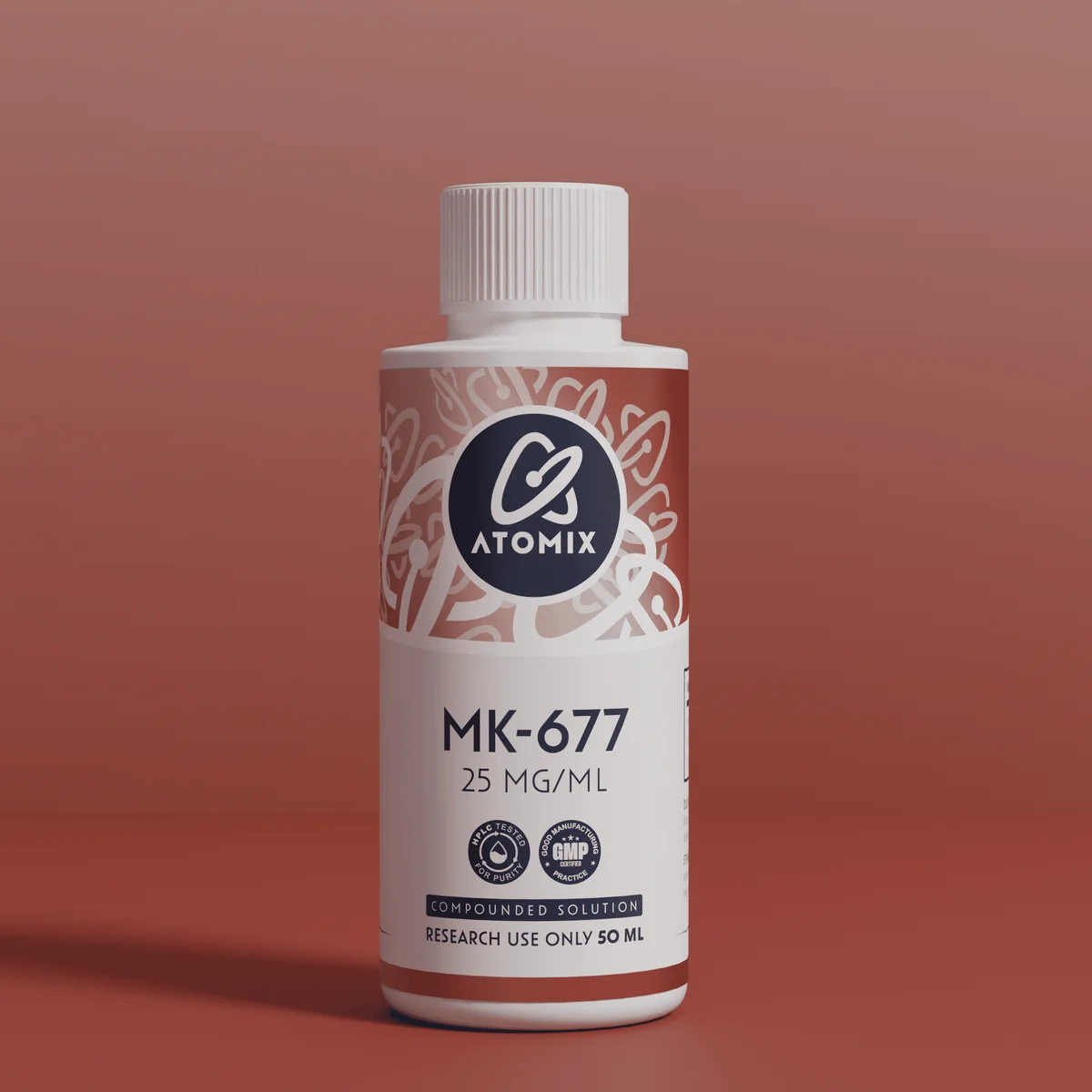
For researchers building a GH-axis protocol with the strongest available human trial data, MK-677 (Ibutamoren) is the most defensible starting point - it's one of the only research chemicals in this class with completed double-blind, placebo-controlled human trials, oral administration, and documented GH/IGF-1 elevation. The insulin sensitivity impairment documented in those same trials, though, makes it a poor fit for any protocol layered with metabolic agents unless that interaction is explicitly part of the research question.
PEPTIDE-PROFILE
Thymosin Alpha-1: Immune-Modulator Research Summary (2024 Evidence Review)
Thymosin Alpha-1 is a 28-amino-acid immunomodulatory peptide derived from prothymosin alpha, first isolated in 1977 by Allan Goldstein at George Washington University and marketed pharmaceutically as Zadaxin in parts of Asia and Eastern Europe. Research suggests it acts as an endogenous TLR2 and TLR9 ligand, promoting Th1 differentiation and increasing IFN-gamma, IL-2, and NK cell activity. Multiple randomized controlled trials support its use in chronic hepatitis B, hepatitis C, sepsis, and cancer-adjuvant contexts, but it remains unapproved in the US, UK, EU, and Australia, where it is sold under research-chemical status.