
PEPTIDE-PROFILE
MK-677 (Ibutamoren): What the Research Shows on the Oral Growth Hormone Secretagogue
An evidence-first look at the only oral GH secretagogue with double-blind human trial data
Last updated: June 8, 2026
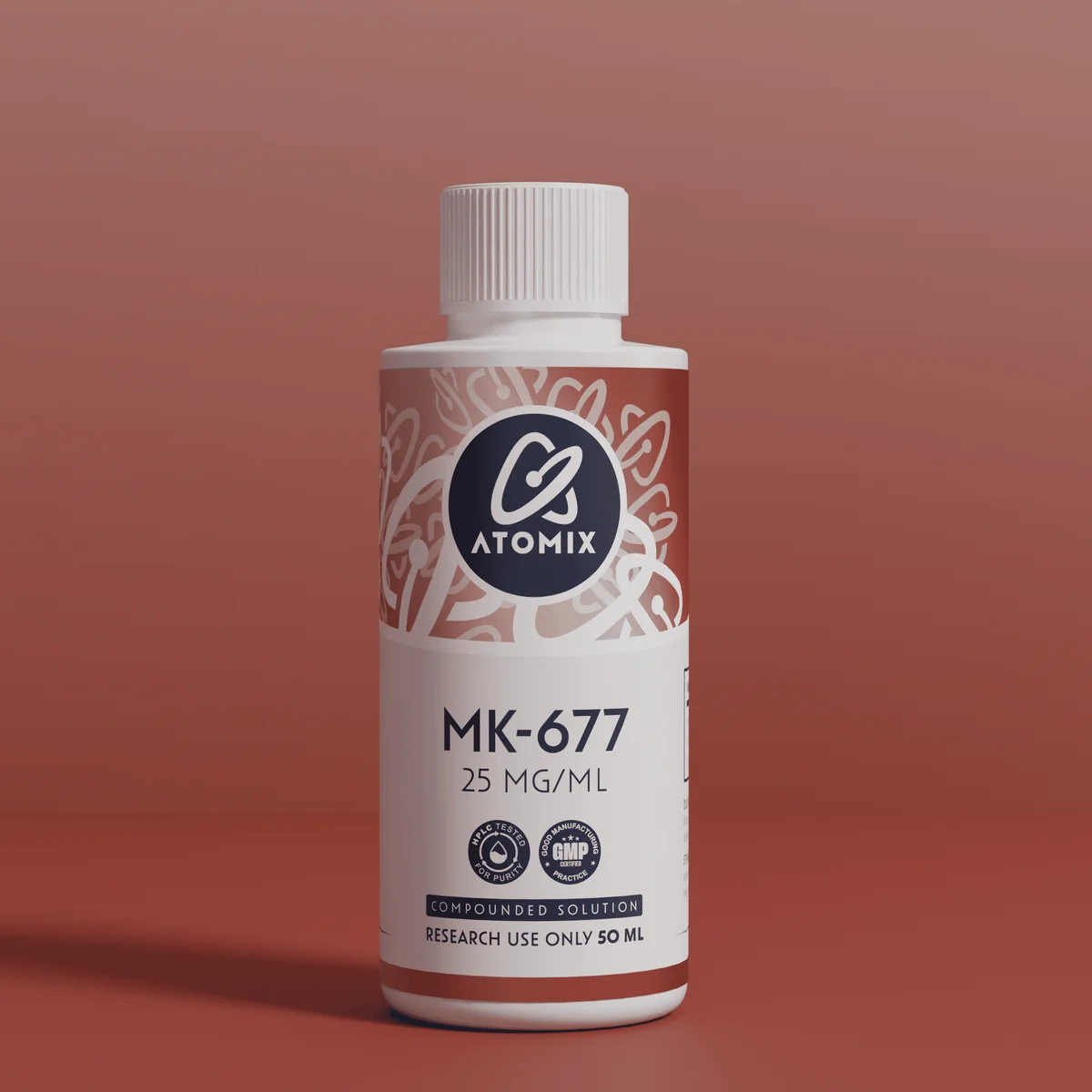
Quick Answer
MK-677 (Ibutamoren) is the most comprehensively studied oral GH secretagogue in the research chemical space, with multiple completed double-blind, placebo-controlled human trials documenting sustained GH and IGF-1 elevation. Its oral bioavailability and documented sleep-architecture effects make it mechanistically interesting, but human trial evidence of insulin sensitivity impairment means any research application requires careful contextual scrutiny.
Most compounds in the growth hormone secretagogue category exist almost entirely in animal models, underground forums, and vendor marketing copy. MK-677 is a meaningful exception. Multiple double-blind, placebo-controlled trials in human subjects have examined its pharmacology, making it one of the more rigorously studied non-approved compounds in this entire category.
That research record cuts both ways. The same trial base that documents consistent GH and IGF-1 elevation also contains clear signals around insulin resistance - a finding that gets considerably less attention in the bodybuilding and biohacking communities that discuss this compound most loudly. This guide addresses both sides.
This profile examines the human trial evidence, contextualizes it against animal data and anecdotal self-reports where those are the only sources available, and compares MK-677's evidence base against other GH secretagogues currently in the research chemical market. All content is published for educational and research contextualization purposes only. MK-677 is not approved by the FDA, MHRA, TGA, or EMA for human use, and nothing in this guide constitutes medical advice or a recommendation for human self-administration.
Featured Peptides
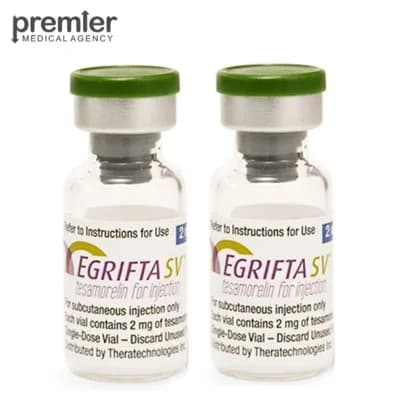
The only compound in this guide operating at a genuinely different evidentiary tier - Phase III RCT data and FDA approval separate tesamorelin from every research chemical here by a significant margin. The cost and narrow indication make it inaccessible for most contexts, but it sets the benchmark for what adequately powered human evidence looks like in this class.
Included as the FDA-approved reference standard against which research chemical evidence quality can be calibrated.
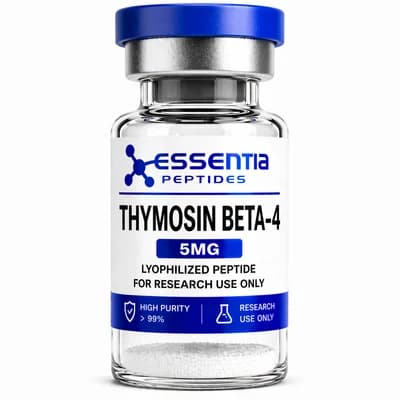
One of the better-characterized injectable GHRH analogs, with Phase II human pharmacokinetic data that most research peptides can't claim. The extended half-life from DAC modification is both its primary dosing advantage and its primary safety management liability - and DAC vs. non-DAC labeling confusion in the vendor market is a meaningful practical risk.
Represents the longer-acting injectable GHRH analog category for comparison against MK-677's oral GHS-R1a mechanism.
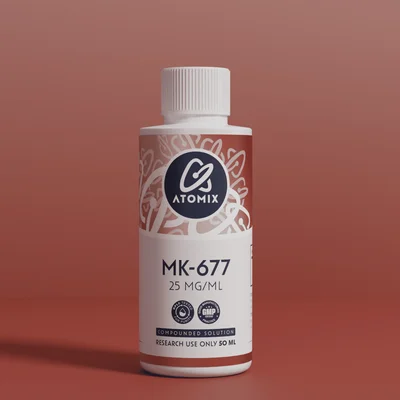
The most human-trial-supported oral GH secretagogue in the research chemical space, with documented efficacy at the GH/IGF-1 axis across multiple double-blind trials. The insulin sensitivity signal is a genuine, controlled-trial-documented liability that deserves more weight than it typically receives in community discussions - this isn't a theoretical concern extrapolated from mechanism.
The central subject of this guide and the compound with the strongest human trial evidence among non-approved GH secretagogues currently available as research chemicals.

The most physiologically conservative option in this group, with rapid clearance and a preserved feedback mechanism that limits the sustained IGF-1 elevation concern. The US compounding pharmacy pathway is a genuine regulatory differentiator. Short half-life significantly limits practical utility for applications requiring sustained GH axis stimulation.
Represents the short-acting GHRH analog category and the compounding pharmacy sourcing pathway - a distinct regulatory option unavailable for most research peptides.
The most selective GHRP in this comparison by documented receptor pharmacology, with consistently minimal off-target hormonal effects compared to earlier-generation GHRPs. The near-complete absence of human clinical trial data for the endpoints most relevant to its research use is a significant evidentiary gap that animal models and anecdotal reports can't close.
Represents the injectable GHS-R1a agonist category for mechanism-based comparison against MK-677's oral GHS-R1a agonism.
What Is MK-677 (Ibutamoren)? - Chemical Identity, Class, and Discovery
MK-677, formally known as ibutamoren or ibutamoren mesylate, is a non-peptide small molecule that acts as a potent, orally active agonist at the ghrelin receptor (GHS-R1a). Despite appearing in peptide research communities and frequently being grouped with peptide secretagogues, MK-677 is technically a peptidomimetic - a small molecule designed to mimic the receptor-binding behavior of peptide hormones without being a peptide itself. That distinction matters: it's what gives the compound oral bioavailability, which no naturally occurring GH-releasing peptide shares.
MK-677 was developed by Merck Research Laboratories and first described in published literature in the mid-1990s. It was investigated as a potential treatment for growth hormone deficiency, muscle wasting, osteoporosis, and obesity before clinical development was discontinued - not because of a single disqualifying safety signal, but because the commercial and regulatory path didn't proceed. The compound's CAS number is 159752-10-0. Its molecular formula is C27H36N4O5S.
As a ghrelin receptor agonist, MK-677 belongs to the growth hormone secretagogue (GHS) class, alongside peptides like ipamorelin and the older GHRP series. It's distinct from GHRH analogs (sermorelin, CJC-1295, tesamorelin), which act at a different receptor upstream in the GH axis.
---
Mechanism of Action - How Research Suggests It Stimulates GH Release
MK-677 binds to and activates the GHS-R1a receptor, the same receptor that endogenous ghrelin activates. This receptor is expressed in the hypothalamus and pituitary. Activation produces two complementary effects on the GH axis:
1. Stimulation of GHRH release from the hypothalamus, which signals the pituitary somatotroph cells to synthesize and release GH.
2. Direct pituitary action, amplifying the GH release response to incoming GHRH signals.
These two mechanisms work together. The net result documented in human trials is a substantial and sustained increase in both GH pulse amplitude and circulating IGF-1 concentrations. Notably, research suggests MK-677 does not suppress the somatostatin feedback mechanism that normally limits GH excess - meaning the pituitary retains its natural brake system, unlike exogenous recombinant GH, which bypasses the axis entirely.
The ghrelin receptor activation also explains several of MK-677's side effects: ghrelin is the canonical "hunger hormone," and GHS-R1a activation produces appetite stimulation that's well-documented both in trial data and anecdotal reports.
---
Why Oral Administration Matters - MK-677 vs. Injectable Secretagogues
Every other compound in this guide requires subcutaneous injection. MK-677 doesn't. That's not a minor convenience distinction - it changes the entire practical and logistical profile of the compound in research contexts.
Injectable peptides require reconstitution from lyophilized powder, sterile or bacteriostatic water, cold-chain storage, appropriate syringes, and injection-site hygiene. Each of those steps is a variable that can introduce contamination, dosing error, or instability. Oral administration removes all of them.
From a pharmacokinetic standpoint, MK-677's oral bioavailability is estimated at approximately 60-70% in published animal pharmacology, with human trials confirming adequate systemic absorption to produce robust GH axis effects. Its half-life of roughly 4-6 hours in human subjects allows once-daily dosing, which is consistent with most published trial protocols.
The tradeoff is less precise pulse control. Injectable GHRPs like ipamorelin, given in discrete subcutaneous doses, more closely mimic the pulsatile pattern of endogenous GH secretion. MK-677's sustained receptor occupancy produces a more continuous stimulatory signal, which may have different downstream implications for IGF-1 and insulin sensitivity - covered in detail below.
---
Evidence Summary - Human Trials, Animal Studies, and Anecdotal Reports
Human Trial Evidence
MK-677 has an unusually substantive human trial record for a non-approved compound. Key studies include:
- Nass et al. (2008), published in the *Annals of Internal Medicine*: A 2-year, double-blind, placebo-controlled, modified-crossover trial in healthy older adults (n=65, ages 60-81). Daily oral MK-677 at 25 mg restored GH and IGF-1 toward ranges typical of younger adults and produced a net fat-free mass gain (+1.1 kg versus -0.5 kg on placebo) without tachyphylaxis - though those gains did not translate into measurable improvements in functional strength, and fasting glucose rose while insulin sensitivity declined. This is one of the longest-duration controlled human trials on any research-class secretagogue.
- Murphy et al. (1998), published in the *Journal of Clinical Endocrinology and Metabolism*: A short double-blind, placebo-controlled crossover trial (two 14-day periods) in healthy young volunteers (n=8, ages 24-39) showing that oral MK-677 reverses diet-induced nitrogen (protein) catabolism - early human evidence for the anti-catabolic signal.
- Svensson et al. (1998): A double-blind crossover study in obese males examining metabolic effects, including early documentation of insulin sensitivity changes. Sample sizes were modest but methodology was controlled.
- Copinschi et al. (1997): Examined sleep architecture in young men, finding that MK-677 administration was associated with increased slow-wave sleep duration and REM sleep - one of the earliest controlled human signals for sleep-architecture effects.
- Adunsky et al. (2011), published in *Archives of Gerontology and Geriatrics*: A multicenter, randomized, placebo-controlled Phase IIb trial in elderly hip-fracture patients (n=123, 25 mg/day). Stair-climbing power rose modestly (about +12.5 W at 24 weeks) but did not reach statistical significance versus placebo, and the trial was stopped early after a higher rate of congestive heart failure in the MK-677 arm (6.5% versus 1.7%) - the source of the fluid-retention/cardiac contraindication noted below.
These trials involved relatively small sample sizes (typically n=8 to n=123) and were primarily pharmacodynamic in nature - establishing that MK-677 does what it's expected to do at the receptor and axis level. Long-term safety and efficacy trials in healthy populations weren't completed.
Animal Study Evidence
Extensive rodent and dog model data exist from Merck's development program. Animal models show dose-dependent GH and IGF-1 elevation, increased lean mass, changes in bone mineral density, and the insulin sensitivity signal observed in human trials. Animal data should be interpreted as mechanistic context only - direct extrapolation to human outcomes isn't warranted.
Anecdotal and Self-Report Evidence
A very large body of self-reported human experience exists across bodybuilding and biohacking communities. Common self-reported effects include pronounced appetite stimulation, water retention, subjectively improved sleep quality, and - at higher informal doses - significant IGF-1 elevation confirmed by self-reported blood work. These reports aren't controlled, aren't blinded, and aren't published. They're noted here as context for the side-effect profile, not as evidence of efficacy.
---
The IGF-1 Elevation Question - What Sustained Increases May Mean for Longevity and Risk
MK-677 consistently elevates IGF-1 in human trials - this is one of its most replicated pharmacodynamic findings. IGF-1 elevation is, depending on context and theoretical framework, both the primary appeal and a potential long-term concern.
The appeal: IGF-1 is anabolic, neuroprotective in certain contexts, and associated with lean mass preservation. In elderly populations, lower IGF-1 correlates with sarcopenia and functional decline. The Nass et al. 2-year trial documented sustained IGF-1 restoration to youthful ranges in elderly subjects, which is the basis for longevity-oriented interest in this compound.
The concern: Elevated IGF-1 is also associated in epidemiological literature with increased risk of certain cancers, particularly prostate and colorectal. The mechanistic pathway is plausible - IGF-1 is mitogenic. Importantly, no MK-677 trial has been powered or designed to assess cancer incidence as an endpoint. The relationship between pharmacologically elevated IGF-1 and cancer risk in humans over years to decades is genuinely unknown.
This isn't a reason to dismiss the compound's research interest. It is a reason to be precise about what the evidence does and doesn't show, and to note that the longevity implications of sustained IGF-1 elevation are contested even among researchers who study the GH axis professionally.
---
Insulin Sensitivity Findings - The Under-Discussed Side-Effect Signal in Human Trials
The insulin sensitivity signal in MK-677 human trials deserves considerably more attention than it typically receives in community discussions of this compound.
Multiple controlled human studies have documented impaired insulin sensitivity and elevated fasting glucose in subjects receiving MK-677. This is a pharmacologically logical finding: GH itself is counter-regulatory to insulin, and sustained GH elevation - whether from exogenous GH or secretagogue-driven endogenous release - reduces peripheral insulin sensitivity. Ghrelin receptor activation may also have direct pancreatic effects.
The clinical significance depends heavily on baseline metabolic status. In healthy, insulin-sensitive individuals, the changes documented in trials may fall within acceptable ranges and reverse upon discontinuation. In individuals with pre-diabetes, metabolic syndrome, insulin resistance, or family history of type 2 diabetes, the same signal carries substantially greater concern.
This isn't a theoretical risk extrapolated from mechanism - it's observed in controlled human trials. Any research context applying MK-677 should account for this finding explicitly, including baseline and ongoing glucose monitoring as standard protocol. The community tendency to minimize this finding in favor of the lean-mass and IGF-1 data is a significant gap in how this compound is typically discussed.
---
Sleep Architecture Research - What Preliminary Data Suggests About Slow-Wave Sleep
Among MK-677's more scientifically interesting properties is its documented effect on sleep architecture. The Copinschi et al. (1997) controlled trial in young men found that MK-677 administration was associated with statistically significant increases in slow-wave sleep (SWS) duration, alongside REM sleep changes.
Slow-wave sleep is the stage most associated with endogenous GH secretion - roughly 70% of daily GH release in healthy young adults occurs during SWS. The mechanistic relationship is plausible and consistent: GHS-R1a activation may reinforce the same hypothalamic signaling cascades that normally drive nocturnal GH pulses during SWS.
This finding has been widely discussed in longevity and biohacking contexts as a potential secondary benefit distinct from direct GH elevation. Important caveats apply, though: the trial sample was small (n=8 in the sleep-specific analysis), the population was young healthy men (not elderly or sleep-disordered individuals), and replication in larger or more diverse samples hasn't been published. The finding is preliminary and should be characterized as such.
Self-reported improvements in sleep quality are among the most consistently mentioned observations in community self-reports, which at minimum suggests the signal warrants further controlled investigation.
---
Dosing in Research Contexts - Ranges Reported in Published Studies
> Disclaimer: The following dosing information is drawn from published human clinical research only. It's presented for educational and research contextualization purposes. It is not a dosing recommendation, and nothing in this section constitutes medical advice. MK-677 is not approved for human use in the US, UK, EU, or Australia.
Published human trials have examined the following oral dose ranges:
- 10 mg/day: Used in some early pharmacodynamic studies; produced measurable but submaximal GH/IGF-1 response.
- 25 mg/day: The most commonly used dose across the controlled trial literature, including the Nass et al. 2-year study. Associated with robust IGF-1 elevation and the documented insulin sensitivity signal.
- 50 mg/day: Used in some dose-escalation studies. Associated with greater GH pulse amplitude but also more pronounced adverse effects including edema and appetite stimulation. No consistent evidence of proportionally greater benefit.
Most published trials used once-daily oral dosing, typically in the evening given the sleep architecture data suggesting nocturnal GH secretion amplification.
Trial durations ranged from single-dose pharmacokinetic studies up to 2 years (Nass et al.). The sustained efficacy without tachyphylaxis at 2 years is one of MK-677's more notable documented properties - receptor downregulation, which limits the utility of many GHRP-class compounds over time, hasn't been prominently observed in the trial literature at these doses.
---
Reported Side Effects and Contraindications - From Trials and User Reports
From Human Trials (Controlled Evidence)
- Insulin resistance / elevated fasting glucose: Documented in multiple controlled trials. Clinically significant for metabolically predisposed individuals.
- Increased appetite: Consistent finding across trials and anecdotal reports, mechanistically explained by ghrelin receptor agonism.
- Peripheral edema / water retention: Reported in trials, particularly at higher doses. A confound for lean mass outcome measures.
- Transient increases in prolactin: Observed in some studies, though less pronounced than with earlier-generation GHRPs.
- Fatigue / lethargy: Some subjects reported increased fatigue, possibly related to GH-driven metabolic shifts.
From Anecdotal Self-Reports (Not Controlled Evidence)
Vivid or unusual dreams, joint discomfort at high informal doses, mild numbness or tingling (possibly carpal tunnel-adjacent), and pronounced "puffiness" from water retention are among the most frequently mentioned informal observations.
Contraindications
Based on trial data and mechanistic reasoning, MK-677 research contexts should specifically exclude or carefully monitor:
- Individuals with pre-existing insulin resistance, type 2 diabetes, or metabolic syndrome
- Active or prior malignancy (IGF-1 is mitogenic; no safety data exists for this population)
- Individuals with active congestive heart failure (fluid retention signal)
- Children and adolescents (GH-axis interference in developing individuals carries poorly characterized risks)
---
How MK-677 Compares to Other GH Secretagogues in the Research Space
Research Peptide MK-677 (Ibutamoren) - Score: 72/100
The standout characteristic here is the oral administration route combined with the depth of human trial data. No other research-class GH secretagogue in this guide can point to a 2-year double-blind human trial. The insulin sensitivity signal is a genuine liability that the research community tends to underweight relative to the anabolic and sleep findings.
Pros: Multiple completed double-blind, placebo-controlled human trials. Oral bioavailability eliminates injection logistics. Documented slow-wave sleep effects in controlled conditions. Consistent GH/IGF-1 elevation without apparent tachyphylaxis at 2 years.
Cons: Documented insulin sensitivity impairment in human trials - the most concrete adverse finding of any compound in this group. Pronounced appetite stimulation. Water retention confounds outcome measurement. Non-peptide classification is sometimes excluded from peptide-specific regulatory frameworks, creating ambiguous legal status.
---
Research Peptide Ipamorelin - Score: 68/100
Best positioned for research contexts where selectivity and hormonal specificity matter most. Ipamorelin's distinguishing characteristic is its receptor selectivity - studies consistently show minimal elevation of cortisol, prolactin, and ACTH compared to earlier GHRPs like GHRP-6 and GHRP-2, which were functionally limited by their off-target cortisol stimulation.
Pros: Well-characterized GHS-R1a selectivity with documented hormonal specificity. Clear peer-reviewed receptor pharmacology. Pulsatile GH stimulation pattern preserves feedback architecture.
Cons: Human clinical trial data in healthy adults is essentially absent for body composition and performance endpoints - the applications most commonly discussed in research communities. All meaningful efficacy data comes from animal models. Subcutaneous injection required. WADA-prohibited, creating compliance risk for competitive athletes.
---
Research Peptide Sermorelin - Score: 68/100
Mechanistically distinct from GHS-R1a agonists because it acts at the GHRH receptor, stimulating endogenous GH synthesis and release through the physiological pathway rather than the ghrelin-receptor route. Its 10-20 minute half-life is both its safety feature (rapid clearance, minimal accumulation) and its primary practical limitation.
Pros: Preserves physiological feedback architecture. Human trial data exists. Compounding pharmacy pathway available in the US - one of the few research-adjacent GH axis compounds with a regulated domestic sourcing option.
Cons: Short half-life requires frequent dosing to sustain meaningful GH stimulation, reducing practical utility compared to longer-acting GHRH analogs. Anti-aging and body composition evidence remains preliminary and small-scale.
---
Research Peptide CJC-1295 - Score: 72/100
CJC-1295's distinguishing feature is its DAC (Drug Affinity Complex) modification, which extends half-life to days - enabling once or twice weekly dosing rather than the multiple-daily injections sermorelin requires. Published Phase II human pharmacokinetic data (n=64) makes it one of the better-characterized injectable secretagogues.
Pros: One of the few GHRH analogs with published Phase II human trial pharmacokinetic data. Infrequent dosing schedule. Predictable GHRH-receptor mechanism.
Cons: The extended half-life makes adverse event management substantially more difficult if problems arise - the compound can't be rapidly cleared. DAC vs. non-DAC product labeling confusion is endemic in the vendor market, and mislabeling risk is meaningfully higher for CJC-1295 than for most other compounds in this category. Long-duration IGF-1 elevation carries uncharacterized long-term safety unknowns.
---
The FDA-Approved Benchmark - Tesamorelin and What Approved Science Looks Like
Prescription Tesamorelin (Egrifta) - Score: 82/100
Tesamorelin (Egrifta) is the only compound in this guide with FDA approval, and it holds that approval specifically because it completed Phase III randomized controlled trials with CT-verified endpoints. That distinction isn't a technicality - it represents a qualitatively different evidence standard than anything else discussed here.
What the trials showed: In HIV-associated lipodystrophy, tesamorelin produced statistically significant, CT-confirmed reductions in visceral adipose tissue. The mechanism is GHRH receptor agonism - the same pathway as sermorelin and CJC-1295, but with a stabilized molecular structure (trans-3-hexenoic acid modification) that confers resistance to dipeptidyl peptidase IV degradation.
Pros: FDA approval and Phase III RCT data in humans - an entirely different evidentiary tier from research chemicals. Preserves physiological GH feedback loop. Pharmaceutical-grade manufacturing with full regulatory oversight on the prescription pathway.
Cons: The cost is prohibitive for most applications - $1,200 to $3,500+ per month, with insurance coverage largely restricted to the approved HIV-lipodystrophy indication. The visceral fat reductions documented in trials reverse substantially upon discontinuation, meaning any benefit requires ongoing use. Off-label applications lack the same evidentiary backing as the approved indication.
Critical framing: Tesamorelin should be sourced exclusively through licensed prescribers and pharmacies. Compounded or "research chemical" versions of tesamorelin aren't subject to the same manufacturing standards as Egrifta and shouldn't be treated as equivalent. The prescription pathway, while expensive, is the only route that delivers what the trial evidence actually evaluated.
---
Legal Status by Region
United States
MK-677 is not approved by the FDA for any indication. It's not a scheduled controlled substance under the Controlled Substances Act as of this writing. The FDA has issued warning letters to vendors selling MK-677 as a dietary supplement, and the compound exists in a regulatory gray area that has been explicitly targeted by FDA enforcement actions. It's not legal to sell as a dietary supplement. Research chemical vendors operate under a distinct - and legally uncertain - framework that doesn't guarantee legal protection for buyers or sellers.
United Kingdom
MK-677 is not licensed as a medicine in the UK. It's not listed under the Misuse of Drugs Act 1971 as a controlled substance. However, supply and sale for human consumption without a medicinal product license is prohibited under the Medicines Act 1968 and the Human Medicines Regulations 2012. The "research chemical" designation doesn't provide legal protection for compounds sold with implied human-use intent.
European Union
Legal status varies by member state. MK-677 is not EMA-approved. Several EU member states classify it as a medicinal product, requiring prescription authorization that's not available in practice for this compound. Others apply more permissive frameworks. Researchers and individuals in EU jurisdictions should consult jurisdiction-specific regulations.
Australia
The Therapeutic Goods Administration (TGA) classifies MK-677 as a Schedule 4 prescription-only medicine in Australia. This means it requires a valid prescription to legally possess or supply, and no prescription pathway exists for this compound in practice. Importation without authorization is prohibited. Australia has one of the stricter regulatory postures toward research chemicals in the English-speaking world.
---
Sourcing Considerations - What a Credible COA Looks Like
For researchers operating in jurisdictions where MK-677 sourcing is legally permissible, vendor quality is highly variable. The following considerations reflect minimum reasonable standards:
What a Credible COA (Certificate of Analysis) Contains
- Identity confirmation: HPLC or mass spectrometry (MS/LCMS) confirming the compound is MK-677 and not an analogue or substitution.
- Purity percentage: Research-grade material should reflect 98%+ purity on HPLC analysis. Vendors reporting 99.9%+ without credible third-party analysis should be treated skeptically.
- Heavy metal testing: Particularly relevant for compounds manufactured in unregulated environments.
- Solvent residue testing: Residual synthesis solvents are a meaningful contamination risk in inadequately tested research chemicals.
- Third-party testing: The COA should come from an independent analytical laboratory, not the vendor's own internal testing. Lab name and accreditation status should be verifiable.
- Batch number: The COA should correspond to a specific production batch, allowing traceability.
Red Flags
- No COA available, or COA available only upon request after purchase.
- COA issued by the vendor itself with no third-party laboratory identified.
- Purity figures presented without specifying the analytical method used.
- Vendors making explicit or implied therapeutic claims on product pages - this signals regulatory noncompliance and is associated with lower quality control practices.
- No age verification or identity verification at checkout.
- Prices significantly below market range for research-grade synthesis - undercutting often correlates with reduced analytical testing investment.
For MK-677 specifically, the non-peptide small-molecule structure means it doesn't require cold-chain storage or the sterility considerations that apply to injectable peptides. That said, it doesn't reduce the importance of identity and purity verification.
---
Regulatory Disclaimer and Research Context
All content in this guide is published for educational and research contextualization purposes only. MK-677 (ibutamoren), ipamorelin, sermorelin, and CJC-1295 are not approved by the FDA, MHRA, EMA, or TGA for human consumption. They're sold as research chemicals and are not legal for human use in most jurisdictions without a valid prescription that doesn't exist in practice for these compounds.
Prescription tesamorelin (Egrifta) is the sole FDA-approved compound covered in this guide, and its evidence base and legal status are categorically different from the research chemicals described alongside it.
Nothing in this guide constitutes medical advice, a dosing recommendation, or an endorsement of human self-administration of any research chemical. Individuals with medical concerns about growth hormone deficiency, metabolic disease, or body composition should consult a licensed medical professional.
---
Where to Learn More - PubMed and ClinicalTrials.gov Pointers
PubMed search terms that return the core MK-677 human trial literature:
- "ibutamoren" OR "MK-677" AND "clinical trial"
- "MK-0677" AND "growth hormone" (Merck's internal compound designation)
- "ghrelin receptor agonist" AND "human" AND "insulin sensitivity"
- "ibutamoren" AND "slow-wave sleep"
Key author names associated with published MK-677 human trial data include Murphy, Copinschi, Svensson, Nass, and Adunsky - searching these alongside "growth hormone secretagogue" surfaces the primary controlled trial literature.
ClinicalTrials.gov (clinicaltrials.gov): Search "ibutamoren" or "MK-677" to access the registry of completed and terminated trials, including Merck-sponsored studies that document methodology and outcomes.
For tesamorelin clinical evidence, the FDA approval package is publicly available at FDA.gov and contains the complete Phase III trial data on which the Egrifta approval rests - a useful benchmark for understanding what adequately powered, endpoint-specific human trial evidence looks like in this space.
For the GH secretagogue class broadly, the 2006 Bowers review in *Growth Hormone and IGF Research* and Ghigo et al.'s work on GHS receptor pharmacology provide solid mechanistic grounding.
Tips
- 1.When reviewing any MK-677 vendor COA, check the analytical method - HPLC alone confirms purity but not identity; LCMS or mass spectrometry is required to confirm the compound is actually MK-677 and not a structural analogue. Reject COAs that don't specify the method used.
- 2.The insulin sensitivity signal documented in MK-677 human trials makes baseline fasting glucose and HbA1c measurement a minimum reasonable protocol before any research application. This isn't just precautionary framing - it reflects findings from controlled human trials at the doses most commonly studied.
- 3.Use the FDA's publicly available Egrifta approval package as a calibration tool when evaluating any GH secretagogue evidence claim. Comparing the endpoint specificity, sample sizes, and trial duration in tesamorelin's Phase III data against the evidence behind research chemicals makes the evidentiary gap concrete rather than abstract.
The Bottom Line
MK-677 occupies a genuinely unusual position in the research chemical landscape: multiple completed double-blind, placebo-controlled human trials give it an evidence base that most compounds in this category can't approach. That same trial record, though, contains a clear and replicated insulin sensitivity signal that the communities most enthusiastic about this compound routinely minimize. Any serious research engagement with MK-677 should weight both findings proportionally. For the only compound in this space with FDA approval and Phase III RCT data, tesamorelin remains the unambiguous benchmark - but for researchers specifically examining oral GH secretagogue pharmacology, MK-677's human trial record makes it the most substantively documented starting point available.